Frozen Shoulder Treatment Complete Guide: From Disease Stages to Non-Surgical Functional Reconstruction

Regen Health
2026-01-08
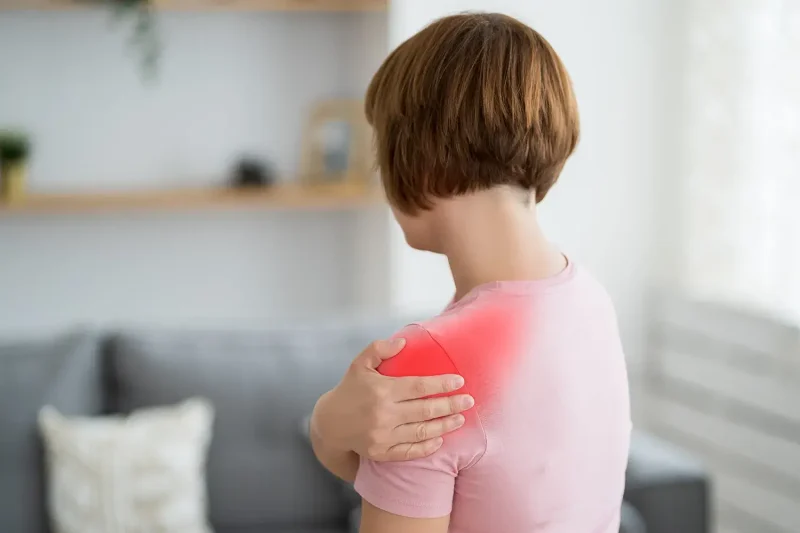
Frozen Shoulder (Adhesive Capsulitis), medically known as shoulder capsule adhesion (frozen shoulder), is a chronic condition caused by inflammation of the shoulder joint capsule, leading to contraction and thickening. It commonly occurs in individuals aged 40 to 60, significantly affecting daily activities and often causing severe nighttime pain that disrupts sleep quality.
Three Stages of Frozen Shoulder
Understanding which stage you are in is the first step in developing a treatment plan:
| Stage | Characteristics and Condition | Duration |
| 1. Painful Inflammatory Stage | Freezing phase in progress, characterized by shoulder soreness, sensitivity to cold, and nighttime pain that may cause awakening. | 6 weeks – 9 months |
| 2. Frozen Adhesive Stage | Freezing phase completed, with severe capsular adhesions and significantly restricted range of motion. | 4 – 9 months |
| 3. Thawing Recovery Stage | Entering the thawing phase, with reduced pain and gradual recovery of mobility. | 5 months – 2 years |
High-Risk Groups for Frozen Shoulder: Why Have You Become “Frozen”?
In addition to age-related factors, occupational strain is a major contributing cause:
- Sedentary individuals: Office workers and programmers often develop shoulder and neck stiffness due to prolonged poor posture.
- Manual laborers and athletes: Repeated heavy lifting or high-intensity stress on the shoulders, such as in baseball and badminton players.
- Fixed-posture professions: Hairdressers and dentists who keep their arms raised for extended periods, leading to chronic shoulder fatigue.
- Repetitive-motion occupations: Teachers and craftsmen who frequently raise their arms, increasing the risk of chronic bursitis.

Regen Clinic: Integrated Non-Surgical Treatment Strategies for Frozen Shoulder
We emphasize a dual approach of “pain reduction” and “functional restoration” to recover the joint’s natural range of motion.
1. Precision Medical Interventions
- Intra-articular PRF Injection: Utilizes autologous Platelet-Rich Fibrin (PRF), administered by an orthopedic physician to accelerate tissue repair.
- Manipulation Under Anesthesia (MUA): Performed by a physician under sedation anesthesia to release adhesions. Self-forceful stretching should be avoided to prevent secondary injury.
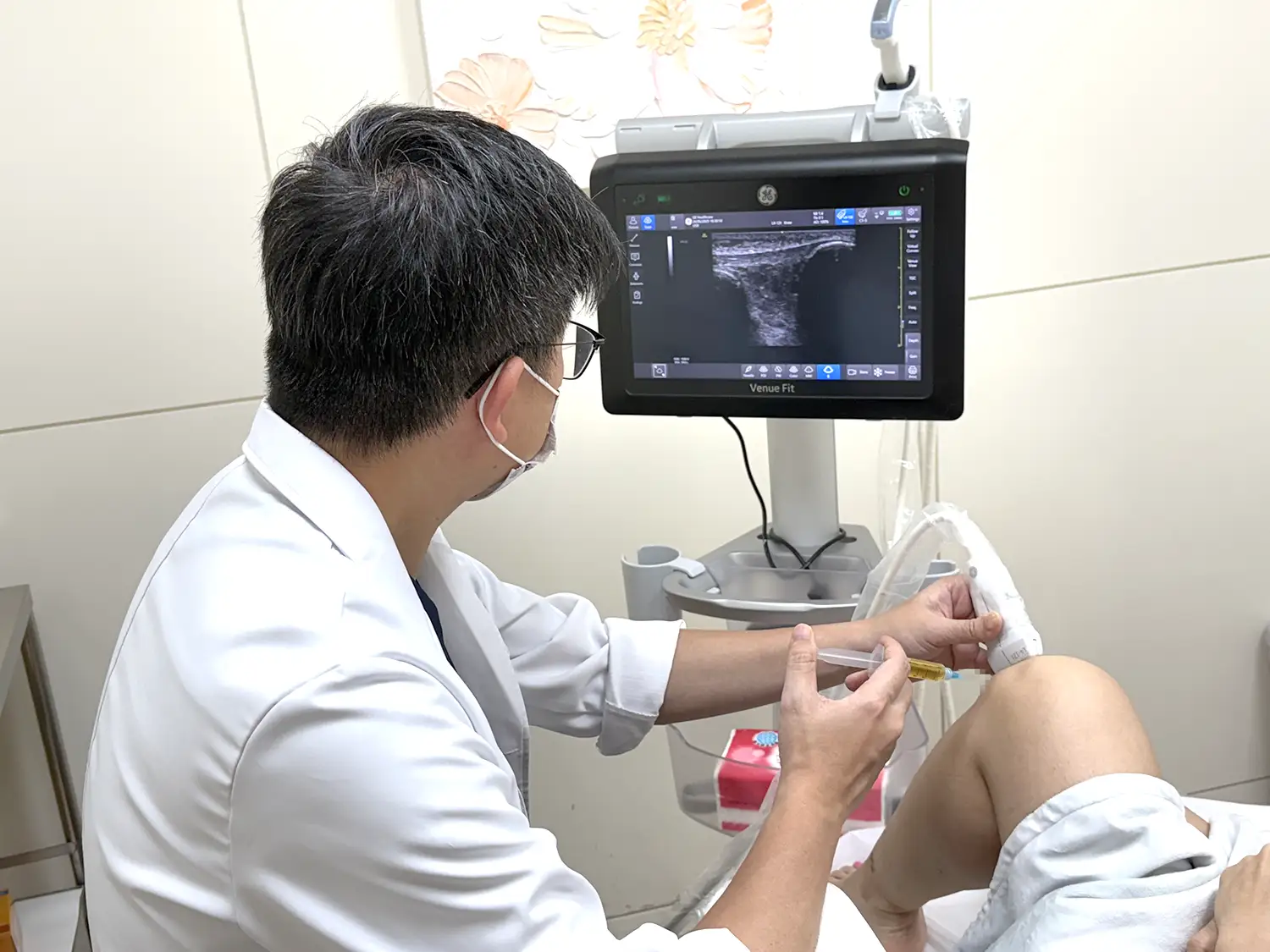
- Ultrasound-Guided Capsular Distension: High-resolution ultrasound is used for precise localization, followed by fluid injection to expand the contracted joint capsule and relieve tendinitis-related pain.
2. Physical Therapy and Technology-Assisted Treatment
- SIS Super Inductive System Therapy: Provides deep penetration to effectively alleviate inflammation and pain.
- One-on-One Manual Therapy: Professional physical therapists assist with joint mobilization and rehabilitation.
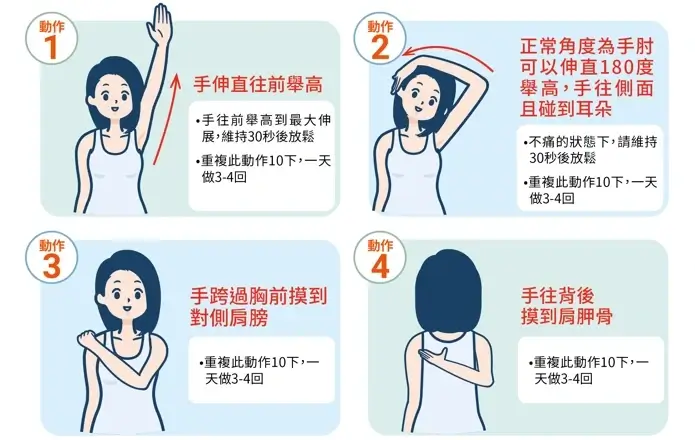
Four Key Postoperative Shoulder Rehabilitation Exercises Guide
Goal: To improve the mobility of the shoulder joint and scapula. It is recommended to perform these exercises after heat therapy or injection treatment for better results.
- Forward Elevation: Raise the arm straight forward up to 180 degrees, close to the ear.
- Lateral Abduction: Lift the arm to the side, focusing on scapular rotation.
- Horizontal Adduction: Bring the arm across the chest to touch the opposite shoulder, stretching the posterior joint capsule.
- Behind-the-Back Reach: Reach the hand behind the back toward the scapula to improve movements such as fastening a bra or scratching the back.
Frozen Shoulder Frequently Asked Questions (FAQ)
Q1: Will Frozen Shoulder Heal on Its Own Without Treatment?
Although some patients may enter the “thawing phase,” without intervention, the range of motion after thawing usually does not return to pre-inflammation levels, and the condition may last up to two years, severely affecting quality of life.
Q2: How Is Frozen Shoulder Different from “Myofascial Pain”?
Myofascial pain usually involves muscle soreness that improves with rest; frozen shoulder involves adhesions of the joint capsule, leading to limited arm mobility and characteristic nighttime pain.
Q3: What Is the Difference Between PRF Injection and Standard Steroid Injection?
Steroids are mainly used for rapid anti-inflammation and pain relief; PRF uses autologous growth factors to promote tissue repair and regeneration, offering better long-term benefits without steroid-related side effects.
Q4: Why Does Frozen Shoulder Hurt More at Night?
At night, reduced blood flow to the shoulder joint allows inflammatory substances to accumulate; additionally, sleeping positions that compress the injured joint capsule can trigger severe pain.
Q5: Can I Exercise Immediately After Manipulation Under Anesthesia (MUA)?
Yes. MUA releases adhesions under anesthesia, and the post-operative period is a golden rehabilitation window. Stretching exercises should begin early to prevent re-adhesion.
Q6: Can Frozen Shoulder Recurs?
The recurrence rate on the same shoulder is low, but if lifestyle habits (such as poor posture) are not corrected, the risk of developing frozen shoulder on the opposite side increases.
Q7: Does SIS Super Inductive System Therapy Hurt?
No. SIS is a non-invasive magnetic field therapy. Patients may feel mild muscle twitching during treatment, which effectively alleviates deep inflammation and pain.
Q8: What Should I Keep in Mind When Doing Stretching at Home?
Follow the principle of “gentle but frequent.” Stretch until mild soreness is felt, and never forcefully pull, as this may cause rotator cuff tendon injury.
Q9: Is Swimming Beneficial for Frozen Shoulder?
During the thawing phase, moderate swimming in warm water (such as breaststroke) can help increase joint mobility, while water buoyancy reduces joint stress.
Q10: How Can Frozen Shoulder Be Prevented?
Get up and move your shoulders every 30–60 minutes at work, avoid prolonged fixed postures, maintain proper sitting posture, and regularly perform shoulder flexibility stretches for optimal prevention.
Related Articles
Please enter a title here Hsu Fang-wei (Orthopedic Surgeon at Jianli Clinic) | Orthopedic Specialist License No. 002188 Please enter a title here What Is Piriformis Syndrome? A Common Nerve Compression Problem in People Who Sit for Long Periods Every time you walk into an office or a coffee shop, t
Please enter a title here Hsu Fang-wei (Orthopedic Surgeon at Jianli Clinic) | Orthopedic Specialist License No. 002188 Please enter a title here Lately, in my clinic, I often see middle-aged women rush in, looking panicked, pointing to the middle joint of their finger and asking, “Doctor, is my fin
For degenerative knee osteoarthritis, conventional treatments can only relieve pain, whereas PRP (platelet-rich plasma) and PRF (platelet-rich fibrin) work through six scientifically proven mechanisms—“promoting cartilage regeneration,” “modulating inflammation,” and “improving mitochondrial functio
Regen Health Don’t Let the “Three Lows” Steal Your Quality of Life in Old Age We often hear about the dangers of the “Three Highs” (high blood pressure, high cholesterol, high blood sugar). However, as Taiwan officially enters a super-aged society in 2025, few pay attention to the equally critical