
Pain and Anesthesia
Nerve Block Injection
Pain and Anesthesia
Nerve Block Injection
Peri-Knee and Hip Nerve Block Procedure

Table of Contents
Non-surgical options for osteoarthritis of the knee and hip pain!
Don’t want knee surgery for osteoarthritis? Nerve block therapy can be performed on an outpatient basis, helping seniors and patients with chronic conditions safely manage pain and improve mobility—without hospitalization and with a quick recovery!
For those experiencing pain or who are ineligible for surgery, nerve block therapy is a precise pain management treatment guided by ultrasound or X-ray. It effectively reduces pain in the knee and hip joints, reduces inflammation, and improves mobility. It is suitable for patients with osteoarthritis, post-surgical pain, or those who cannot undergo surgery.
What is a nerve block?
Nerve block is a type of “regional pain management treatment.” Using ultrasound or X-ray guidance, the physician precisely injects medication around the nerves responsible for transmitting pain, thereby relieving pain and reducing inflammation, which allows for smoother joint movement.This technique targets specific nerve branches, such as those in the knee or hip joints. Because the nerve distribution in these areas is highly complex, ultrasound guidance is essential to ensure safe and precise injection. The pain-relieving effects typically last 2 to 4 months, depending on individual constitution and response to the medication. If corticosteroid-containing medications are used, clinical guidelines recommend no more than four injections per year.
Common Sites and Types of Nerve Block Procedures
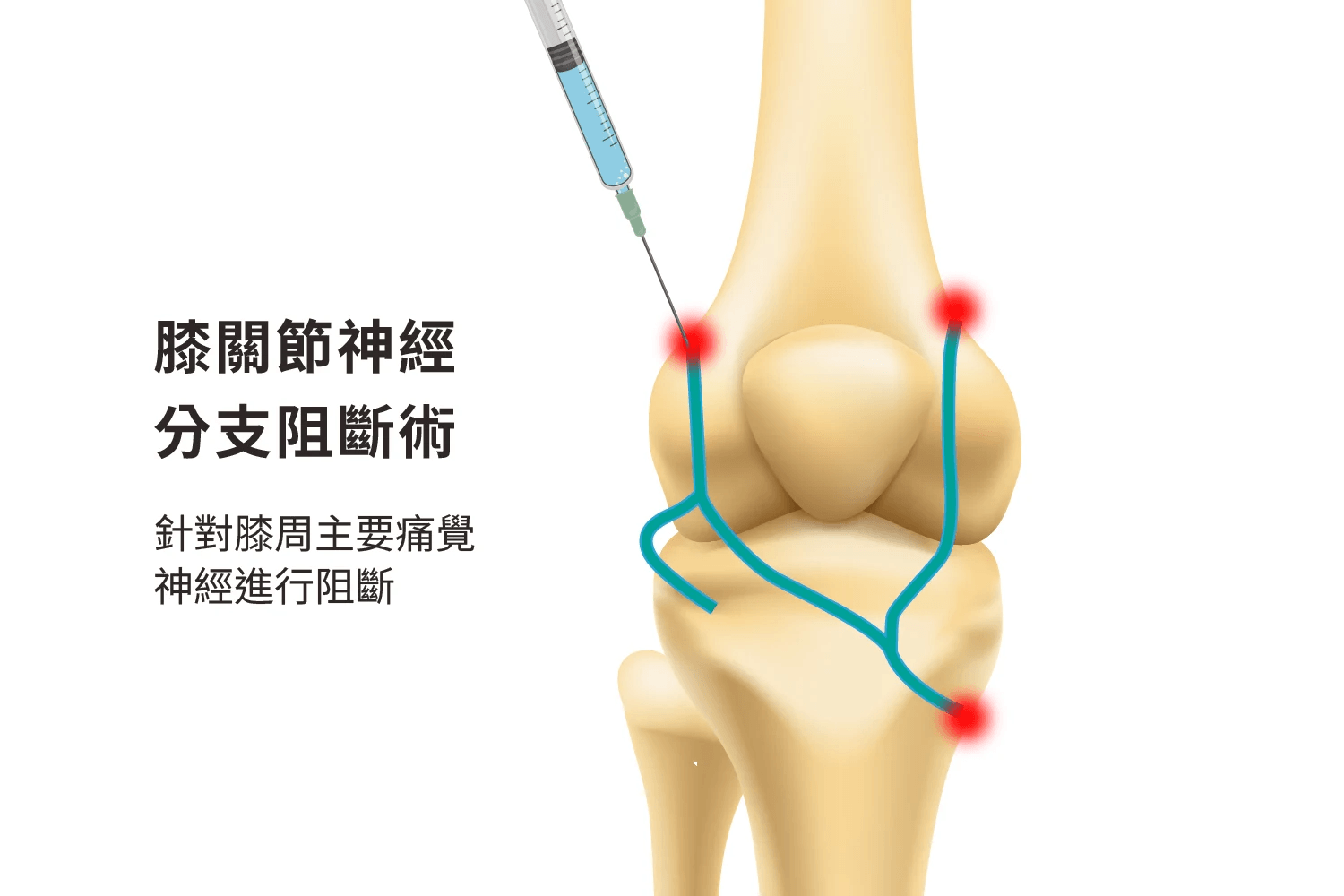
1. Common Nerve Blocks for the Knee
- Genicular Nerve Block: A precise block targeting the distribution of major sensory nerves around the knee joint.
- Popliteal Artery and Posterior Knee Capsule Space Block (iPACK Block): Relieves pain in the posterior aspect of the knee.
- Adductor Canal Block: Blocks the saphenous nerve to alleviate pain on the inner side of the knee.
2. Common Nerve Blocks for the Hip
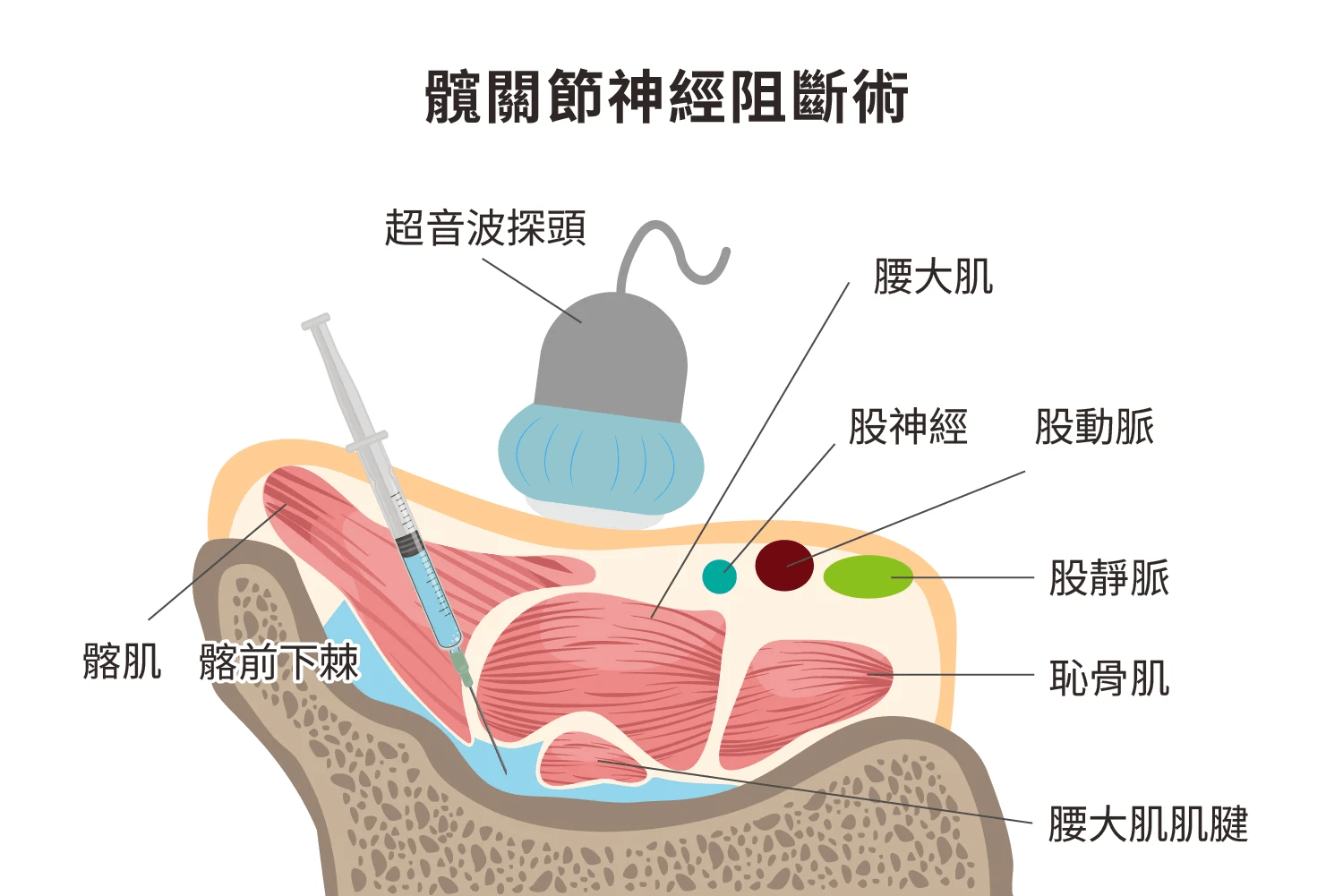
- PENG Block (Pericapsular Nerve Group Block): Blocks the nerves surrounding the hip joint capsule to relieve deep hip pain.
Who is a good candidate for nerve block therapy?
| Indications | Description |
|---|---|
| Osteoarthritis (OA) | Severe degeneration of the knee or hip joint where medication and rehabilitation have limited effectiveness. |
| Preoperative/Postoperative Pain Management | Pain relief following total knee arthroplasty (TKA), total hip arthroplasty (THA), and knee arthroscopy. |
| Patients Unsuitable for Surgery | Patients who cannot undergo surgery due to age, chronic conditions, or other reasons. |
| Cancer-Related Pain | Intractable joint pain caused by tumor invasion of the pelvis or lower limbs. |
Features and Benefits of Nerve Block
- Rapid pain relief: Pain is often relieved within a short period of time, with effects lasting from several weeks to several months.
- Reduced reliance on pain medication: Reduces the need for oral painkillers or morphine, resulting in fewer side effects.
- Improved Quality of Life: Significant improvements in sleep quality, mobility, and daily activities.
- Support for Rehabilitation: With reduced pain, patients can more actively engage in physical therapy and muscle strength training.
Delaying Surgery: An important alternative pain management option for patients at high surgical risk.
Risks and Possible Side Effects of Nerve Block
Most side effects are mild and temporary, including:
- Mild soreness or bruising at the injection site
- Temporary numbness or weakness in the lower limbs (resolves within a few hours)
- If steroids are used, they may cause a temporary rise in blood sugar (diabetics should take note)
Rare but serious complications include:
- Local infection
- Local anesthetic toxicity (if accidentally injected into a blood vessel)
- Nerve damage (extremely rare)
- Temporary numbness in the treated area following radiofrequency ablation
⚠️※If you are taking anticoagulants or have a bleeding disorder, inform your doctor before the procedure and discontinue the medication as directed by your doctor before undergoing the procedure to avoid complications related to bleeding.
Post-Treatment Guidelines for Nerve Block Procedures
- Avoid driving, riding a bike, or lifting heavy objects on the day of the procedure to prevent numbness and falls.
- Keep the injection site dry and avoid taking baths or soaking in hot springs for 24 hours.
- If you experience severe weakness in the lower limbs, fever, redness, swelling, or severe pain, return to the hospital immediately.
- Diabetic patients should monitor their blood sugar levels.
- Once pain subsides, engage in physical therapy or low-intensity exercise to maintain joint function.
What is the difference between a nerve block and a standard painkiller injection?
Procedure | Nerve Block | General Pain Relief Injections |
|---|---|---|
Injection Site | Precise injection around the nerve | Intramuscular or intravenous injection |
Guidance Method | Ultrasound or X-ray guidance | No guidance required |
Duration of effect | Weeks to months | Approximately a few hours |
Selectivity | High (targeted at specific nerves) | Low (systemic) |
Does it contain anti-inflammatory medication? | Contains local anesthetics and anti-inflammatory drugs | Mostly pain relievers or anti-inflammatory drugs |
Nerve Block | "Precision Pain Relief" Targeting the Source of Pain
Nerve block therapy is more than just a "pain-relieving injection." Through a doctor’s professional judgment and image guidance, it precisely locates the nerve responsible for the pain and directly blocks the pain pathway, resulting in more effective and long-lasting pain relief. For patients with osteoarthritis or those recovering from surgery, nerve block therapy offers a safe, effective, and repeatable new option for pain management, helping you regain your freedom of movement and improve your quality of life.
Frequently Asked Questions About Nerve Block
Is nerve block injection painful? Is general anesthesia required?
The knee joint has many nerves, so injections may be needed at 4-5 sites; the hip joint requires about 1-2 sites. Most patients only require local anesthesia. General anesthesia is only necessary for those who are extremely nervous or unable to cooperate.
How long does the effect of nerve block surgery last?
It can generally last for 2 to 4 months, but this may vary slightly depending on individual constitution and nerve response.
Will nerve block surgery affect walking or other activities?
The numbness usually recovers within hours and does not have a long-term impact on walking or muscle strength.
How long after a nerve block surgery can another injection be given?
It is recommended to use it no more than 4 times a year to avoid the cumulative side effects of steroids.
What is the difference between nerve block and regular painkiller injections?
- General painkiller injection (systemic):The medication circulates throughout the body via the bloodstream, like a “widespray.” While it can relieve pain, its effect is short-lived (only a few hours) and it easily causes side effects such as dizziness, drowsiness, or gastrointestinal discomfort.
- Nerve block (regional):Through precise ultrasound guidance, the medication is injected directly next to the “pain-causing nerve.” Like a “precision sniper,” it is highly targeted and has a stable and long-lasting effect (usually lasting several weeks to months), effectively reducing dependence on oral medications.
Can elderly people receive nerve block injections?
Yes. After evaluation by a physician, if surgery is not suitable or the pain severely affects daily life, nerve block is a safe alternative treatment.
Does nerve block injection require hospitalization?
No, it’s an outpatient treatment. After the injection, you can rest and observe for about 30 minutes before going home.
What precautions should be taken after nerve block surgery?
Avoid strenuous activity, bathing, or driving on the day of your visit. If you have diabetes, monitor your blood sugar levels. You can begin light rehabilitation exercises once the pain has subsided.
**This website is intended to provide information on new medical developments and health education. Any discrepancies between the terms used in this content and those in the package insert (including descriptions of uses not covered by the approved indications or colloquial terms) are provided solely for the public’s understanding and reference; the official names of treatments and devices, as well as their effects, are subject to the physician’s personal explanation.
Related Articles
Regenerative Medicine Integrative Medicine Regenerative Therapy Please enter a title here Table of Contents Turning On the Body’s Repair Switch: How Does BMAC (Autologous High-Concentration Bone Marrow Concentrate) Reshape the Joint Microenvironment? Have you ever wondered why, even after multiple

Regenerative Medicine Integrative Medicine Regenerative Therapy Please enter a title here Table of Contents Unlocking the Joints’ Natural Healing Power: PRP Regenerative Therapy and a Holistic Anti-Aging Care Plan PRP (Platelet-Rich Plasma) is one of the core technologies in modern regenerative med
Regenerative Medicine Integrative Medicine Regenerative Therapy Please enter a title here Table of Contents All-Natural Tissue Regeneration | A Guide to the Sustained-Release Effects of PRF and Joint Self-Healing PRF (Platelet-Rich Fibrin) is a cutting-edge therapy in modern regenerative medicine. B

Regenerative Medicine Integrative Medicine instrument Please enter a title here Table of Contents MCS+ Blood Purification | Thorough Vascular Cleansing, Reducing the Risk of High Blood Pressure, High Cholesterol, and High Blood Sugar Why do modern people need blood purification? The high-pressure pa

Regenerative Medicine Integrative Medicine Bit by bit Please enter a title here Table of Contents Vitality Intravenous Drip | High-purity nutritional replenishment, restarting vital circulation, and improving fatigue. Why choose intravenous infusion? To overcome the bottleneck of oral absorption. M
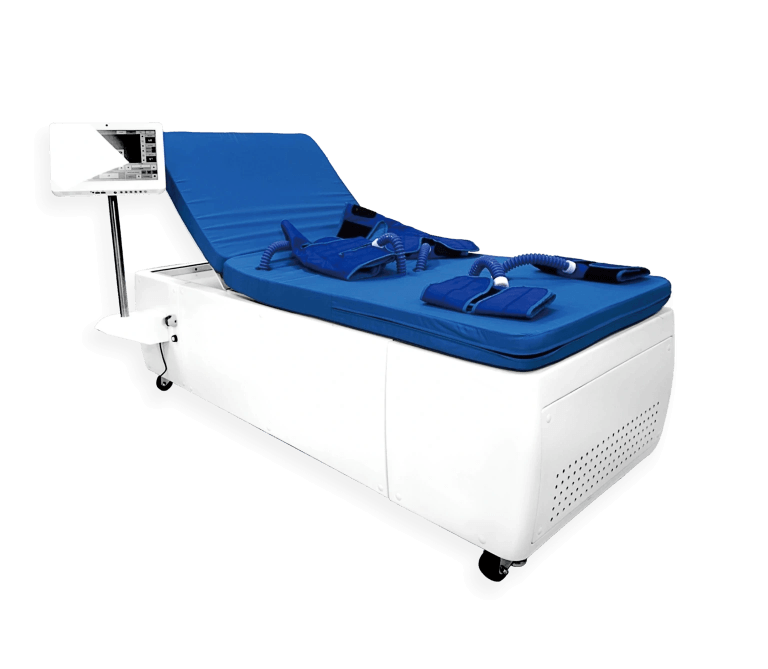
Regenerative Medicine Integrative Medicine instrument Please enter a title here Table of Contents EECP (External Counterpulsation) | Non-surgical, natural vascular bypass therapy to enhance cardiac circulation. What is EECP (Extracorporeal Counterpulsation)? (Non-invasive Circulation Optimization)
