
Prolotherapy
Integrative Medicine
Regenerative Therapy
AGF Amniotic Growth Factor Injection

Table of Contents
Unleashing the body's deep self-healing potential: Amniotic growth factor: a next-generation therapy that requires no blood draws, is highly stable, and possesses a "cellular scaffold."
Amniotic Growth Factors Injection (AGF) is a non-surgical regenerative medicine technique. It utilizes over 285 natural growth factors extracted from the human placental amniotic membrane, along with a special protein scaffold, injected into damaged joints or tendons. Unlike traditional plantar fasciitis (PRP), it requires no blood draw and possesses stronger anti-inflammatory and tissue regeneration capabilities. Clinical data show that it can significantly reduce the visual acuity index (VAS) and improve mobility in patients with osteoarthritis, plantar fasciitis, and refractory tendon injuries, making it particularly suitable for elderly patients or those who have not responded to PRP treatment.
What is AGF (Amniotic growth factor) injection?
Amniotic Growth Factor Injection (Amniotic), as a next-generation regenerative medicine technology, bridges the gap between conventional conservative treatments and surgery, providing a precise “biological blueprint” for tissue repair.
1. Biological Activity and “Immune Privilege” of the Amniotic Membrane
Amniotic growth factors (such as Amniofix®) are not merely pharmaceuticals, but bioactive scaffolds processed using the patented PURION® technology.
- Safe sourcing: Derived from placental amniotic membranes donated by healthy cesarean-section donors, compliant with U.S. FDA and AATB standards.
- Immune privilege (Immune Privileged): The amniotic membrane possesses natural anti-rejection properties, making immune responses extremely unlikely after injection and demonstrating excellent biocompatibility.
- Preserved bioactivity: Retains over 285 natural growth factors and specialized protein scaffolds, rather than synthetic chemicals.
2. Integrating the Three Elements of Repair: The Science of Tissue Regeneration
Amniotic injections are not merely about delivering nutrients, but represent a comprehensive tissue repair solution:
1. Signals: Rich in growth factors such as PDGF, VEGF, and TGF-β, acting like “repair instructions” to awaken dormant cells and restart regenerative processes.
2. Scaffold: Preserves the extracellular matrix (ECM) and collagen, providing a structural “framework” for new cells to ensure organized, strong tissue repair while reducing scar formation.
3. Stem cell recruitment: Through chemokines, it attracts the patient’s own mesenchymal stem cells (MSCs) to accumulate at the injury site, enabling a deeper, self-driven healing process.
Why do proliferative therapy sometimes fail?
The effectiveness of conventional proliferative therapies is highly dependent on the patient\\'s own blood quality. In elderly individuals, those with chronic diseases, or those with weakened constitutions, the concentration of growth factors in platelets may be insufficient, leading to limited repair capacity. In contrast, amniotic growth factor offers the following integrative medical advantages:
- Standardized quantification: Unaffected by fluctuations in patient age or physical condition, it provides a stable and high concentration of repair factors.
- Powerful anti-inflammatory: Contains anti-inflammatory factors such as IL-1Ra and inhibitors of metalloproteinases (TIMPs), which can effectively protect cartilage.
Amniotic growth factor vs. PRP: Why is it more advantageous?
| Comparison Item | PRP (Platelet-Rich Plasma) | Amniotic Growth Factors (Amniotic Allograft) |
|---|---|---|
| Source | Autologous blood (requires blood draw) | Human placenta (no blood draw required, processed under sterile conditions) |
| Growth Factor Concentration | Varies depending on patient age and condition (less effective in older individuals) | Standardized dosage with high and stable concentration |
| Core Components | Platelets, growth factors | 285+ growth factors + collagen scaffold (ECM) |
| Anti-inflammatory Effect | Triggers an initial inflammatory response to initiate repair (more discomfort) | Potent anti-inflammatory effect with IL-1Ra cytokine (less discomfort) |
| Number of Sessions | Typically requires 3–6 sessions | Usually only 1–2 sessions required |
| Suitable Candidates | Younger individuals, sports injuries, those with good blood quality | Older individuals, severe degeneration, PRP non-responders, those who prefer to avoid blood draws |
AGF injection is suitable for the following groups
Amniotic growth factor injections are particularly suitable for the following high-demand groups:
1. Elderly and patients with chronic diseases: No blood test required, suitable for those with anemia or poor vascular conditions.
2. For those taking anticoagulants: medication usually needs to be discontinued before PRP administration, but amniotic fluid injection does not require discontinuation, reducing the risk of thrombosis.
3. For patients with intractable pain: It is highly effective for stage 2-3 knee osteoarthritis, tennis elbow, or Achilles tendon inflammation.
4. For those seeking highly efficient repair: no surgery, no hospitalization, and a short postoperative recovery period.
Neurotransmission in regenerative medicine: Summoning the body’s self-repairing power
Many patients mistakenly believe that amniotic membrane preparations contain live stem cells. In fact, they do not contain live cells, but rather act as a “commander” and “magnet.” The chemokines they release attract mesenchymal stem cells (MSCs) from the patient’s body to the lesion. This “leveraging existing resources” model is the core principle of integrative medicine, guiding the body’s self-repair.
Although amniotic membrane injections are currently a self-funded procedure and are relatively expensive, considering their high success rate requiring only a single injection, and the elimination of surgical risks and the time cost of multiple follow-up visits, they are undoubtedly a highly worthwhile investment for modern people who pursue a high quality of life.
Common AMI Amniotic Growth Factor Injection Issues
Amniotic growth factor is someone else’s tissue. Will it cause rejection or allergic reactions when injected?
The risk is extremely low. Amniotic membrane tissue possesses a unique ****immune-privileged** characteristic, meaning it is unlikely to trigger an immune rejection response in the human body (which is why the fetus is not rejected in the womb). Furthermore, amniotic membrane preparations used in reputable medical institutions (such as Amniofix®) are derived from healthy donors delivered via cesarean section and undergo rigorous screening and patented aseptic processes in accordance with US FDA and AATB (American Association of Tissue Banks) standards, ensuring their safety has been widely validated internationally.
I’ve already had PRP injections, but the results weren’t ideal. Would switching to amniotic growth factor injections be helpful?
It’s definitely worth trying. The effectiveness of PRP is highly dependent on the patient’s own blood quality. If you are older, have chronic diseases, or have insufficient blood growth factor concentration, the repair capacity of PRP may be limited. In contrast, amniotic growth factor is a “standardized high-concentration formulation” that is not affected by the patient’s constitution and additionally contains the “extracellular matrix (ECM)” scaffold that PRP lacks, providing a more stable repair environment for tissues. It is particularly suitable for patients with intractable pain who do not respond to PRP treatment.
How long after treatment will I feel the effects? How many treatments are needed?
Amniotic membrane injection has a dual effect of “anti-inflammatory” and “tissue repair.”
- Short-term (1-2 weeks): Due to the anti-inflammatory effect, many patients experience significant pain relief.
- Long-term (3-6 months): This is a critical period for tissue regeneration, and function will continue to improve. Unlike PRP, which usually requires 3-6 treatments, amniotic growth factor, due to its high concentration and long-lasting efficacy, allows most patients to see results with only one treatment; if the condition is severe, a second booster treatment can be administered after 3 months, subject to physician evaluation.
I am taking anticoagulants (or aspirin), can I undergo this treatment?
Yes, it is possible. This is a major advantage of amniotic fluid injection. Anticoagulants are usually discontinued before PRP therapy to avoid affecting platelet function or causing bruising. However, amniotic fluid injection does not require drawing blood from the patient’s own body. Therefore, patients taking anticoagulants, those with anemia, or those with poor vascular conditions can safely receive this treatment without the risk of discontinuing medication.
Does amniotic growth factor injection contain “stem cells”?
Strictly speaking, legal amniotic membrane preparations do not contain “living stem cells” (due to regulations and safety considerations). They are rich in more than 285 natural growth factors and a special protein scaffold. These components act like powerful “commanders” and “magnets,” summoning and activating your own stem cells after injection to gather at the injured site for repair, rather than directly implanting foreign cells.
Will the treatment be painful? Will I need to rest for a long time after the procedure?
The procedure takes only 3-5 minutes, and the pain is similar to a regular injection. We will use ultrasound guidance to precisely avoid nerves, minimizing pain. No hospitalization is required after the procedure, and you can walk immediately. Some patients may experience mild soreness at the injection site for 2-3 days; this is a normal reaction as tissue repair begins (benign inflammation). It is recommended to avoid strenuous exercise for one week after the procedure.
What are the contraindications after the injection? Can I take anti-inflammatory medication?
This is very important: it is recommended to “avoid” taking strong anti-inflammatory painkillers (NSAIDs), such as ibuprofen, after surgery. This is because the principle of regenerative therapy is to use the body’s natural “reparative inflammation” to rebuild tissues, and strong anti-inflammatory drugs may inhibit the effects of growth factors and reduce the effectiveness of the treatment.
Is this treatment covered by health insurance? Approximately how much does it cost?
Currently, amniotic growth factor injections are a self-funded medical service and are not covered by health insurance. Due to the high technical threshold of the manufacturing process (requiring patented dehydration and sterile processing), the cost is higher than traditional PRP. However, considering that it usually only requires one injection (compared to multiple injections for PRP) and avoids the huge costs and risks of surgery and hospitalization, it has a very high cost-effectiveness ratio (CP value) for patients seeking highly efficient repair.
Related Articles
CASE Testimonials What Can Be Done About Recurrent Knee Pain Due to Degenerative Conditions? For many middle-aged and older adults, degenerative knee conditions often lead to a sharp decline in quality of life. Mr. Wu, an avid cyclist, has been suffering from recurring knee pain for over three month
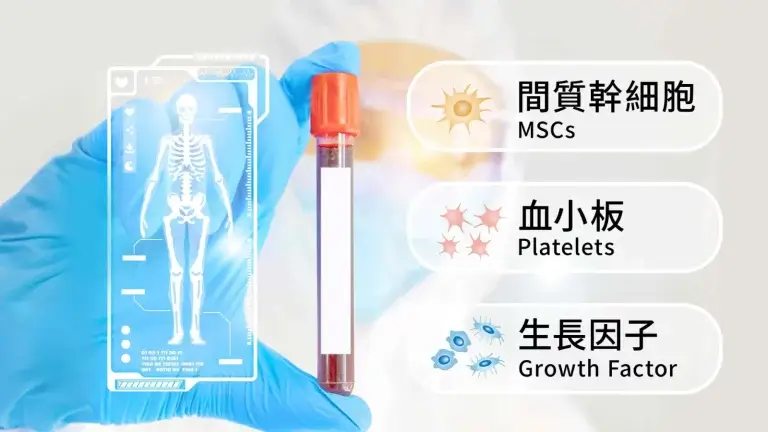
Regenerative Medicine Integrative Medicine Regenerative Therapy Please enter a title here Table of Contents Turning On the Body’s Repair Switch: How Does BMAC (Autologous High-Concentration Bone Marrow Concentrate) Reshape the Joint Microenvironment? Have you ever wondered why, even after multiple
