Orthopedic Pain
Lower Back & Lumbar Pain
Orthopedic pain
Lower back pain, back pain
Lower Back & Lumbar Pain
Neck & Cervical Spine
Shoulder & Shoulder Joint
Elbow Joint
Wrist & Fingers
Lower Back & Lumbar Pain
Hip Joint
Knee
Ankle & Foot
Full Joint Checkup
Sciatica
Table of Contents
What to Do About Sciatica? | A Comprehensive Guide to Pain Relief: From Causes to Treatment
Sciatica is often caused by lumbar disc herniation, spinal stenosis, or piriformis syndrome, resulting in radiating pain, numbness, and weakness that extends from the lower back to the buttocks and legs. Through proper diagnostic testing (X-rays/MRI), physical therapy, medication, and interventional treatments, symptoms can typically be effectively relieved and recurrence prevented.
Sciatica is more than just buttock pain! Issues ranging from the lumbar spine and pelvis to piriformis muscle compression can trigger lower back pain and leg numbness. This article provides a comprehensive analysis of the causes, symptoms, and treatment options for sciatica, and introduces Jianli Medical’s precise diagnostic and multi-level treatment plans to help you regain pain-free mobility.
What is sciatica?
Sciatica is not a single disease, but rather a general term for a group of symptoms. When the sciatic nerve—the body’s largest and longest nerve—is compressed or inflamed, it causes pain, numbness, or weakness that radiates along a path “from the lower back to the leg.”This nerve is formed by the convergence of nerve roots from the lumbar and sacral vertebrae. It passes through the pelvis, buttocks, and the back of the thigh, extending all the way to the calf and the sole of the foot. Therefore, compression or damage at any point along this pathway can lead to sciatica.
Common Causes of Sciatica
The causes of sciatica can be broadly categorized into two types: spinal and pelvic.
1️ Spinal compression is most commonly caused
by pressure on the nerve roots in the lumbar or sacral spine:
- Herniated disc
- Hyperplasia of the yellow ligament
- Osteophytes on the facet joints
- Spinal spondylolisthesis
- Spinal tumors
- Spinal trauma or fracture
2️ Pelvic-type compression The
sciatic nerve is compressed by surrounding muscles or bones as it passes through the buttocks:
- Piriformis syndrome (common among people who sit for long periods and drivers)
- Pelvic fracture or trauma
Main Symptoms of Sciatica
Symptoms of sciatica occur along the nerve's distribution, and common symptoms include:
- Lower back pain
- Deep aching in the buttocks
- Radiating pain or numbness in the leg
- Weakness in the big toe
- Pins-and-needles sensation or burning sensation in the calf
- Pain worsens with prolonged sitting; lying flat provides relief
- Limited mobility, intermittent limping
Groups prone to sciatica
| Category | Risk Factors |
|---|---|
| Older adults | Degenerative spinal conditions causing disc compression |
| People engaged in heavy physical labor | Lifting heavy objects leading to a herniated disc |
| People with sedentary lifestyles | Prolonged pressure on the piriformis muscle leading to swelling |
| Obese individuals | Intervertebral discs under excessive pressure |
| People with poor posture | Prone to herniated discs or muscle tension |
How is sciatica diagnosed?
- Physical examination: Straight Leg Raise (SLR) test, muscle strength, and reflexes.
- Imaging studies:
- X-ray: To assess spinal alignment and the presence of bone spurs.
- MRI (Magnetic Resonance Imaging): To assess the intervertebral discs and the location of nerve compression.
- Ultrasound: To examine the condition of the piriformis muscle and surrounding tissues.
Common Treatments for Sciatica
Treatment must be tailored to the source of the compression, ranging from conservative management to interventional therapies, with the goal of alleviating pain.
| Etiology | Conservative Treatment | Degenerative/Pain Management | Interventional Therapy | Surgical Treatment |
|---|---|---|---|---|
| Herniated Disc | Medication for pain relief, physical therapy, and traction | Coccygeal Nerve Block Injections, Epidural Injections, PRP/PRF Regenerative Injections | Radiofrequency ablation | Minimally Invasive Spinal Endoscopy |
| Spinal Spondylolisthesis | Electrotherapy, muscle strength training | Nerve block injections, PRP/PRF regenerative injections | Radiofrequency Ablation | Minimally Invasive Spinal Fusion |
| Facet joint osteophytes | Anti-inflammatory and pain relief, physical therapy | Facet Joint Nerve Block, PRP/PRF Regenerative Injections | High-Frequency Thermocoagulation Therapy | Determined by the condition |
| Piriformis Syndrome | Stretching exercises, electrotherapy | Ultrasound-guided PRP/PRF regenerative injection | Ultrasound-guided nerve decompression | No surgery required |
To truly relieve sciatica, you must identify its root cause.
The key to effectively treating sciatica lies in “identifying the source of compression and providing targeted treatment.” Jianli Clinic combines
image-guided procedures, regenerative injections, thermocoagulation therapy, and nerve decompression techniques to create a personalized pain relief plan for each patient, freeing you from the grip of pain and restoring your mobility.
Home Exercises for Sciatica Relief
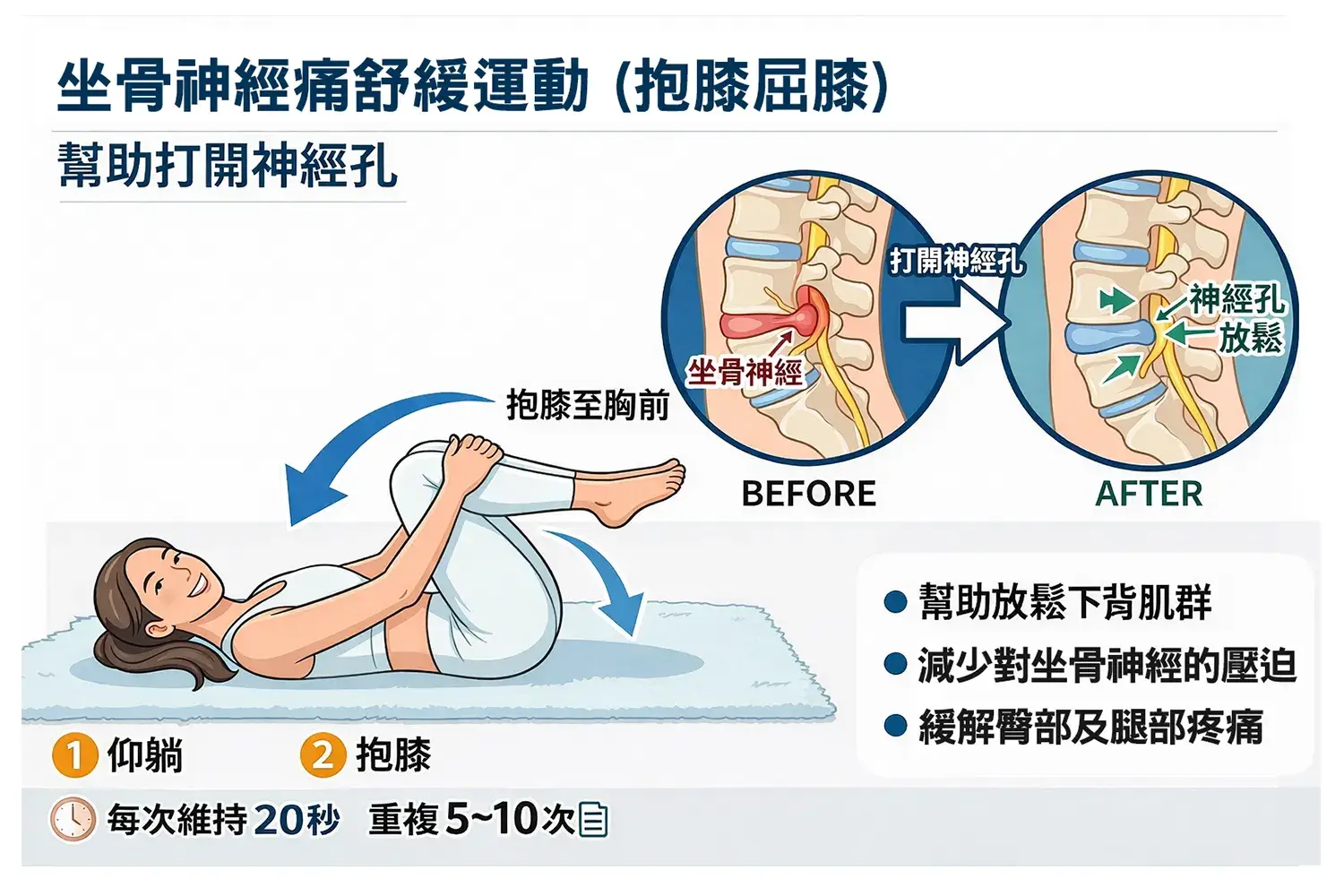
Choosing different exercises based on the location of the pressure can help relieve pain and speed up recovery: McKenzie Exercise
for Herniated Discs (Prone Stretch): Helps realign the disc
- Lie face down on the bed and push your upper body up by placing your hands on the floor.
- Hold for 10 seconds each time, and repeat 10 times.
- Helps realign the disc and reduce nerve compression.
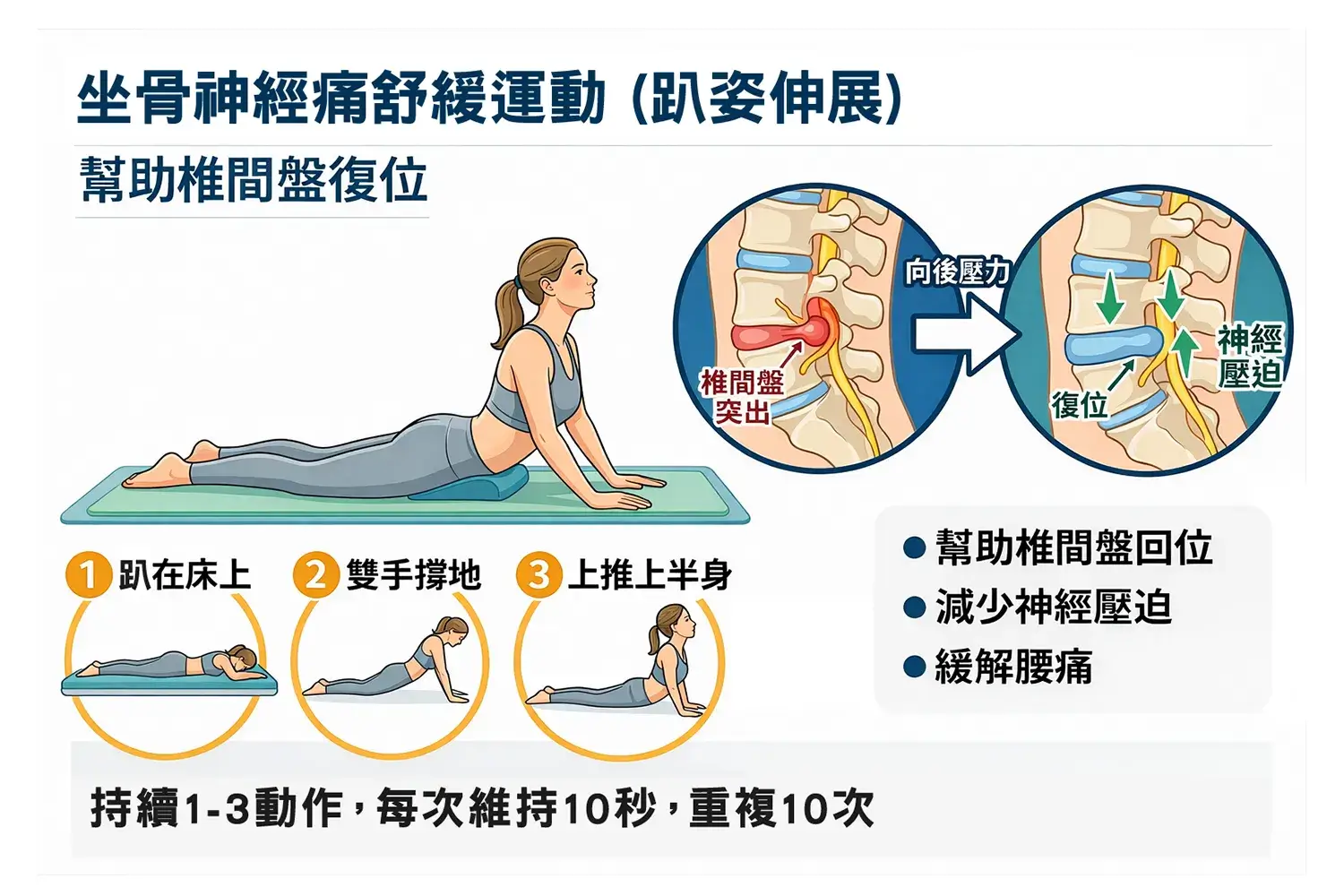
Williams Exercise (Knees-to-Chest): Helps open the neural foramen
- Lie on your back and hug your knees to your chest.
- Hold for 20 seconds each time, and repeat 5–10 times.
- Helps relax the lower back muscles and open the neural foramen.
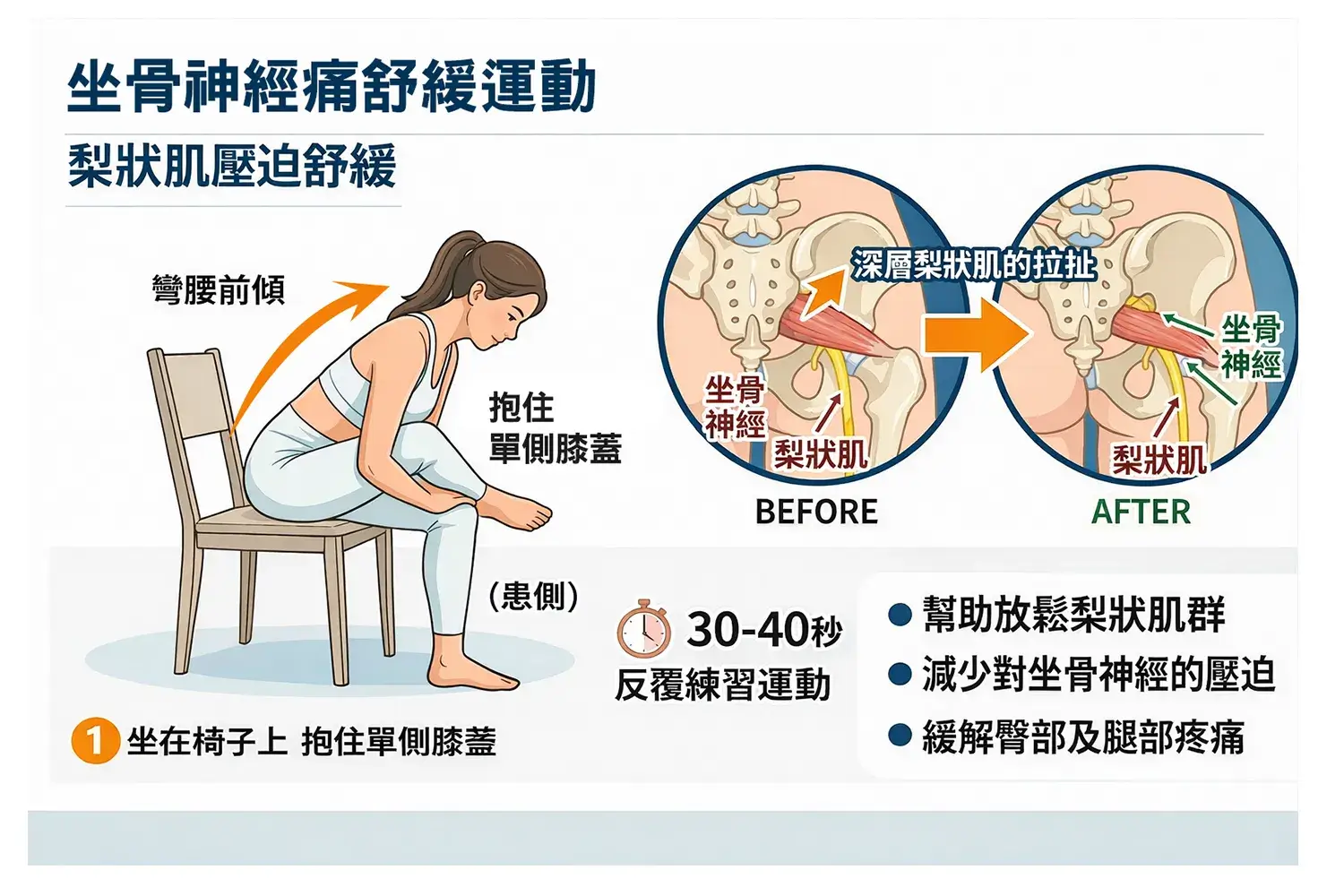
Piriformis Syndrome:
Sit on a chair and cross the affected leg over the other leg. Lean forward to feel a stretch in the deep piriformis muscle. Hold for 30–40 seconds and repeat the exercise.
Four symptoms of sciatica that require immediate medical attention:
- Sciatica accompanied by urinary incontinence.
- Sciatica lasting longer than one week.
- Acute pain and muscle weakness preventing movement.
- Accidents such as trauma, car crashes, or falls.
Frequently Asked Questions About Sciatica
Is sciatica a lumbar spine problem or a buttock problem?
Both are possible. Lumbar spine compression causes nerve root pain, while piriformis muscle compression occurs in the buttocks.
Can sciatica heal on its own?
Mild cases may improve, but if there is no improvement after more than two weeks, it is recommended to seek medical attention.
Can I exercise if I have sciatica?
Yes. Moderate stretching can help relieve nerve pressure, but during the acute phase, weight-bearing and bending movements should be avoided.
Will injections hurt?
Jianli Medical uses ultrasound-guided injection, which is safe, precise, and virtually painless.
What is high-frequency thermocoagulation therapy?
It uses heat energy to precisely destroy pain-conducting nerves without damaging the main nerve trunk, and the effect can last for several months.
Is PRP/PRF injection safe?
It is extracted from the patient’s own blood, so there is no risk of rejection, and it can promote nerve and tissue repair.
Will sciatica recur?
The risk of relapse is high if posture is not improved or core muscle training is not strengthened. Continued rehabilitation after treatment is recommended.
When is surgery necessary?
If significant lower limb weakness, loss of urinary and fecal incontinence, or ineffective conservative treatment after three months are observed, minimally invasive surgery should be considered.
Related Articles
CASE Testimonials Mr. Wang, who has long engaged in physically demanding work, suffered severe strains to his lumbar spine and deep muscles due to frequent bending and lifting of heavy objects. He has endured chronic lower back pain for years, and traditional rehabilitation has yielded limited resul
orthopedics Orthopedic pain Neck and cervical spine Text description, text description, text description, text description Lumbar disc herniation Table of Contents Don’t ignore lower back pain any longer! A herniated disc may be compressing your nerves. Will a herniated disc heal on its own? We brea