SIS Super Magnetic Energy Therapy

Regen Health
2025-11-24
SIS Super Magnetic Therapy Device: Medical-grade HIFEM technology—a powerful tool for chronic pain management!
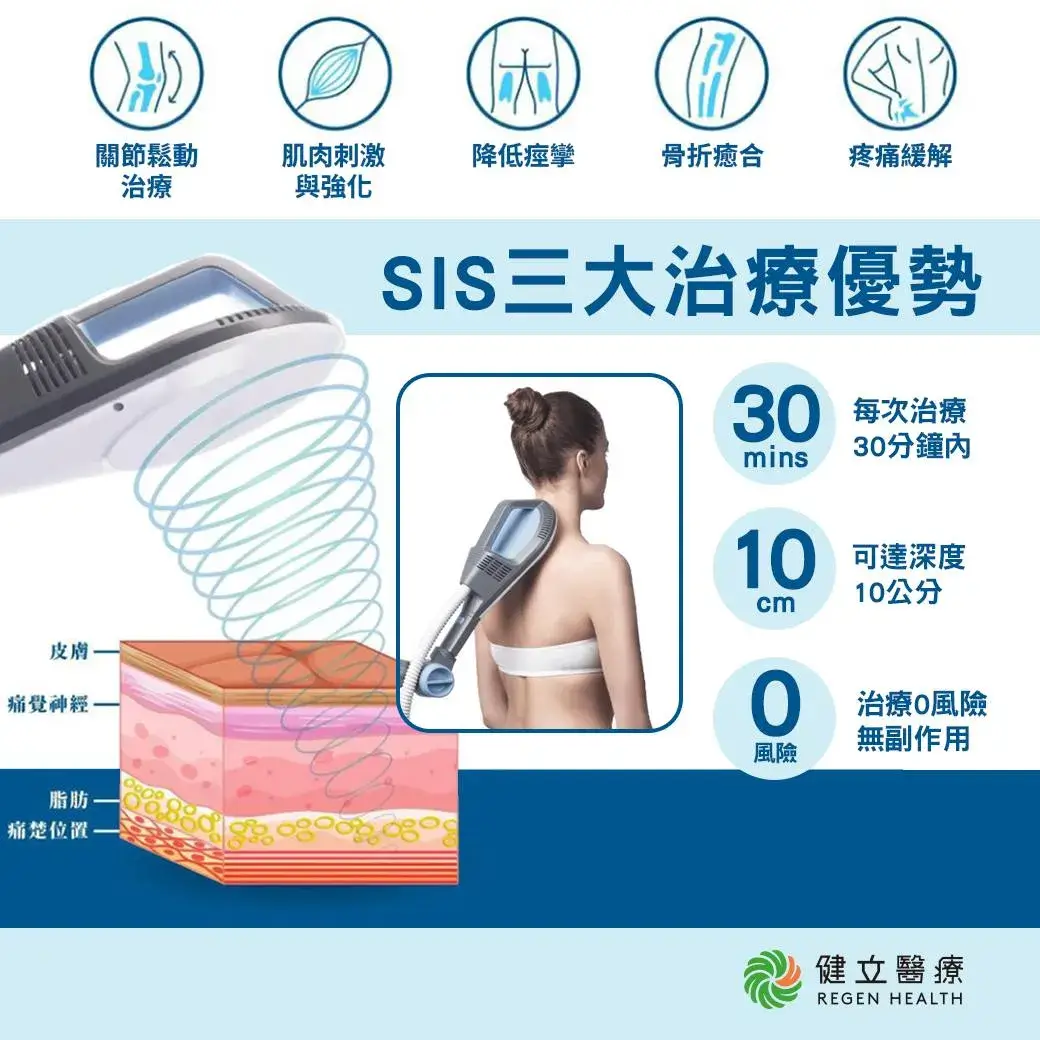
The SIS Super Inductive System (SIS) is an advanced non-invasive therapy that utilizes HIFEM (High-Intensity Focused Electromagnetic) technology. With an intensity of 2.5 Tesla (20 times that of conventional rehabilitation equipment), it penetrates 10 centimeters beneath the skin to directly depolarize deep muscles and nerves.Clinically proven to effectively relieve acute and chronic pain, relax stiff fascia, and accelerate fracture healing, the treatment is completely pain-free and non-contact, making it the pain management tool of choice for Olympic athletes.
The Scientific Principles Behind the SIS Super Magnetic Therapy Device: More Than Just Heat and Electrotherapy
Traditional rehabilitation methods such as heat therapy or electrotherapy typically only affect the superficial layers of the skin and are ineffective against deep-seated, persistent pain. SIS Super Magnetic Therapy utilizes proprietary HIFEM (High-Intensity Focused Electromagnetic Field) technology to generate a focused magnetic field of up to 2.5 T (tesla), triggering two key effects:
1. Physiological Electrical Effect (Pain Relief and Depolarization): By using a
high-intensity magnetic field to alter the electrical potential of nerve cells (depolarization), it blocks the transmission of pain signals to the brain—much like pressing the “pause button” on the pain switch. This provides significant relief for spinal nerve compression and sciatica.
2. High-Energy Magnetic Effect (Repair and Strengthening) The
magnetic field induces passive "maximum contraction and relaxation" in deep muscles. This not only improves local blood circulation but also strengthens weakened muscles and relaxes tight fascia. For incomplete fracture healing, the high-energy magnetic field can also stimulate osteoblasts to accelerate callus formation.
Why Choose SIS Super Magnetic Energy? Four Key Features and Advantages
| Key Strengths | Detailed Description |
|---|---|
| Exceptional Penetration | Reaches a treatment depth of 10 cm, targeting deep muscle groups and joints (such as the hip and spine)—a depth that traditional patch-based electrotherapy cannot reach. |
| Pain-Free and Non-Contact | Utilizes "non-contact therapy," where the probe does not need to touch the skin directly, eliminating hygiene concerns. The process is non-invasive and pain-free, with only a sensation of muscle contraction. |
| High Intensity, Fast Results | 20 times more powerful than traditional devices. A single treatment session lasts only 15–30 minutes, providing noticeable relief. |
| World-Class International Certifications | Certified by the U.S. FDA, EU CE, and Taiwan TFDA , and designated as the official equipment for national teams at the Olympics and the FIFA World Cup. |
SIS Super Magnetic Therapy’s “Five Golden Indications”
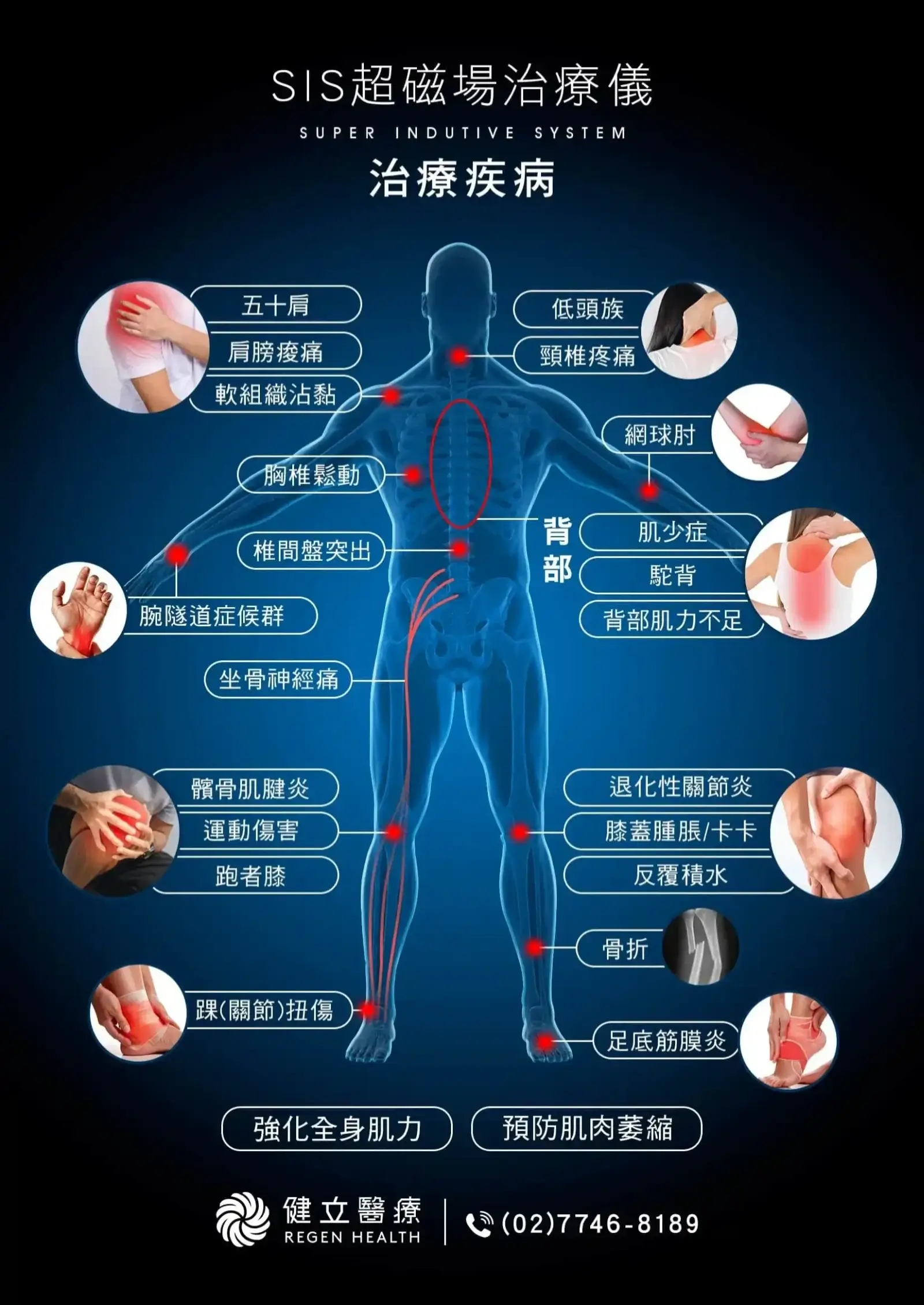
SIS not only relieves pain but also has "repair" capabilities. It is widely used in clinical practice in the following areas:
1. Muscle and fascial pain (deep relaxation)
- Symptoms: Chronic shoulder and neck stiffness, scapular pain, myofascial pain syndrome, delayed onset muscle soreness (DOMS).
- Principle: Induces rhythmic muscle contractions through magnetic fields to break up adhesions in the fascia and improve blood perfusion.
2. Joint Degeneration and Inflammation
- Symptoms: Frozen shoulder (adhesive capsulitis), osteoarthritis of the knee, hip osteoarthritis, weakness when squatting or standing.
- Principle: Increases blood circulation around the joints and strengthens the supportive muscles surrounding the joints.
3. Nerve Compression and Neuropathic Pain
- Symptoms: Sciatica, lower back pain caused by herniated discs, arm numbness and tingling due to cervical nerve compression, carpal tunnel syndrome.
- Principle: Nerve depolarization, directly blocking pain transmission pathways.
4. Tendon and Ligament Injuries (Sports Medicine)
- Symptoms: Tennis elbow, golfer’s elbow, rotator cuff tears, ankle sprains, Achilles tendinitis.
- Mechanism: Controls the inflammatory response and promotes collagen reorganization in soft tissues.
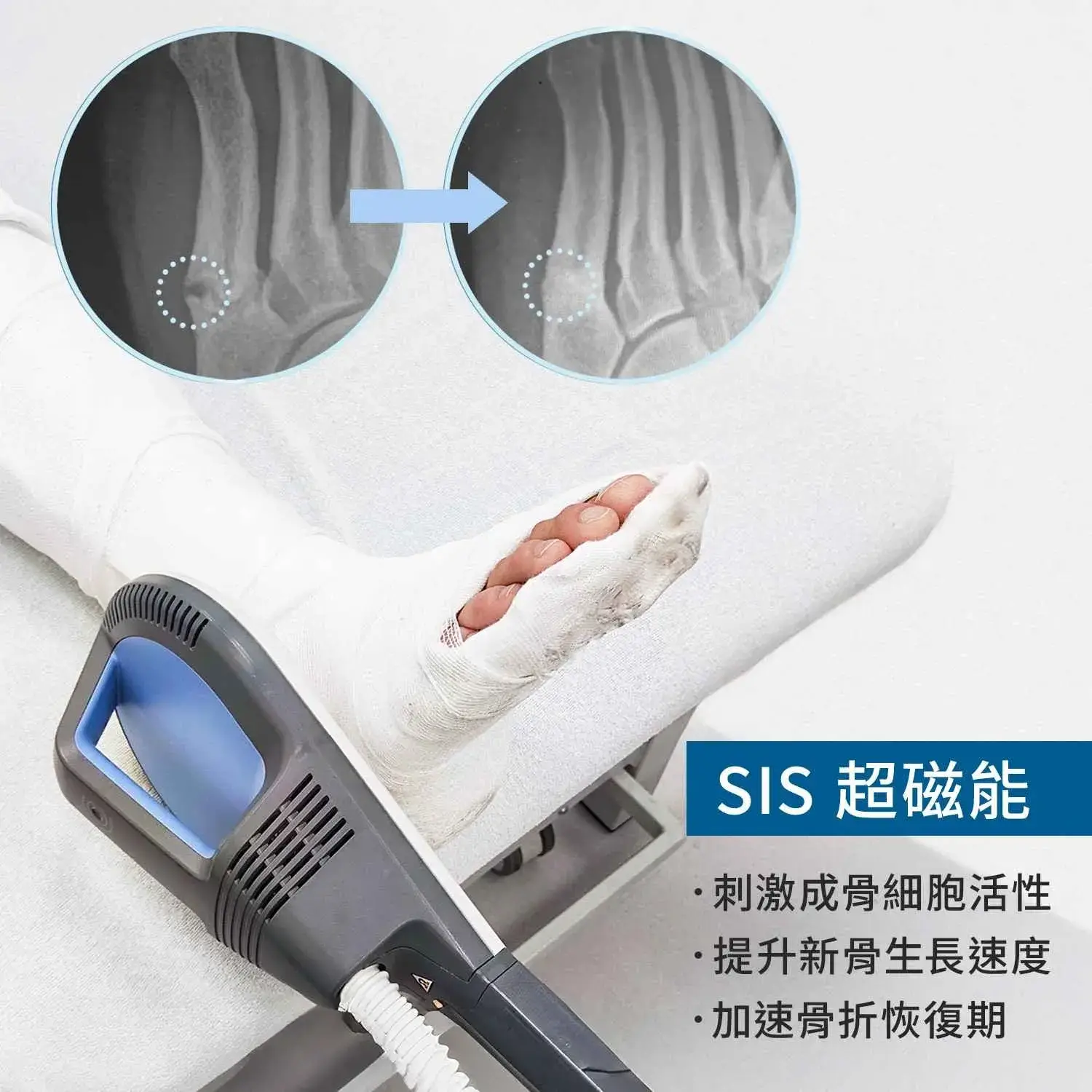
5. Accelerated Fracture Healing (Special Indications)
- Symptoms: Slow healing after fracture surgery, delayed bone union.
- Mechanism: High-intensity magnetic fields improve bone metabolism, promote calcium deposition, and stimulate callus formation. This is one of the very few devices capable of “non-invasively accelerating fracture healing.”
Who is the best candidate for SIS supermagnetic therapy?
- Office workers: "Text neck" and lower back pain caused by constantly looking down at smartphones and prolonged sitting.
- Seniors: Weakness and degeneration of the knees, spinal stiffness, and body aches caused by osteoporosis.
- Fitness Enthusiasts: Excessive muscle tightness after strength training, sports injuries, and those looking to speed up recovery to get back on the field.
- Mothers: "Mom's hand" from carrying children, and postpartum lower back and back pain.
- Post-Surgery/Fracture Patients: Reducing swelling after arthroscopy; those whose fractures are healing slower than expected.
SIS Super Magnetic Therapy FAQ
Q1: Does the SIS treatment hurt? How is it different from shockwave therapy?
It is completely painless. SIS uses magnetic fields to induce muscle contractions, which feels like someone is giving you a deep vibrating massage—it can even be somewhat comfortable. In contrast, “Extracorporeal Shock Wave Therapy (ESWT)” uses physical sound waves to impact the tissue, causing noticeable soreness. Patients who are sensitive to pain should choose SIS.
Q2: I have a pacemaker or an artificial joint. Can I undergo SIS treatment?
Absolutely not. Because SIS uses a “high-intensity magnetic field,” it can interfere with electronic devices or cause metal to heat up and shift.
Absolute contraindications: pacemakers, cochlear implants, metal implants in the treatment area (such as bone screws or artificial joints), and pregnancy.
Note: If the bone screws are made of titanium alloy (non-magnetic), a physician’s evaluation is required, but it is generally recommended to avoid that area.
Q3: Will I feel a difference after just one session? How many sessions are needed?
Clinical experience shows that approximately 80% of patients experience pain relief or muscle relaxation after the first treatment. Recommended standard course: 2–3 times per week, with a full course consisting of approximately 6–10 sessions. More sessions may be required for fracture healing or chronic adhesions.
Q4: Can SIS be combined with PRP or manual therapy?
Highly recommended. SIS can be viewed as an “accelerator.” When combined with PRP or amniotic membrane injections: SIS promotes local blood circulation, helping
growth factors diffuse and take effect within the tissue, thereby improving repair rates. When combined with manual therapy
: First using SIS to relax deep muscles allows physical therapists to perform joint mobilization with less effort and better results.
Q5: Do I need to remove my clothes for the treatment?
No. SIS features “through-clothing treatment,” as the magnetic field can penetrate clothing. You only need to change clothes if you’re wearing a thick coat or clothing with a large number of metal zippers or buttons, making it ideal for patients who value privacy.
Q6: Can I use it immediately after an injury (acute phase), or should I wait until the chronic phase?
Both are suitable.
Acute phase (redness, swelling, heat, pain): Use the low-frequency mode, which primarily provides "pain relief" and "reduces swelling.
" Chronic phase (adhesions and stiffness): Use the high-frequency mode, which primarily provides "relaxation" and "strengthening."
Q7: Are there any side effects after SIS treatment?
Very rarely. A small number of patients who are otherwise inactive may experience delayed onset muscle soreness (DOMS) the day after treatment, similar to the feeling after intense exercise. This is a normal response to forced muscle contraction and can be alleviated by drinking plenty of water and resting for about 1–2 days.
Q8: Can SIS treat "numbness" caused by nerve compression?
Yes. SIS can modulate the depolarization of compressed nerve roots, reducing excessive nerve excitability. It provides auxiliary relief for numbness in the hands and feet caused by degenerative conditions in the cervical or lumbar spine.
Q9: How is it different from traditional physical therapy methods like “interferential current” or “low-frequency therapy”?
The penetration depth and intensity are on completely different levels. Traditional
electrotherapy: Acts only 1–2 centimeters below the skin, feels prickly, and provides only temporary pain relief.
SIS Super Magnetic Therapy: Reaches a depth of 10 centimeters, with an intensity 20 times that of traditional methods, and can directly stimulate deep muscle contractions—making it a truly therapeutic device.
Q10: Is this treatment covered by national health insurance?
Currently, SIS Super Magnetic Therapy is a self-pay physical therapy service and is not covered by national health insurance. The cost per session varies depending on the treatment area and duration; we recommend consulting a specialist at the clinic for an evaluation.
Related Articles
CASE Testimonials Popular online content creator "Goodnight Old Si Ji" suffered from recurring plantar fasciitis due to prolonged standing and constant movement, with the pain becoming so severe that he could no longer put weight on his feet. Following a professional evaluation by the orth
orthopedics Orthopedic pain Ankle and sole Text description, text description, text description, text description Please enter a title here Table of Contents Does your heel hurt when you take your first steps in the morning? Watch out for plantar fasciitis: Everything you need to know about the caus