
Orthopedic Pain
Knee
Orthopedic pain
knee
Meniscus Cartilage Injury of the Knee
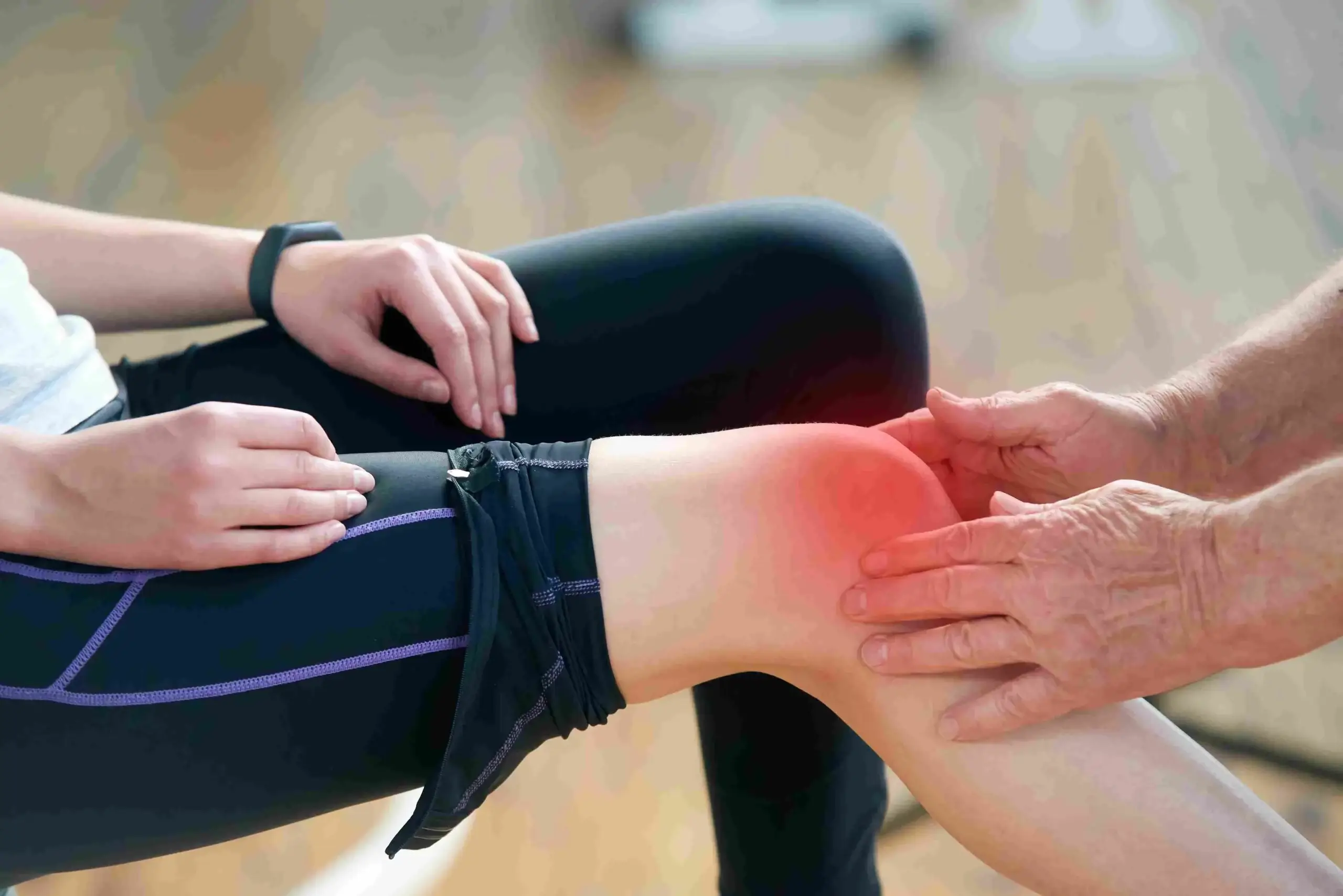
Table of Contents
Ignoring Meniscus Injuries May Lead to Degenerative Arthritis Over Time | A Comprehensive Analysis of Acute Meniscus Sprains and Degenerative Wear and Tear
The meniscus acts as a "shock-absorbing cushion" within the knee, helping to distribute pressure and stabilize the joint. If it tears due to twisting, squatting, kneeling, or sports injuries, common symptoms include pain on the inner or outer side of the knee, swelling, and a sensation of the knee catching or "locking" so that it cannot be fully straightened. Early evaluation and treatment can reduce the risk of degeneration and help restore the ability to walk and engage in physical activities.
Have you ever experienced pain on the inner or outer side of your knee, swelling, a grinding sensation when going up or down stairs, or even a sudden "locking" of the knee that prevents it from straightening? These symptoms are likely related to a "meniscus injury." The meniscus is a crucial cushioning and stabilizing structure in the knee joint. If injured and not properly treated, it may accelerate knee joint degeneration and even lead to early-onset osteoarthritis.
What is the meniscus? Why is it prone to injury?
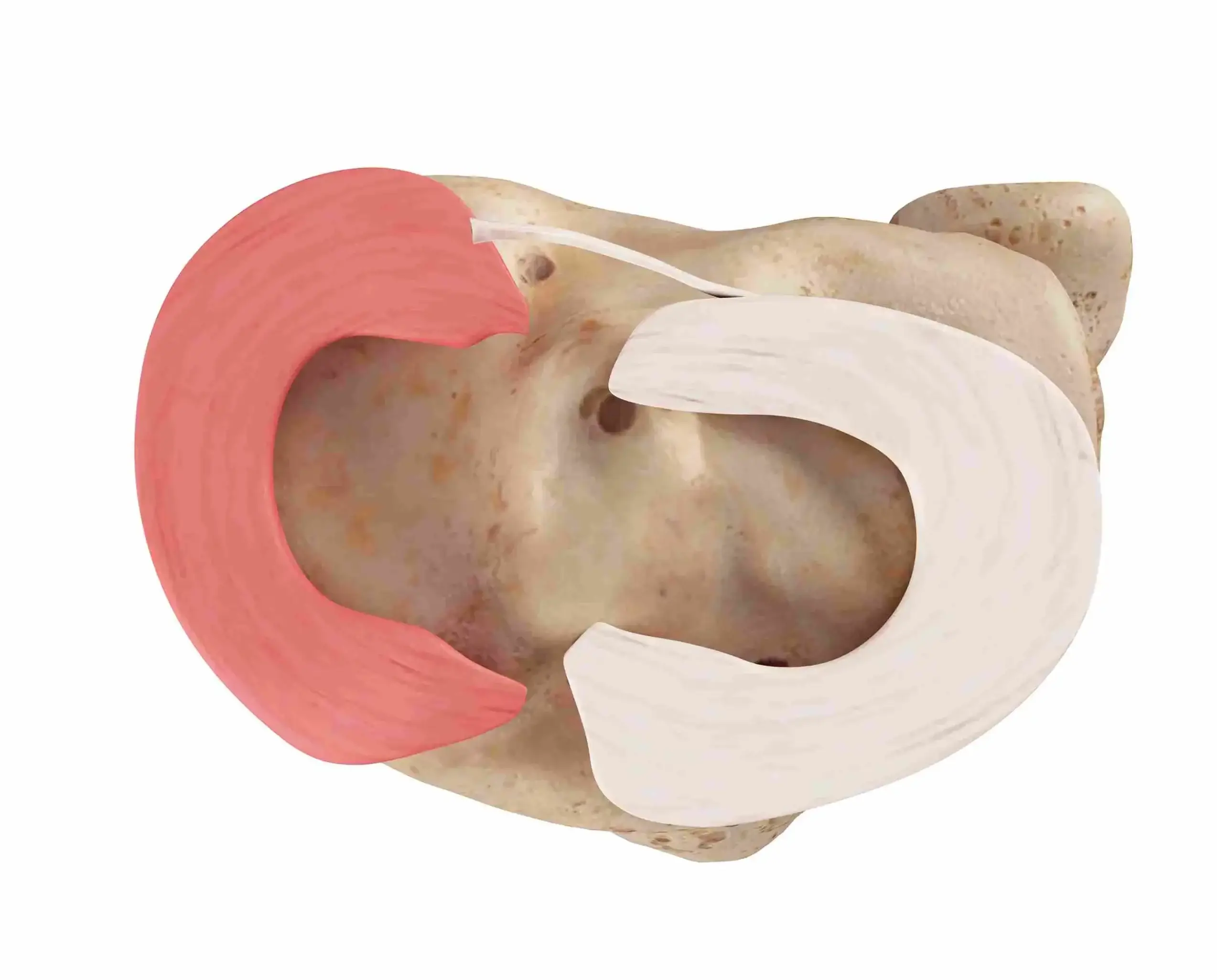
The menisci are two C-shaped pieces of fibrocartilage located within the knee joint, between the femur (thigh bone) and the tibia (shin bone). They are divided into:
- Medial meniscus
- Lateral meniscus
Functions of the meniscus
- Absorbing shock and distributing pressure
- Increasing joint stability
- Assists in smooth bending and straightening of the knee
Because the meniscus is subjected to stress whenever the knee bears weight, rotates, or during activities such as squatting and standing, and because the central zone has poor blood supply and limited repair capacity, it is prone to tears or degenerative damage following excessive twisting or long-term wear and tear.
Common Causes and Symptoms of Meniscus Injuries
I. Common Causes of Traumatic Meniscal
Injuries (Acute):
- Sudden twisting of the knee while bearing weight
- Sudden stops or changes of direction (basketball, soccer, badminton)
- Falls, car accidents, or direct impact
Typical Symptoms:
- Pain on the inner or outer side of the knee
- Swelling, joint effusion
- Knee locking (inability to fully straighten or bend the knee)
- Clicks or pops during movement
- Weakness in the leg, unsteady gait
II. Common causes of degenerative meniscus
damage (chronic):
- Aging of the meniscus leading to thinning and reduced elasticity
- No history of significant trauma; pain triggered by everyday activities such as squatting, standing, or climbing stairs
Characteristic Symptoms:
- Pain develops gradually
- Recurrent swelling and a sensation of catching or stiffness
- Often accompanied by knee osteoarthritis
Populations Prone to Meniscus Injuries
- Athletes in sports such as basketball, soccer, badminton, and tennis
- Middle-aged and older adults aged 40 and above
- Overweight and obese individuals
- Workers who frequently squat, kneel, or stand for long periods
- Individuals with congenital structural abnormalities of the knee joint
How are meniscus injuries examined and diagnosed?
The physician will make a diagnosis based on symptoms and a physical examination, supplemented by imaging studies if necessary:
- Physical examination: McMurray test, tenderness along the joint line
- X-ray: To rule out fractures and joint degeneration (the meniscus cannot be directly visualized)
- MRI (gold standard): Clearly identifies the location and type of meniscus tear
- Ultrasound: Can assist in evaluating joint effusion and surrounding soft tissues, and is used for therapeutic guidance
Prevention and Daily Care for Meniscus Injuries
- Control your weight to reduce stress on your knees
- Avoid deep squats, sitting cross-legged, and kneeling
- Warm up thoroughly before exercising and avoid sudden twisting motions
- Strengthen your quadriceps, hamstrings, and glutes
- Choose low-impact exercises (swimming, cycling, brisk walking)
- Rest and apply ice appropriately after prolonged activity
Common Treatments for Meniscus Injuries
- Conservative treatment (for most patients with mild to moderate symptoms)
- RICE principle: Rest, Ice, Compression, Elevation
- Medication: NSAIDs for anti-inflammatory and pain relief
- Physical therapy: Strength training, joint mobility exercises, proprioceptive training
- Knee braces and movement modifications
2. Surgical Treatment (Specific Cases)
Indications: Severe tears, joint locking, failure of conservative treatment
Surgical options include:
- Meniscus repair
- Partial meniscectomy
- Meniscus transplantation in specific cases
Meniscus Repair and Regeneration, and Minimally Invasive Surgery
PRP (Platelet-Rich Plasma)
- Promotes healing and reduces inflammation
- Suitable for mild to moderate meniscus injuries or as postoperative support
PRF (Platelet-Rich Fibrin)
- Longer-lasting release of growth factors
- Provides a scaffold for repair and enhances tissue regeneration
Minimally Invasive Arthroscopic Meniscus Surgery
- Suitable for larger tears, recurrent locking, or cases unresponsive to conservative treatment.
- Using only a 0.5–1 cm incision, we perform precise repairs under high-resolution imaging to preserve as much of the meniscus as possible, thereby reducing the risk of degeneration.
- Can be combined with PRP/PRF, SIS super-magnetic therapy, and rehabilitation, aiming not only to relieve pain but also to restore function and help you walk longer.
Frequently Asked Questions About Meniscus Injuries
Does a meniscus tear always require surgery?
Not necessarily; most cases can be improved through conservative treatment or PRP/PRF repair.
What happens if a meniscus tear is left untreated?
It may lead to chronic pain, knee degeneration, joint locking, and instability while walking.
Can you still exercise if you have a meniscus injury?
It is not recommended during the acute phase; during the rehabilitation phase, low-impact exercises should be performed under professional guidance.
Does PRP/PRF require surgery?
No, it can be done through outpatient injection, and it is safer when combined with ultrasound guidance.
Does SIS (Super Magnetic Energy Therapy) hurt?
Most people only feel a slight throbbing or warmth, which is comfortable and non-invasive.
How many treatments are needed for it to be effective?
Depending on the degree of injury, the common treatment is 2–3 sessions of PRP/PRF combined with SIS therapy.
How long after treatment can I walk normally?
Most patients can walk on the same day, but should avoid strenuous exercise for 1–2 weeks.
Is regenerative therapy suitable for older people?
Suitable, especially for middle-aged and elderly people who do not want or are not suitable for surgery.
When is minimally invasive arthroscopic meniscus surgery necessary?
Surgical intervention is only considered when there is a large tear in the meniscus, repeated entrapment, joint locking, or when conservative treatment or regenerative therapies such as PRP/PRF fail to improve the condition.
What are the differences between minimally invasive arthroscopic surgery and traditional open surgery?
Arthroscopic surgery requires only a small incision of 0.5–1 cm, is performed under high-resolution imaging, results in less tissue damage, less pain, a shorter recovery period, and usually does not require hospitalization.
Related Articles
orthopedics Orthopedic pain Ankle and sole Text description, text description, text description, text description Please enter a title here Table of Contents Does your heel hurt when you take your first steps in the morning? Watch out for plantar fasciitis: Everything you need to know about the caus
orthopedics Orthopedic pain knee Table of Contents What Is Osteoarthritis? Don’t Put Up With Joint Pain, Stiffness, and Cracking Any Longer: A Comprehensive Guide to Causes, Symptoms, Diagnosis, and Treatment If you experience joint pain during physical activity, stiffness after sitting for long periods, difficulty climbing stairs, joint crepitus, or even find yourself reluctant to move due to pain, these symptoms aren’t necessarily just due to the weather or aging. Clinically, these symptoms are highly consistent with osteoarthritis (OA).Osteoarthritis is not simply “inflammation,” but a continuous process of structural degeneration:
orthopedics Orthopedic pain Lower back pain, back pain Please enter a title here Table of Contents Numb Hands, Neck Pain, and Dizziness? A Comprehensive Guide to Causes, Symptoms, Treatment, and Prevention! Due to prolonged use of smartphones and computers, combined with poor posture and a sedentary
orthopedics Orthopedic pain Wrist and fingers Please enter a title here Table of Contents The Ultimate Guide to De Quervain's Tenosynovitis | Symptoms, Causes, and Treatments Explained! The medical term for "mom's hand" is De Quervain's tenosynovitis. It primarily affects th
orthopedics Orthopedic pain Wrist and fingers Please enter a title here Table of Contents Does your wrist hurt when you twist it toward your little finger? It might not be a sprain—it could be your triangular fibrocartilage complex crying out for help! The triangular fibrocartilage complex (TFCC) i
orthopedics Orthopedic pain Neck and cervical spine Text description, text description, text description, text description Lumbar disc herniation Table of Contents Don’t ignore lower back pain any longer! A herniated disc may be compressing your nerves. Will a herniated disc heal on its own? We brea
