
Medical Equipment & Technology
Integrative Medicine
instrument
EECP (External Counterpulsation)
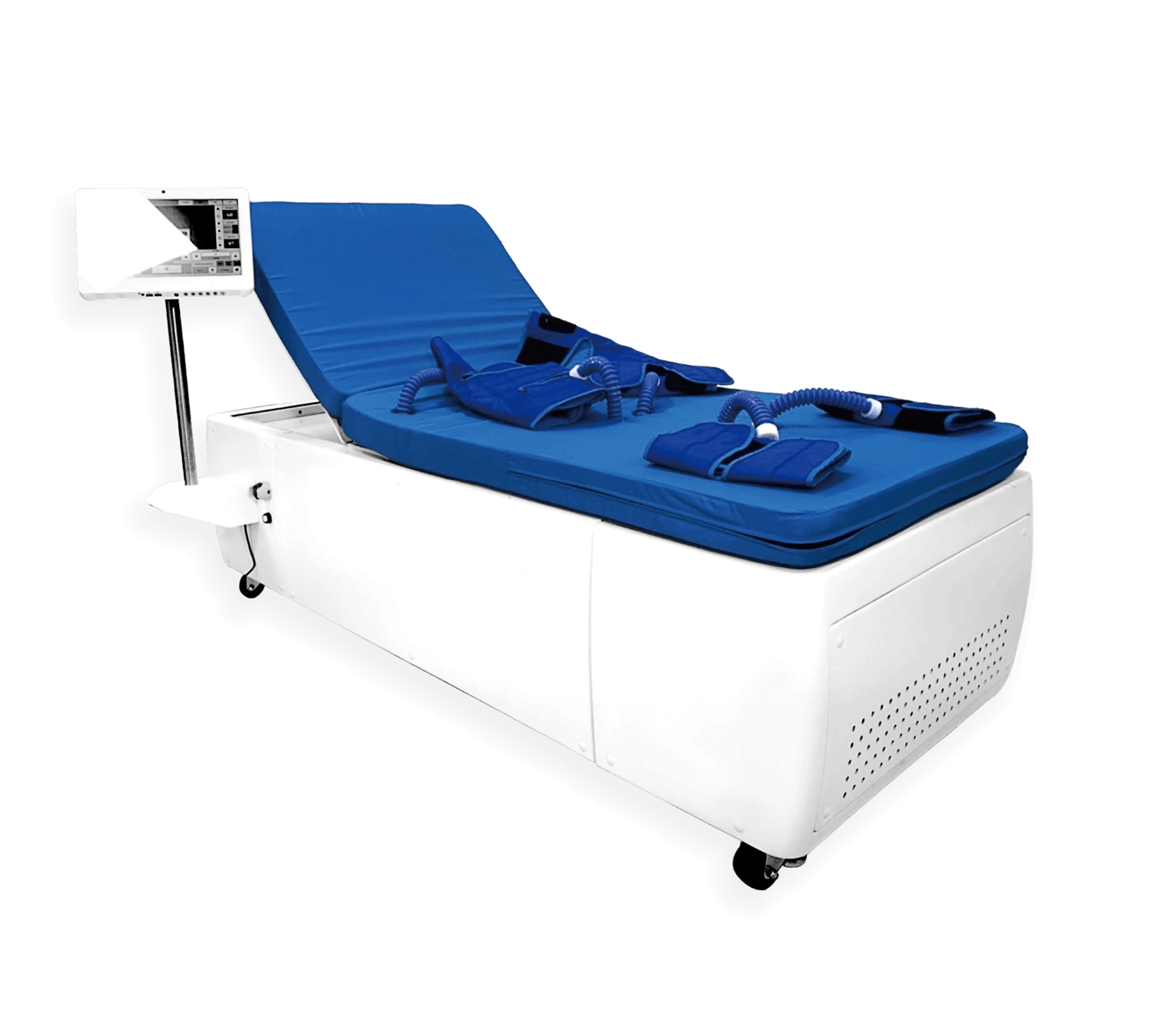
Table of Contents
EECP (External Counterpulsation) | Non-surgical, natural vascular bypass therapy to enhance cardiac circulation.
What is EECP (Extracorporeal Counterpulsation)? (Non-invasive Circulation Optimization)
**EECP (Enhanced External Counterpulsation)** is a non-invasive cardiovascular supportive therapy technology certified by the US FDA and Taiwan\\'s Ministry of Health and Welfare.
It requires no surgery or hospitalization. Through mechanical pressure synchronized with the heartbeat, it achieves the effect of \\"whole-body vascular massage.\\" You can think of it as installing an \\"external pressure motor\\" on the heart, using passive movement to reshape vascular health.
EECP Treatment Principle: A Dual Act of Mechanics and Biorepair
- Function of mechanical pumps: Reduce the burden on the heart
EECP uses airbags strapped to the lower limbs to precisely inflate and deflate in sync with the heartbeat.
- Diastolic inflation (squeezing back blood): When the heart relaxes, the bladder rapidly pressurizes from distal to proximal, squeezing blood back into the aorta, significantly increasing coronary blood flow and ensuring the myocardium receives sufficient oxygen.
- Systolic deflation (reduced resistance): When the heart is preparing to pump blood, the bladder deflates instantly to create negative pressure, which causes a sharp drop in peripheral resistance, allowing the heart to pump blood more easily and significantly reducing the heart\\'s power consumption.
- Biological angiogenesis: Establishing \\"natural bypasses\\"
Prolonged shear stress can elicit a positive response in vascular endothelial cells:
- Endothelial repair: Stimulates the secretion of nitric oxide (NO), which restores the elasticity and softens blood vessels.
- Collateral circulation establishment: Induces the release of vascular endothelial growth factor (VEGF), which grows microvessels around the blocked blood vessel, forming a \\"natural bypass\\" and restoring blood supply to the damaged area.
Cardiovascular Treatment Comparison Table: EECP vs. Stents vs. Bypass Surgery
| Comparison Item | EECP (Enhanced External Counterpulsation) | Coronary Stent Placement | Coronary Artery Bypass Grafting (CABG) |
|---|---|---|---|
| Treatment Type | Non-invasive (no incisions) | Minimally invasive procedure | Highly invasive surgery |
| Core Principle | Physical vascular stimulation: improves endothelial function, promotes angiogenesis and natural collateral circulation. | Mechanical expansion: uses a stent to reopen narrowed vessels and restore blood flow. | Vessel grafting: creates a bypass to reroute blood flow around blocked arteries. |
| Suitable Candidates | Patients with mild to moderate ischemia, those unsuitable for surgery, or individuals seeking natural therapy. | Suitable for localized vascular lesions with low surgical risk. | Suitable for patients with multi-vessel disease or complex conditions. |
| Anesthesia Requirement | No anesthesia required | Local anesthesia | General anesthesia |
| Recovery Time | No recovery time; normal activities can resume immediately after treatment. | Short (light activities can resume in about 3–7 days). | Long (requires weeks to months of hospitalization and recovery). |
| Hospitalization | No hospitalization required (outpatient procedure) | 1–3 days of hospitalization | More than 1–2 weeks of hospitalization |
Features and advantages of EECP treatment
- Extremely safe: No surgical wounds, no anesthesia risks, and no radiation burden.
- Zero recovery period: Each session lasts 1 hour, and you can immediately return to work or resume your daily activities afterward.
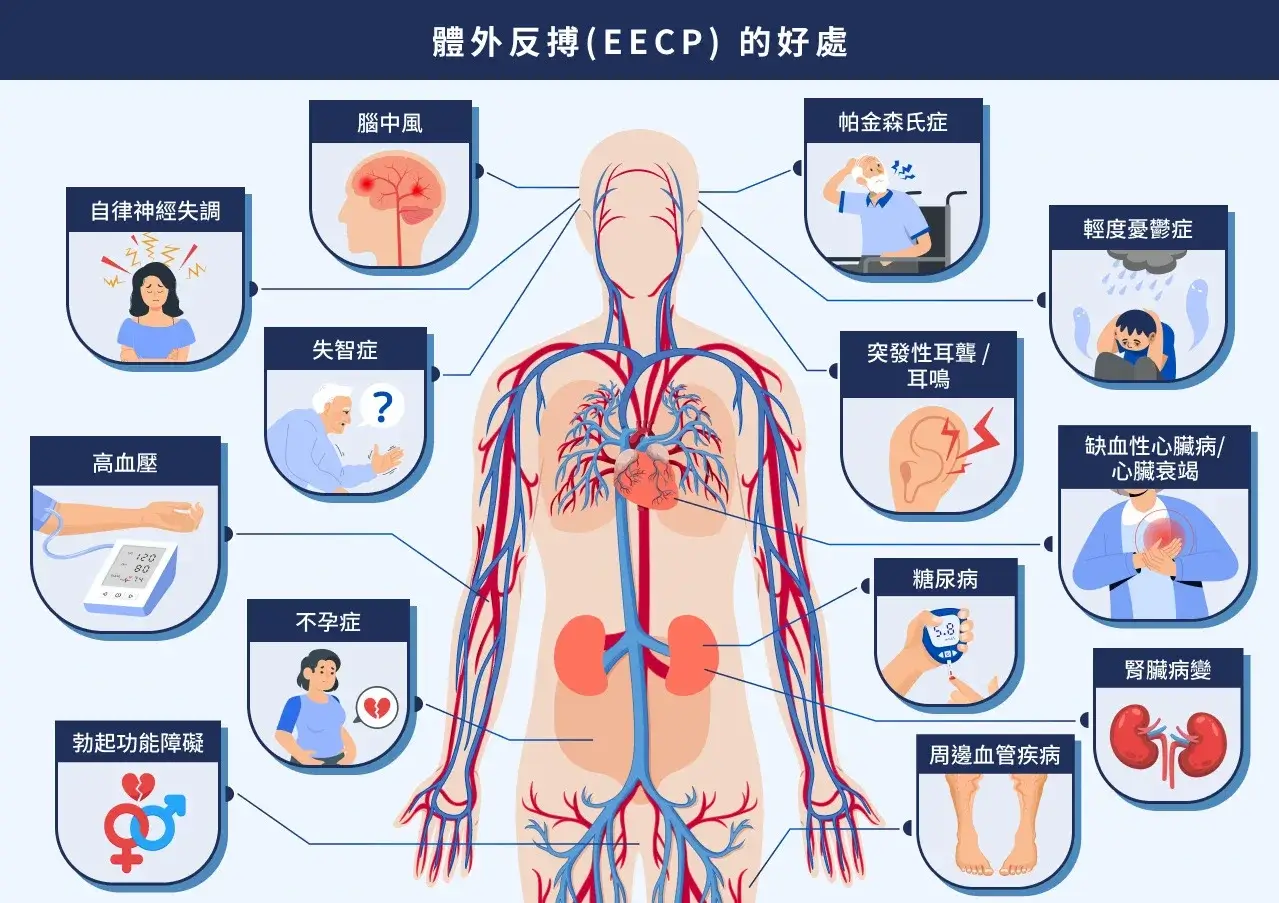
- Systemic benefits: Improved blood circulation is not limited to the heart; it also benefits the brain, kidneys, and sexual function.
- High tolerability: It is an excellent alternative for elderly patients who cannot tolerate stent surgery or bypass surgery.
Suitable groups: Who needs EECP?
- People at high risk of cardiovascular disease
- Refractory angina: Poorly controlled with medication and recurrent chest tightness.
- Heart failure: People with extremely poor physical strength, who are breathless with slight activity and suffer from chronic fatigue.
- Postoperative care: For those who have already had a stent implanted or undergone bypass surgery and want to prevent restenosis of the blood vessels.
- Improved systemic circulation and metabolism
- The \\"Three Highs\\" and Metabolic Groups: Microcirculatory disorders caused by hypertension, hyperlipidemia, and diabetes.
- Cerebrovascular health: Ischemic stroke rehabilitation, improvement of memory decline (brain fog).
- Long-term COVID-19 syndrome: Significantly improves chronic fatigue and shortness of breath that remain after infection.
- Male Energy Boost: Improves erectile dysfunction caused by vascular factors.(ED)。
Who is not suitable for EECP?
- Moderate to severe aortic valve insufficiency: may cause blood to flow back into the heart.
- Aortic aneurysm or dissecting aneurysm: Avoid the risk of pressure causing rupture.
- Deep vein thrombosis (DVT): Prevents thrombus from detaching and causing pulmonary embolism.
- Uncontrolled severe hypertension: Blood pressure higher than 180/110 mmHg.
- Other: Pregnancy, abnormal blood clotting function, frequent arrhythmias (affecting machine interpretation).
Common problems with EECP treatment
How many EECP treatments are needed for them to be effective?
The standard treatment course consists of 35 sessions. It is recommended to have 5 sessions per week, 1 hour each, for 7 consecutive weeks. Angiogenesis takes time to accumulate; a complete course of treatment is necessary to achieve structural improvement.
Will the treatment be painful? What will it feel like?
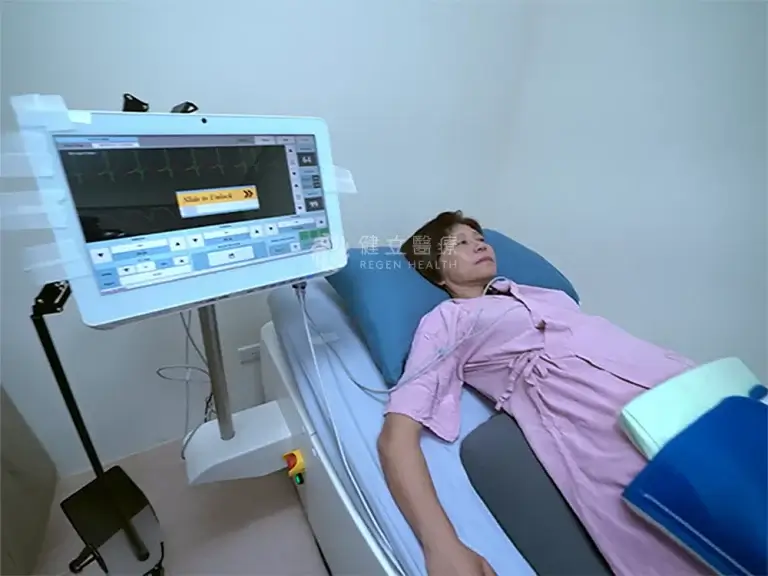
It’s completely painless. The sensation is similar to a powerful massage on your legs using a pneumatic leg massager; many patients even fall asleep during the treatment.
How long will the effect last?
After completing 35 treatment sessions, clinical studies show that the effects typically last for 1 to 3 years. The duration of the effect is highly correlated with individual diet and exercise habits.
Can I still have this done if I already have a heart stent or pacemaker implanted?
Stent implantation is highly suitable for patients as it helps prevent restenosis. Patients with pacemakers (rhythm devices) need to be evaluated by a physician to ensure that the device frequency will not be interfered with by the vibration of the balloon.
What are the differences between EECP and regular massage chairs?
EECP stands for “Medical-grade ECG Tracking System.” It precisely captures the R wave and applies jet-like pressure during the moment of diastole, a hemodynamic therapeutic effect that ordinary massage devices cannot achieve.
Can I stop taking medication after completing the EECP?
EECP is an adjunctive therapy and should not be discontinued without medical advice. However, many patients can gradually reduce their dosage after their circulation improves, subject to evaluation by their physician.
What are the side effects after treatment?
In very rare cases, people may experience slight redness of the skin and localized muscle soreness, which usually disappears naturally within a few hours.
Does health insurance cover this? Approximately how much would it cost?
Currently, health insurance does not cover this cost. A single session costs approximately NT$4,000 to NT$6,000. It is recommended to consult the clinic for special offers on a complete 35-session treatment program.
(Note: This information is for reference only. Please consult a cardiologist for an evaluation and to develop an actual treatment plan.)
Related Articles
CASE Testimonials While accompanying an elderly relative for a health checkup, Ms. Lin discovered she might have a hereditary form of hyperlipidemia. In her recent checkup, her total cholesterol level had skyrocketed to 218 mg/dL. “I didn’t have any symptoms at first—I just felt short of breath when

Regenerative Medicine Integrative Medicine instrument Please enter a title here Table of Contents MCS+ Blood Purification | Thorough Vascular Cleansing, Reducing the Risk of High Blood Pressure, High Cholesterol, and High Blood Sugar Why do modern people need blood purification? The high-pressure pa
