
Nerve Block Procedure

Regen Health
2025-11-29

[Procedure Overview] What Is a Nerve Block? A Guide to Targeted Pain Relief When Medication Fails—Without Surgery
When chronic pain severely disrupts sleep and daily life, and high doses of oral pain medication no longer provide sufficient relief, many patients feel deeply anxious, wondering, “Is surgery the only option?”
From the clinical perspective of modern pain medicine, “nerve blocks” serve as an advanced interventional treatment that bridges the gap between oral medications and surgery. When facing severe joint pain, spinal pain, or intense post-surgical discomfort—and when traditional painkillers have limited effectiveness—nerve blocks offer a precise and low-risk treatment option.
Many patients have misconceptions about the term “block,” believing it involves permanently severing or destroying nerves. In fact, the core concept of this clinical procedure is to “calm inflamed nerves.”Using advanced imaging technology, physicians precisely locate the source of pain and administer local anesthetics, small doses of anti-inflammatory medications, or apply high-frequency thermal coagulation (electrocautery) to the area surrounding the target nerve. This temporarily blocks the transmission of pain signals to the brain, buying the body valuable time for healing and rehabilitation.
Treatment Process and Benefits of Nerve Block Therapy
A nerve block is a form of "regional pain management." Modern nerve blocks are based on "evidence-based medicine" and have completely moved away from the traditional "blind" injection method relying on tactile sensation, instead utilizing high-tech image guidance to enhance safety and precision.
【Standard Treatment Procedure】
- Image Guidance: The physician uses ultrasound, X-ray (fluoroscopy), or computed tomography (CT) guidance to ensure the needle tip precisely reaches the target nerve.
- Local Injection: The injection is administered in the target area. The procedure typically requires only local anesthesia, and patients remain awake throughout.
- Observation and Discharge: The procedure takes approximately 30 minutes. Patients rest and are monitored in the hospital post-procedure and may leave if they experience no discomfort.
- Duration of Effect: Pain relief varies by individual but typically lasts from several weeks to several months (on average, about 3–6 months).
【Five Key Clinical Advantages】
1. Image-guided, precise targeting of the pain source: Unlike traditional injections, which rely solely on the physician’s tactile sense for “blind” administration, modern nerve block procedures utilize advanced ultrasound, X-ray, or computed tomography (CT) for real-time guidance throughout the procedure.
2. Free Yourself from Medication Bottles, Significantly Reducing Systemic Side Effects: Long-term use of nonsteroidal anti-inflammatory drugs (NSAIDs) or steroids can easily lead to gastric ulcers, increase the metabolic burden on the liver and kidneys, and even pose cardiovascular risks; meanwhile, potent opioid medications carry concerns regarding dizziness, constipation, and addiction.Nerve block therapy is a form of “regional drug delivery,” where the medication acts only on the local nerves, completely avoiding the systemic side effects mentioned above.
3. Minimally invasive, no surgery required, with rapid post-procedure recovery: This is an outpatient minimally invasive procedure. It requires only local anesthesia, and patients remain fully conscious throughout, completely eliminating the life-threatening risks associated with intubation and general anesthesia. The entire process typically takes only 15 to 30 minutes. Afterward, patients are observed in the clinic for one hour to ensure there are no adverse reactions before returning home; no hospital stay is required.
4. Breaking the vicious cycle of pain and restarting the golden period for rehabilitation: “Pain makes you afraid to move, and lack of movement causes further joint degeneration”—this is the vicious cycle faced by many chronic pain patients. Nerve block therapy effectively silences the pain alarm, granting patients a “pain-free golden period” lasting several months or even up to a year.
5. Dual Function of “Precise Diagnosis”: Nerve block therapy is not only a treatment but also an excellent diagnostic tool.When the human anatomy is complex (such as in cases of spinal bone spurs combined with herniated discs), and the physician cannot determine exactly which nerve is causing the pain, a nerve block can first be administered to the suspected nerve. If the patient’s pain subsides immediately after the procedure, it provides a 100% confirmation that the nerve is the “true source of pain,” offering a clear direction for subsequent long-term treatment.
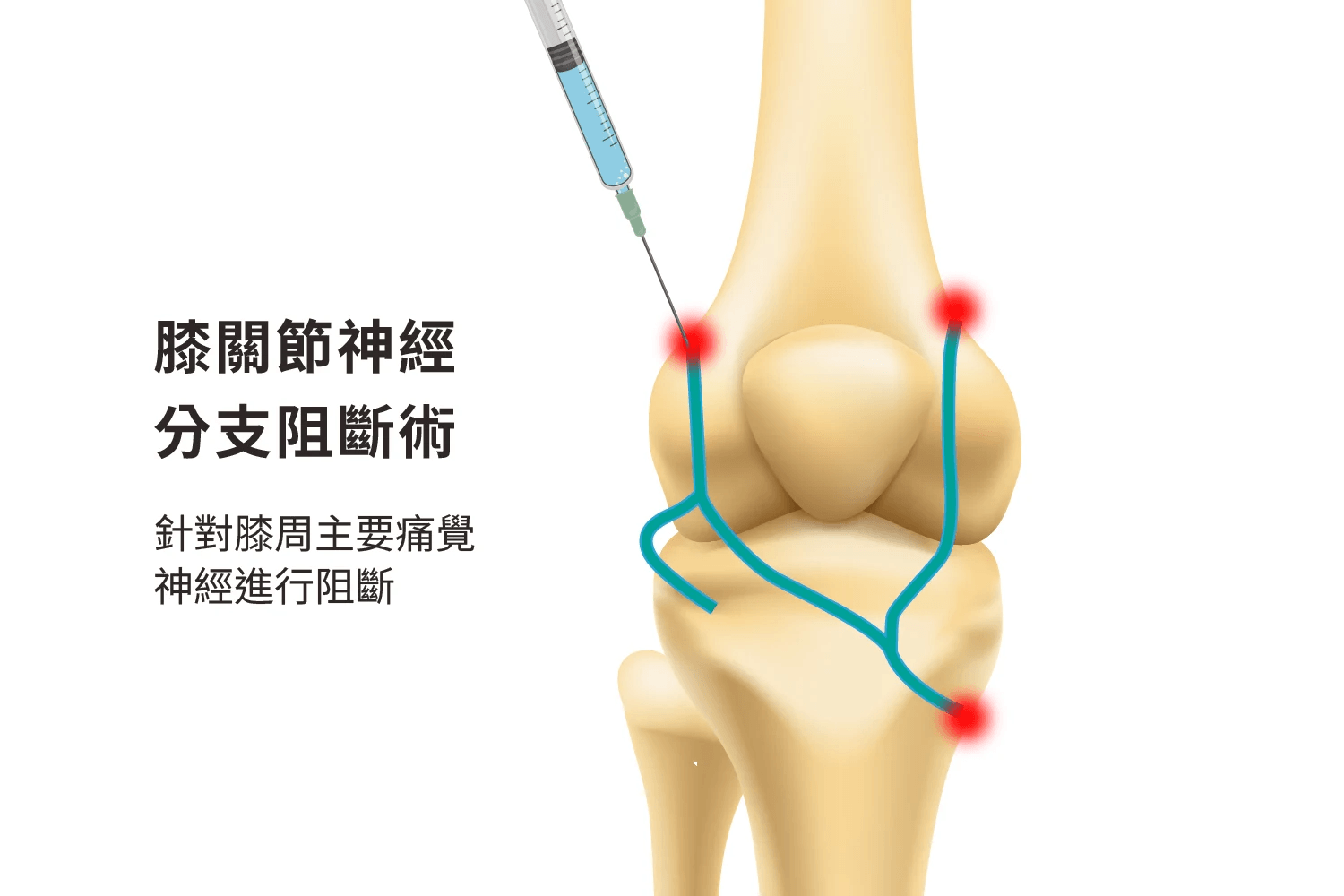
Who is a good candidate for nerve block therapy?
| Target Population | Common Indications |
|---|---|
| Patients with chronic degenerative conditions and neuropathic pain (those suffering from long-term pain for which medication has been ineffective) | • Osteoarthritis (knee and hip joints) • Sciatica and lower back pain caused by herniated discs • Frozen shoulder (adhesive capsulitis) • Postherpetic neuralgia, trigeminal neuralgia |
High-risk groups unsuitable for surgery (physical conditions preclude major surgery) | • Elderly/very elderly individuals • Individuals with impaired cardiopulmonary function • Patients with multiple chronic conditions (e.g., severe hypertension, hyperlipidemia, and hyperglycemia; kidney disease) • Patients deemed unsuitable for general anesthesia by a physician |
Patients with acute pain or postoperative pain (who do not require rapid and potent regional pain relief) | • Severe trauma or excruciating pain from fractures • Postoperative pain following various surgical procedures (e.g., joint replacement) • Childbirth (pain-free delivery) |
Patients with intractable cancer pain (where conventional pain medications have reached their limit) | • Severe pain caused by nerve compression from advanced tumors • Cancer-related pain in the pelvic region, abdomen, or lower limbs |
Clinical evidence from international medical journals on nerve block procedures over the past decade
Nerve blocks are widely used for acute postoperative pain, chronic degenerative pain, and intractable neuropathic pain. According to high-quality literature (Level 1 systematic reviews and Level 2 randomized controlled trials) indexed in PubMed over the past 10 years, their efficacy is well-supported by scientific evidence:
- Degenerative Knee Osteoarthritis (Knee OA): Medical literature indicates that image-guided knee nerve blocks can significantly reduce pain. When combined with radiofrequency ablation (RFA), up to 51%–74% of patients experience a reduction in pain of more than 50% at 6 months post-procedure, a success rate far higher than that of traditional intra-articular injections.
- Chronic Lower Back Pain (Spinal Pain): Studies on interventional treatments for spinal nerves show that approximately 64%–65% of patients achieve significant pain relief 6 to 12 months post-procedure, with substantial improvements in the Office of Disability Index (ODI).
- Intractable neuropathic pain: When applied to deep-seated neuropathic pain such as trigeminal neuralgia, the success rate for pain relief after the procedure can reach 80%, with an extremely low incidence of complications.
Risks and Possible Side Effects of Nerve Block
Most side effects are mild and temporary, including:
- Mild soreness or bruising at the injection site
- Temporary numbness or weakness in the lower limbs (resolves within a few hours)
- If steroids are used, they may cause a temporary rise in blood sugar (diabetics should take note)
Rare but serious complications include:
- Local infection
- Local anesthetic toxicity (if accidentally injected into a blood vessel)
- Nerve damage (extremely rare)
- Temporary numbness in the treated area following radiofrequency ablation
⚠️※If you are taking anticoagulants or have a bleeding disorder, inform your doctor before the procedure and discontinue the medication as directed by your doctor before undergoing the procedure to avoid complications related to bleeding.
Post-Treatment Guidelines for Nerve Block Procedures
- Avoid driving, riding a bike, or lifting heavy objects on the day of the procedure to prevent numbness and falls.
- Keep the injection site dry and avoid taking baths or soaking in hot springs for 24 hours.
- If you experience severe weakness in the lower limbs, fever, redness, swelling, or severe pain, return to the hospital immediately.
- Diabetic patients should monitor their blood sugar levels.
- Once pain subsides, engage in physical therapy or low-intensity exercise to maintain joint function.
Nerve Block: "Precision Pain Relief" Targeting the Source of Pain
Nerve block therapy is more than just a "pain-relieving injection." Through a doctor’s professional judgment and image guidance, it precisely locates the nerve responsible for the pain and directly blocks the pain pathway, resulting in more effective and long-lasting pain relief. For patients with osteoarthritis or those recovering from surgery, nerve block therapy offers a safe, effective, and repeatable new option for pain management, helping you regain your freedom of movement and improve your quality of life.
Nerve Block FAQ
Q1: Does a nerve block cut the nerve or cause paralysis?
No. It uses medication or physical heat to "temporarily block the transmission of pain signals" in the nerves. It is not a surgical procedure that cuts the nerves, so it will not cause permanent nerve damage or paralysis of the lower body.
Q2: Will the pain go away after treatment? How long do the effects last?
According to clinical data, approximately 60% to 75% of patients experience a reduction in pain of more than 50%. The effects of medication-based blocks generally last from several weeks to several months; if radiofrequency ablation (RFA) is used, the effects typically last from 6 months to over a year.
Q3: Is the nerve block procedure painful?
During the procedure, the physician will first administer local anesthesia, so most patients will only feel a mild sensation of soreness or a brief, momentary sting when the needle is inserted. There will be no unbearable, severe pain.
Q4: Is this treatment safer than taking pain medication long-term?
Yes, it carries a lower risk of systemic side effects. The medication acts directly on the local nerves, significantly reducing the risk of gastric ulcers or strain on the liver and kidneys associated with long-term oral medication. Additionally, with ultrasound guidance, the risk of accidental vascular injury is virtually eliminated.
Q5: Can I ride a bike or drive myself home after the treatment?
This is strongly discouraged. The local anesthetic may cause temporary numbness or mild weakness in the limbs after the procedure. To prevent falls or traffic accidents, please arrange for a family member or friend to pick you up on the day of treatment.
Q6: Can a nerve block cure my knee degeneration or bone spurs?
It cannot alter existing degenerative bone structures. Its core benefit is to “turn off the pain alarm,” breaking the vicious cycle of pain. The true long-term solution is to actively engage in physical therapy during the period when you are pain-free (while the medication is effective) to strengthen the surrounding muscles and stabilize the joint.
Q7: I regularly take anticoagulants (such as aspirin) to prevent strokes. Can I undergo this treatment?
You must inform your doctor in advance. Taking anticoagulants increases the risk of bleeding from deep injections. Your doctor will assess your cardiovascular condition to determine whether you need to stop taking the medication for a few days or switch to an alternative. Additionally, if you have diabetes, you must strictly control your blood sugar to prevent infection.
Q8: If the pain recurs, can nerve block procedures be performed frequently?
If the injected medication contains “steroids,” to avoid local tissue atrophy, it is generally recommended not to have more than 4 injections in the same area within a year. If radiofrequency ablation is used, the frequency will be lower due to its longer duration of action; the specific frequency should be professionally assessed by your doctor based on the nerve’s recovery status.
Related Articles

CASE Testimonials What Can Be Done About Recurrent Knee Pain Due to Degenerative Conditions? For many middle-aged and older adults, degenerative knee conditions often lead to a sharp decline in quality of life. Mr. Wu, an avid cyclist, has been suffering from recurring knee pain for over three month

orthopedics Orthopedic pain Neck and cervical spine Text description, text description, text description, text description Lumbar disc herniation Table of Contents Don’t ignore lower back pain any longer! A herniated disc may be compressing your nerves. Will a herniated disc heal on its own? We brea
