
Orthopedic Pain
Wrist & Fingers
Orthopedic pain
Wrist and fingers
De Quervain’s Tenosynovitis
Table of Contents
The Ultimate Guide to De Quervain's Tenosynovitis | Symptoms, Causes, and Treatments Explained!
The medical term for "mom's hand" is De Quervain's tenosynovitis. It primarily affects the two tendons on the thumb side of the wrist that are responsible for extending and abducting the thumb. When the tendon sheaths become narrowed and inflamed, it causes pain, swelling, and a sensation of catching or snapping.
"De Quervain’s Tenosynovitis" is a common hand pain condition that many people have heard of, but it is not exclusive to mothers. Whether you are a new mother, an office worker, a heavy smartphone user, a homemaker, a factory worker, or even a sports enthusiast, you may develop De Quervain’s Tenosynovitis due to repetitive use of the thumb and wrist.
What is "mom's hand"?
"Mommy's Hand" is a condition characterized by inflammation of the tendons and tendon sheaths on the thumb side of the wrist. It is commonly referred to as "Mommy's Hand
" because it frequently affects new mothers who repeatedly perform tasks such as holding their babies, breastfeeding, and changing diapers, compounded by hormonal changes that cause tissue laxity.In fact, anyone who repeatedly grips, twists, lifts heavy objects, or uses a smartphone or computer mouse for extended periods is at risk of developing de Quervain's tenosynovitis.
Main Causes of "Mommy Wrist"
De Quervain’s tenosynovitis is typically not caused by a single factor, but rather by a combination of factors, including:
1. Overuse and repetitive motions—repeatedly bending and extending the thumb and wrist, such as when holding a baby, using a cell phone, typing, wringing out a towel, or lifting heavy objects—which places prolonged pressure on the tendons and leads to inflammation of the tendon sheath.
2. Narrowing of the tendon sheath – The passage through which the thumb extensor (short thumb extensor) and abductor (long thumb abductor) tendons pass narrows due to prolonged pressure, causing restricted tendon gliding, synovial swelling, and fibrosis.
3. Postpartum hormonal changes—Hormonal influences during pregnancy and after childbirth cause connective tissue to become more lax and prone to inflammation. Combined with the physical strain on the hands from caring for an infant, this leads to a high incidence of “mommy thumb.”
4. Poor posture—For example, excessive wrist flexion when holding an infant or excessive thumb abduction when lifting objects.
5. Age and Degeneration—Individuals aged 40–60 are more prone to inflammation due to cumulative strain, as tissue elasticity decreases with age.
6. Other Factors—Acute trauma, prolonged static postures, and systemic diseases can all lead to tenosynovitis.
Common Symptoms of "Mommy Wrist"
Typical symptoms of de Quervain's tenosynovitis include:
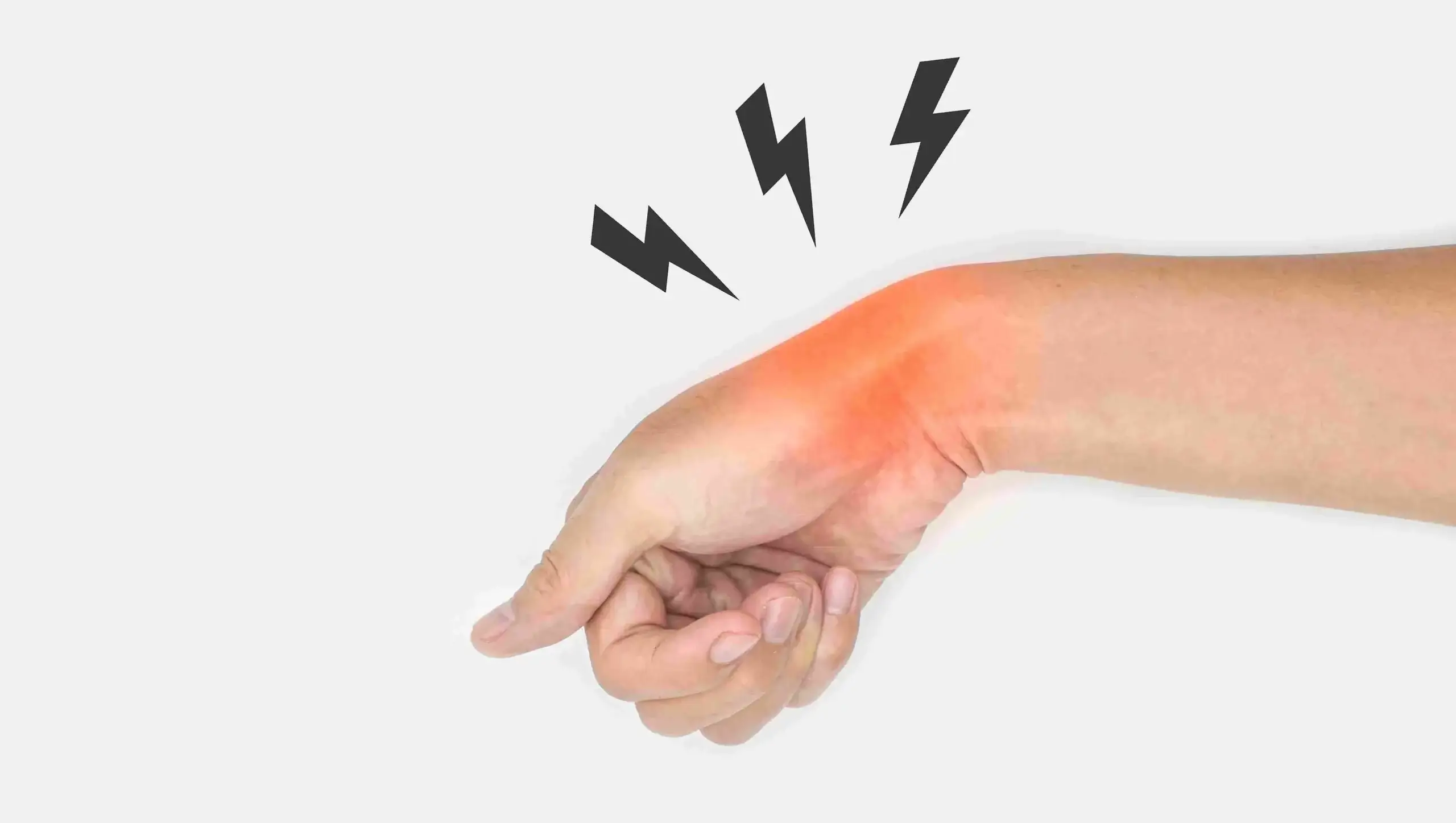
✔ Location of pain—the wrist near the thumb (radial side); the pain may radiate to the thumb or forearm.
✔ Nature of pain—pain is most noticeable when gripping, twisting, or extending the thumb
- Pain is more severe upon waking in the morning
- Occasional "clicking" or "popping" sounds
✔ Other symptoms
- Weakness in the thumb and reduced grip strength
- Localized swelling and tenderness
- Limited movement of the wrist and thumb
✔ Self-test: Finkelstein Test—Curl your thumb into your palm → Tilt your wrist toward
your little finger. If you experience severe pain, it is highly likely that you have de Quervain's tenosynovitis.
Groups Prone to "Mommy Wrist"
High-risk groups include:
- Women aged 30–50
- New mothers
- People who type or use a mouse for extended periods
- Food service industry (carrying trays)
- People who perform repetitive household tasks (wringing out towels, doing laundry)
- Frequent smartphone users (scrolling with thumbs)
- Athletes (racket sports, throwing events)
How can you prevent "mom's hand"?
● Avoid repetitive motions for long
periods of time ● Keep your wrists
straight when holding a child ● Use protective gear to
reduce strain ● Stretch your thumbs and
wrists regularly ● Choose ergonomic tools (mouse, keyboard)
● Apply ice during the acute phase and heat during
the chronic phase ● Strengthen your hand muscles through exercise If symptoms
recur or continue to worsen, be sure to seek medical evaluation as soon as possible.
Common Treatments for De Quervain's Tenosynovitis
1. Conservative Treatment: The First-Line Non-Surgical Option In the
early stages, symptoms of de Quervain’s tenosynovitis can often be managed through conservative methods, making this the preferred choice for most people.
● Braces or splints—These immobilize the wrist and thumb to prevent improper use, reduce friction and inflammation in the tendon sheath, and allow the tendons to rest.
● Physical therapy – Professional therapists perform tendon stretches, wrist mobility exercises, and soft tissue release to help alleviate stiffness and pain.
● Injections (effective in the early stages) – Studies indicate that approximately 70% of patients experience significant relief from local injections administered early in the course of the condition. However, please note: This is not suitable for everyone and should only be performed after a physician has assessed the location and severity of the condition.
2. Traditional Injections vs. Regenerative Medicine Proliferation Therapies (PRP / PRF)
● Steroid Injections (Traditional Approach) – Rapidly reduce inflammation and relieve pain, suitable for short-term relief. However, potential side effects include: tendon fragility, increased risk of rupture, skin thinning, and the appearance of white patches. Long-term use may hinder tissue repair → Therefore, this is not suitable as a treatment for long-term or repeated use.
● Regenerative Therapy (PRP / PRF / Glucose-Enhanced Regeneration) – Emphasizes promoting true repair of tendon and tendon sheath tissues, not merely pain relief.
PRP: Injection of highly concentrated platelets to activate repair
mechanisms PRF: High-fibrin structure that enhances the stability and repair
capacity of growth factors High-concentration glucose regeneration: Stimulates tissue strengthening, improves laxity and pain
→ Suitable for chronic, recurrent cases, or those with limited response to steroid treatment.
3. Surgical Treatment: An effective solution when conservative treatment fails—surgery should be considered if pain continues to worsen, grip strength decreases, or mobility is severely limited. Due to anatomical variability (such as multiple tendons or additional tendon sheath compartments), conservative treatment often cannot achieve complete success; in such cases, surgery can thoroughly resolve the problem of tendon sheath stenosis.
Minimally Invasive De Quervain’s Tenosynovitis Release (completed in 15–30 minutes) involves making a small incision under local anesthesia. By carefully avoiding nerves and blood vessels, the narrowed tendon sheath is released, allowing the tendon to glide smoothly again.
● Surgical Features
- Small incision, minimal scarring
- Rapid recovery; most patients can return to daily activities within a few days
- Minimal postoperative pain and low need for pain medication
- Low risk, significantly reducing the risk of nerve and soft tissue injury
→ A long-lasting and safe option for those who have not responded to conservative treatments, experience recurrent pain, or whose daily lives are affected.
Common Questions About "Mommy Wrist"
Will my mother’s hand heal on its own?
Mild cases may be relieved with rest and reduced use, but most will recur.
Simply relying on endurance and applying ointments often leads to chronic inflammation; it is recommended to seek medical evaluation and treatment as soon as possible.
Should I apply ice or heat during the acute phase?
- Acute phase (significant redness, swelling, heat, and pain): Apply ice for approximately 10–15 minutes each time.
- Chronic phase (ache, tightness, and stiffness): Apply heat to help relax and promote circulation.
Can a mother massage her own hands?
- Acute phase: Self-massage is not recommended, as it may worsen the inflammation.
- After pain relief: Under the guidance of a physical therapist or doctor, perform gentle stretching and relaxation exercises to avoid “massaging to make it more painful.”
How long does it usually take for a mother’s thumb to heal?
- Mild: Approximately 2–6 weeks
- Moderate: Approximately 1–3 months
- Chronic or severe: May require longer treatment, possibly combined with regenerative therapy or surgery, and rehabilitation.
How can we prevent mommy’s thumb from developing?
The three most important things:
1) Correct posture: Keep your wrists as straight as possible when holding a child or lifting objects.
2) Muscle strength training: Strengthen the muscles around your forearm, wrist, and thumb.
3) Avoid repetitive movements for extended periods: Remember to rest your hands in between movements and avoid continuously performing the same exerting action.
What treatment options are available for mommy’s thumb?
Treatment will be adjusted according to the severity and duration of inflammation, generally stratified as follows:
Conservative treatment: Reduced use, postural adjustments, bracing, and application of heat and ice.
Physical therapy: Deep soft tissue relaxation, stretching and muscle strengthening exercises, ultrasound/electrotherapy, etc.
Medications and injections: Oral anti-inflammatory analgesics, and cautious use of topical steroids when necessary.
Regenerative medicine: Such as PRP/PRF injections, promoting tendon and tendon sheath repair, suitable for chronic or recurrent cases. [Reverse link]
Other adjunctive therapies: Such as SIS super-magnetic energy, a non-invasive method to help relax fascia and promote repair. [Reverse link]
Surgery: In cases of severe stenosis where conservative treatment is ineffective, surgery is performed to release space in the tendon sheath, followed by postoperative rehabilitation.
In what situations should you see a doctor as soon as possible if you have “mommy’s thumb”?
Situations where prompt medical attention is recommended include:
Pain lasting more than 2–4 weeks without significant improvement
Frequency such as dropping objects or significant weakness
Nighttime pain affecting sleep
Extreme pain making it impossible to hold a child or do housework. The earlier the treatment, the simpler the procedure and the faster the recovery.
Will steroid injections for treating maternal hand injury damage tendons?
Infrequent injections, appropriate dosages, and injections at the correct location are generally safe and effective.
However, frequent injections in a short period, excessive dosages, or inaccurate injection sites can indeed increase the risk of tendon weakening or rupture. Therefore:
- Injections must be administered by a qualified physician familiar with anatomy and ultrasound guidance
- It is not recommended to request continuous injections on your own. You should fully discuss alternative or advanced treatments (such as PRP/PRF) with your physician.
Related Articles
CASE Testimonials What Can Be Done About Recurrent Knee Pain Due to Degenerative Conditions? For many middle-aged and older adults, degenerative knee conditions often lead to a sharp decline in quality of life. Mr. Wu, an avid cyclist, has been suffering from recurring knee pain for over three month
orthopedics Orthopedic pain Wrist and fingers Please enter a title here Table of Contents "The Complete Guide to Carpal Tunnel Syndrome: From Causes and Symptoms to High-Risk Groups—Uncover the Truth Behind Hand Numbness!" Do you experience numbness in your hands, nighttime tingling, or fi
