No Hospital Stay Required! The Complete Guide to BMAC Autologous Bone Marrow Concentrate Injection Therapy
When traditional regenerative therapies or hyaluronic acid fail to address severe joint degeneration, BMAC (Bone Marrow Aspirate Concentrate) offers a more advanced option. This is an advanced regenerative therapy that utilizes autologous mesenchymal stem cells (MSCs) for tissue repair, providing precise and long-lasting treatment for chronic pain and tissue damage.
What is BMAC (Bone Marrow Aspiration Concentrate)?
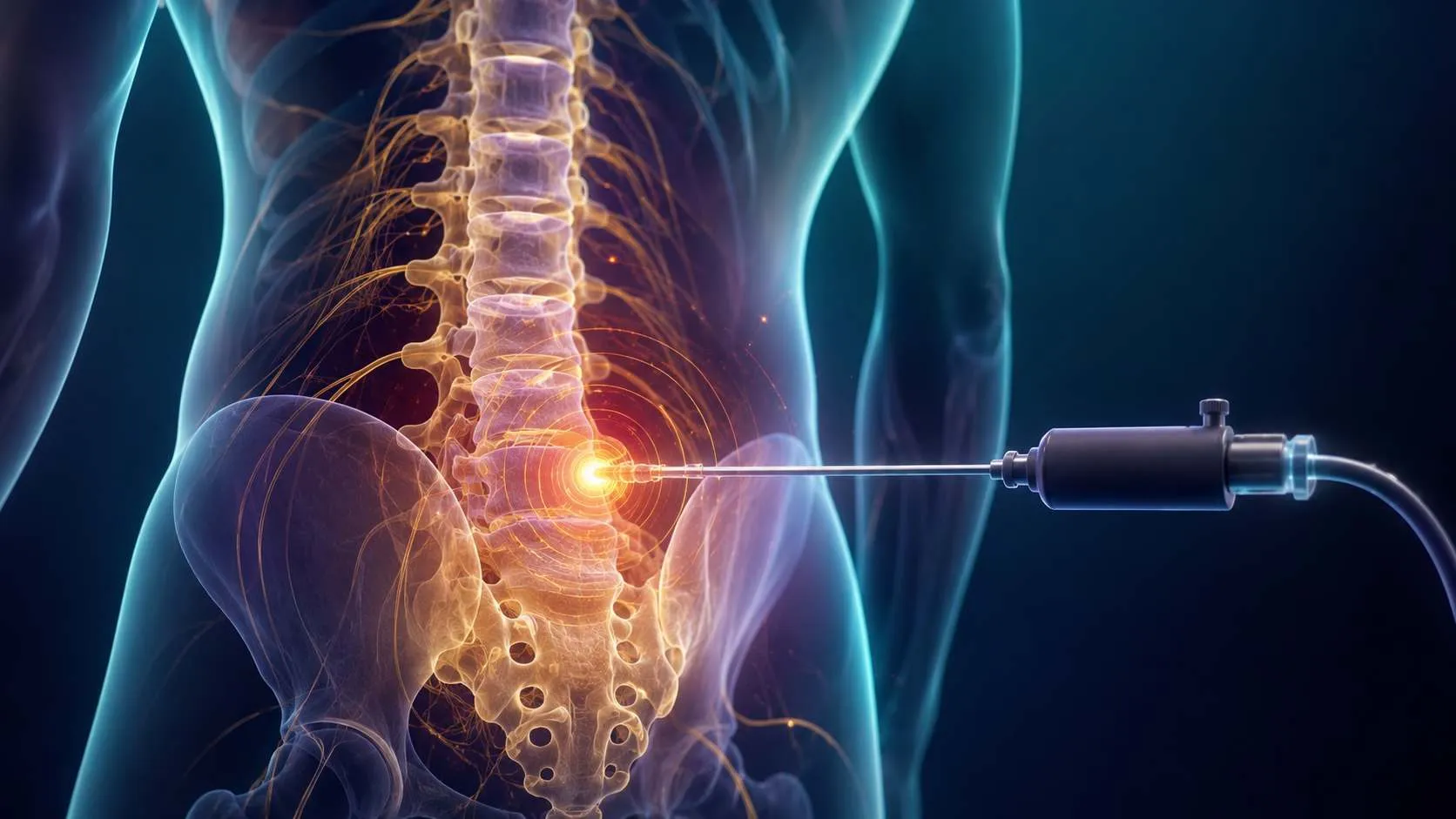
BMAC is a biological agent produced by extracting a small amount of bone marrow from the patient’s own pelvis (iliac crest) and concentrating it using specialized centrifugation techniques.
Key Components and Repair Mechanism
- Mesenchymal Stem Cells (MSCs): Possess the ability to differentiate into various tissues such as cartilage, tendons, and bone, promoting true tissue regeneration.
- Growth Factors and Bioactive Substances: Including PDGF, TGF-β, and others, which activate repair mechanisms.
- Anti-inflammatory protein (IL-1RN): Effectively modulates inflammatory responses to create an environment conducive to repair.
Orthopedic Specialist Explains: Dispelling the Fear of "Bone Marrow Aspiration"
Many patients are afraid of "bone marrow aspiration." In fact, the BMAC procedure is safe and straightforward; it can be completed in less than half an hour, and does not require hospitalization or general anesthesia.
Bone marrow aspiration is completely different from the commonly referred to “spinal tap” (lumbar puncture). The aspiration site is the hard bone of the pelvis (the ilium), so it does not come into contact with the spinal cord or nerves, eliminating the risk of lower body paralysis. Because the source is purely autologous, the risk of rejection and infection is extremely low.
Procedure for Bone Marrow Concentrate Injection Therapy: Minimally invasive outpatient procedure with a quick return home
Many patients are afraid of "bone marrow aspiration." In fact, the BMAC procedure is safe and straightforward; it can be completed in less than half an hour, and does not require hospitalization or general anesthesia.
Bone marrow aspiration is completely different from the commonly referred to “spinal tap” (lumbar puncture). The aspiration site is the hard bone of the pelvis (the ilium), so it does not come into contact with the spinal cord or nerves, eliminating the risk of lower body paralysis. Because the source is purely autologous, the risk of rejection and infection is extremely low.
The entire procedure usually takes 30 to 60 minutes and does not require an overnight hospital stay:
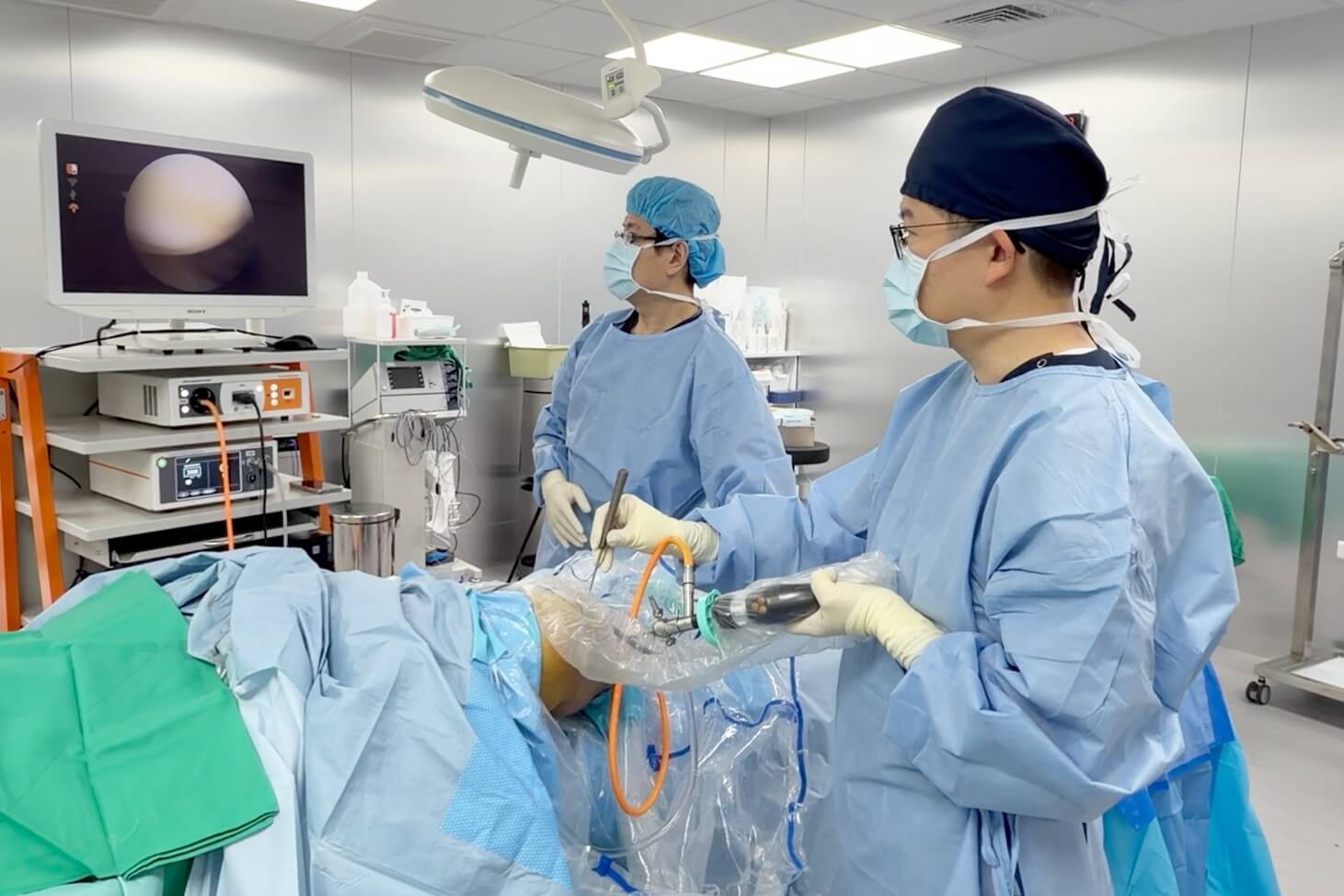
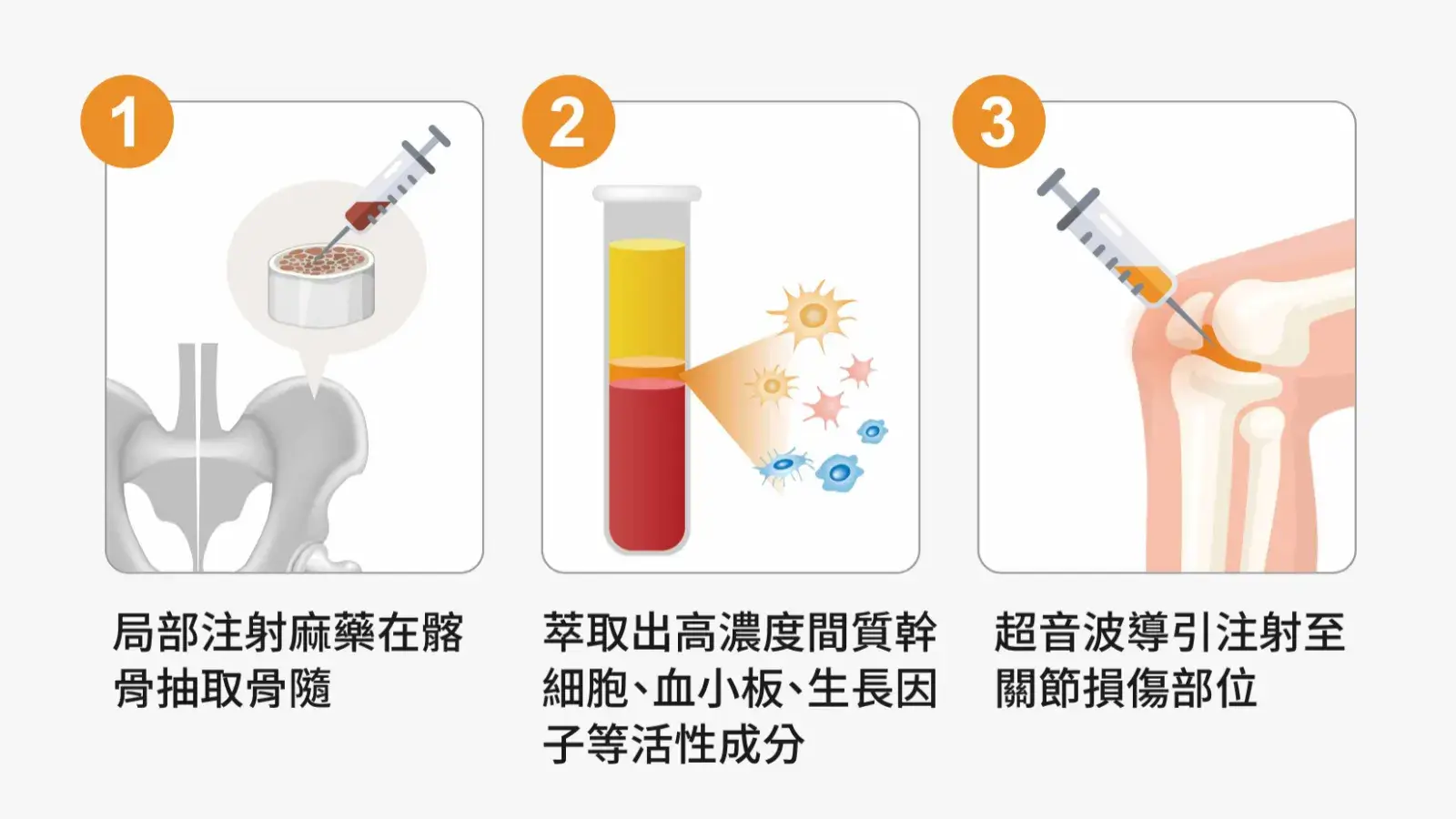
- Bone Marrow Harvesting: Under local anesthesia, a small amount of bone marrow fluid is extracted from the iliac crest. The procedure is safe and causes minimal discomfort.
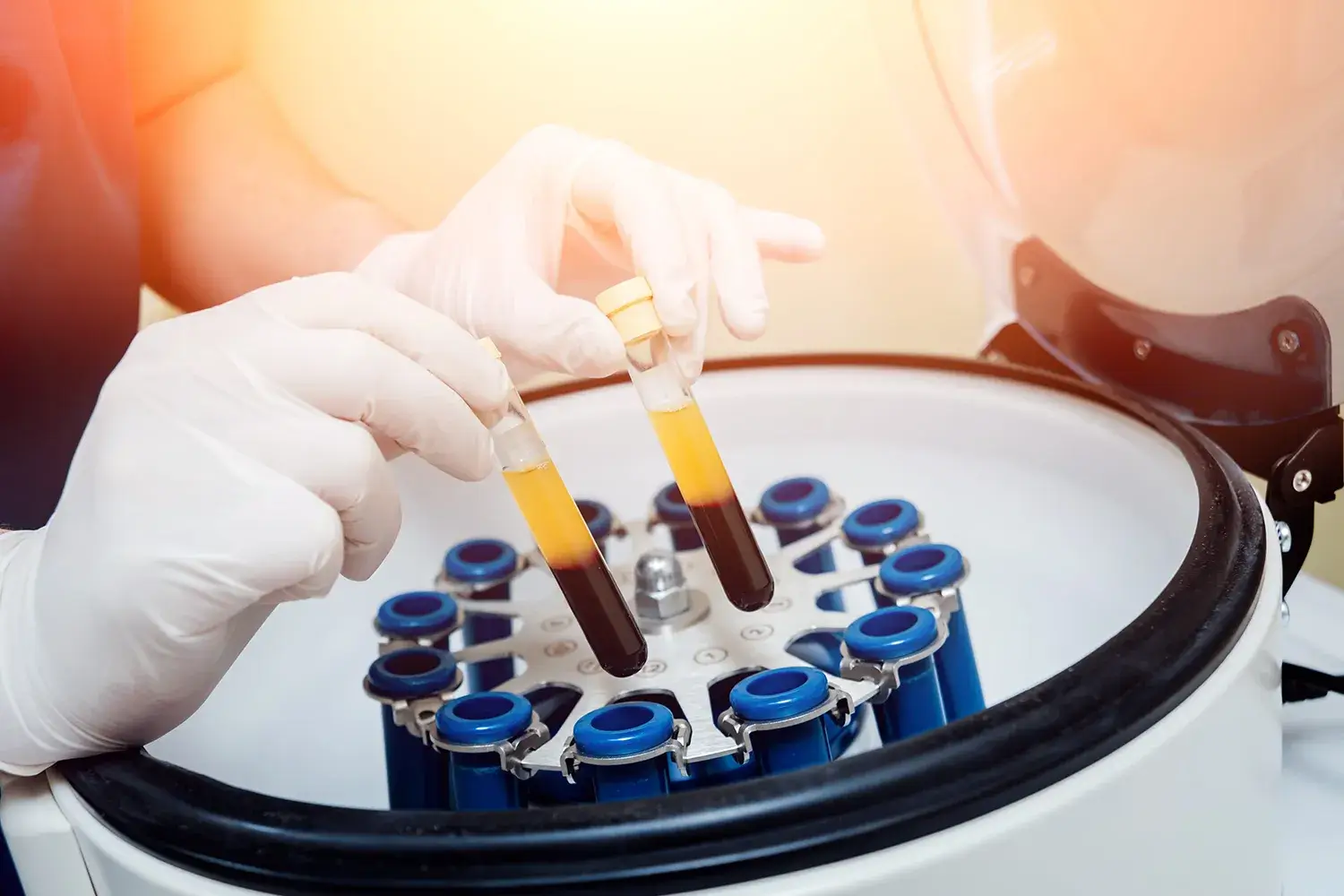
- Advanced centrifugation: A specialized centrifuge is used to purify high-concentration mesenchymal stem cells and growth factors.
- Precision Injection: Under ultrasound or X-ray guidance, the solution is precisely injected into the affected area.
- Post-procedure observation: Patients may return home after a brief rest and can resume normal daily activities.
Evidence-Based Analysis: The 4 Key Repair Benefits of BMAC That Overcome the Limitations of PRP Therapy
Clinical research data and practical applications demonstrate that BMAC performs exceptionally well in deep tissue repair and anti-inflammatory effects, and in some conditions, it is significantly superior to traditional PRP (platelet-rich plasma) therapy:
- Superior to PRP in Osteoarthritis of the Knee (Knee OA): Studies indicate that BMAC is significantly more effective than PRP in the treatment of knee osteoarthritis.After 12 months of treatment, patients who received BMAC injections experienced a 57.4% reduction in pain (compared to only a 26.65% reduction in the PRP control group); in joint function assessments (KOOS and WOMAC scores), the BMAC group showed improvements exceeding 73%, while the PRP group improved by only about 8% to 11%.
- Improvement in Lower Back Pain and Spinal Structure: For chronic lower back pain caused by intervertebral disc degeneration (IDD), patients’ pain scores decreased by 58% 12 months after receiving BMAC injections, and their reliance on opioid pain medications was significantly reduced (by 61.5%).Furthermore, MRI follow-up imaging revealed a significant increase in disc height and expansion of the neural root space (spinal canal).
- Overcoming the Limitations of PRP: For patients who have previously undergone PRP treatment with unsatisfactory results, BMAC is an excellent advanced alternative. This is because, in addition to providing growth factors and repair signals, BMAC contains a rich supply of mesenchymal stem cells (MSCs) to facilitate cell differentiation and replace damaged tissue.
- Powerful Anti-Inflammatory Mechanism: BMAC contains the unique IL-1RN protein, which binds to receptors that trigger inflammatory responses, effectively regulating and reducing inflammation. This enables BMAC to provide stronger and faster anti-inflammatory benefits than PRP when treating injured sites with significant inflammatory reactions, thereby fundamentally improving the joint’s biological environment.
BMAC Bone Marrow Concentrate Injection: Frequently Asked Questions (FAQ)
Q1: What is the difference between BMAC and PRP?
BMAC is an advanced version of PRP. In addition to growth factors, BMAC contains key mesenchymal stem cells (MSCs). It simultaneously provides the "signals, cells, and scaffold" necessary for repair, offering stronger regenerative capabilities for deep tissues and severe inflammation.
Q2: Is BMAC effective for treating knee degeneration?
Yes, it is effective, with pain relief nearly twice as effective as PRP. Clinical studies have shown that patients with moderate knee osteoarthritis experienced a 57.4%reduction in pain and over a 73%improvement in joint function 12 months after receiving a BMAC injection, making it a new non-surgical treatment option.
Q3: Can BMAC be used to treat a herniated disc?
Yes, it can significantly improve lower back pain and repair structural damage. Studies show that BMAC can reduce chronic pain by 58%; MRI follow-ups have even revealed an increase in disc height and expansion of the neural space.
Q4: Who is a suitable candidate for BMAC treatment?
Patients with moderate degeneration or those wishing to avoid surgery. This includes: Grade 2–3 knee osteoarthritis, herniated discs, chronic lower back pain, tears in strong ligaments (such as the Achilles tendon), and those who have not responded well to PRP therapy.
Q5: Is the bone marrow aspiration painful? Is hospitalization required?
The procedure requires only local anesthesia and takes about 30 minutes; no hospitalization is required. The physician extracts a small amount of bone marrow from the pelvis via a minimally invasive approach. The pain is generally tolerable for most people. After the treatment, you can return home after a short rest, and it does not affect daily activities.
Q6: Is BMAC therapy safe? Are there any side effects?
It is extremely safe because the source is 100% autologous tissue. There is no risk of foreign body rejection. Common side effects are limited to soreness or a sensation of warmth at the injection site for 2–3 days, which is a normal phenomenon as the stem cells initiate the repair process.
Q7: Can I take anti-inflammatory medication after the procedure? What should I be aware of?
Anti-inflammatory medications (NSAIDs) are strictly prohibited for 2 weeks after the procedure. Anti-inflammatory drugs can inhibit the healing process; for pain relief, please take "Panadol" instead. Keep the wound dry for 24 hours, avoid strenuous exercise for one week, and it is recommended to supplement with protein and vitamin C.
Q8: How many BMAC treatments are needed? How long does it take to see results?
Most patients require only one treatment, with results typically becoming most noticeable within 4–6 weeks. The exact number of sessions depends on the degree of degeneration. Because it has the ability to modulate the microenvironment, the repair effects are more long-lasting than those of traditional injections.