
Orthopedic Pain
Elbow Joint
Orthopedic pain
Elbow joint
Golfer’s Elbow
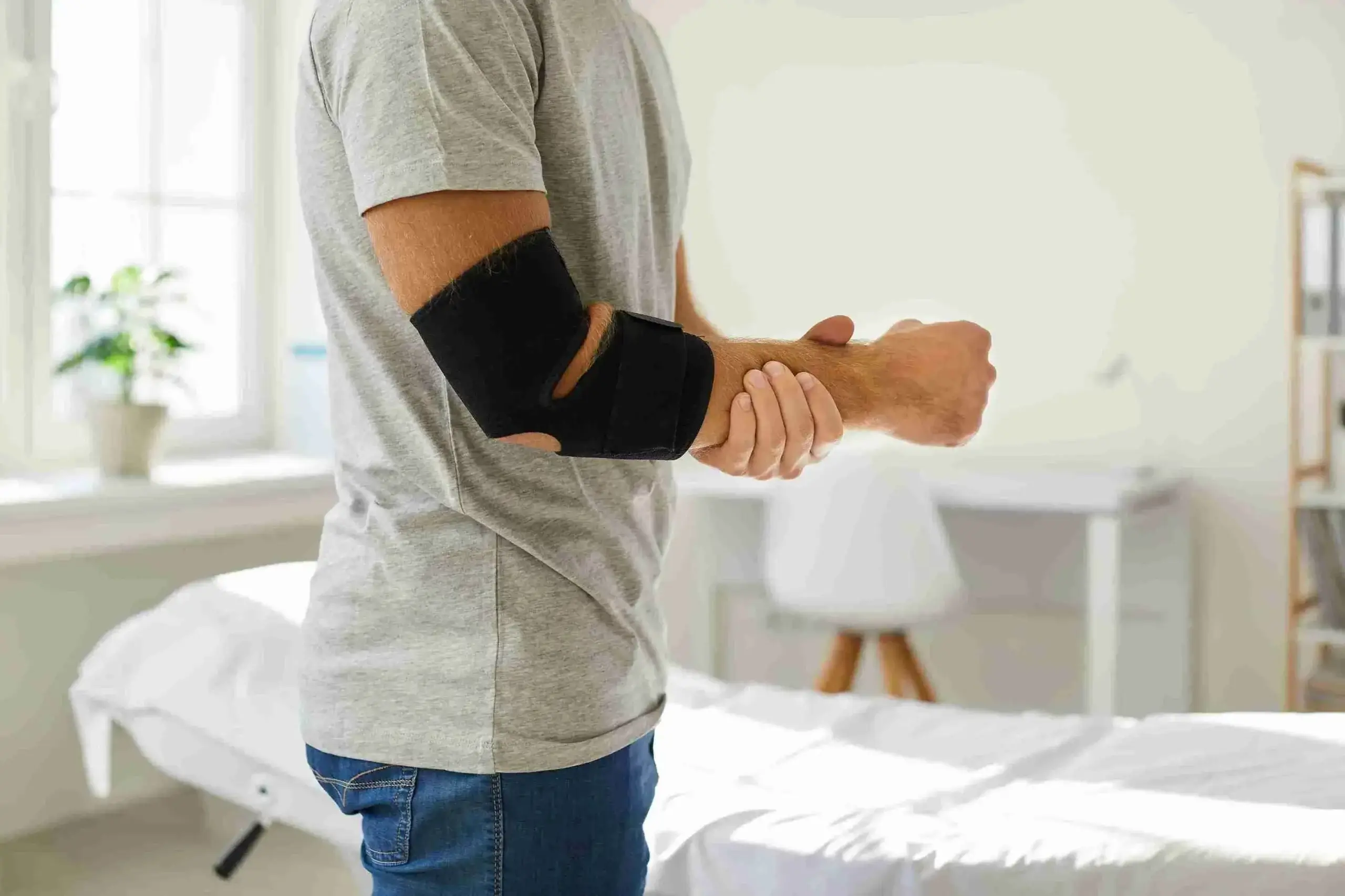
Table of Contents
Golf Elbow Isn’t Just for Golfers! | Pain on the Inner Side of the Elbow and Weak Grip? Everything You Need to Know About Causes, Symptoms, Treatment, and Daily Care
Do you experience a sharp pain or soreness on the inside of your elbow when wringing out a towel, lifting heavy objects, gripping tools, or doing strength training? Do you even notice a decrease in grip strength or stiffness in your forearm?
This is likely not just “overuse,” but a common elbow tendon injury known as golfer’s elbow.
What is golfer's elbow?
Golfer's elbow (medial epicondylitis), medically known as medial epicondylitis of the humerus, refers to a condition in which a group of tendons on the inner side of the elbow—primarily responsible for wrist flexion and forearm pronation—undergo degeneration, microtears, and poor healing at the tendon-bone junction due to repetitive strain and overuse, thereby causing pain.
Although the condition is named after the golf swing, clinically, most patients are actually non-athletes; it is commonly seen in people who engage in prolonged hand use, gripping, twisting, or lifting.
Common Causes of Golfer's Elbow (Why Does the Inner Side Hurt?)
The underlying cause is: repeated gripping + inward bending (flexion) of the wrist + pronation of the forearm, which
subjects the medial tendons to prolonged stress and leads to cumulative damage. Common scenarios
include:
- Sports: golf, baseball pitching, badminton, table tennis, tennis backhand, etc.
- Work: Carpenters, plumbers, chefs, movers, factory workers, gardeners and cleaners
- Office workers: Poor mouse-use posture, prolonged forceful gripping
- Fitness training: Bicep curls, rowing, etc. (if performed with incorrect form or excessive weight)
Typical symptoms of golfer's elbow
Pay special attention if you experience the following symptoms:
- Tenderness on the inner side of the elbow: Pain when pressing on the medial epicondyle (the bony bump on the inner side)
- Pain or weakness when gripping: This is more noticeable when carrying bags, making a fist, wringing out a towel, or opening a bottle cap
- Aching and stiffness on the inner side of the forearm: Pain may extend to the wrist and fingers
- Symptoms worsen with specific movements: wrist flexion, forearm pronation, passive wrist extension, or forcefully bending the fingers
- Pain may also occur at rest or at night
Groups Prone to Golfer's Elbow
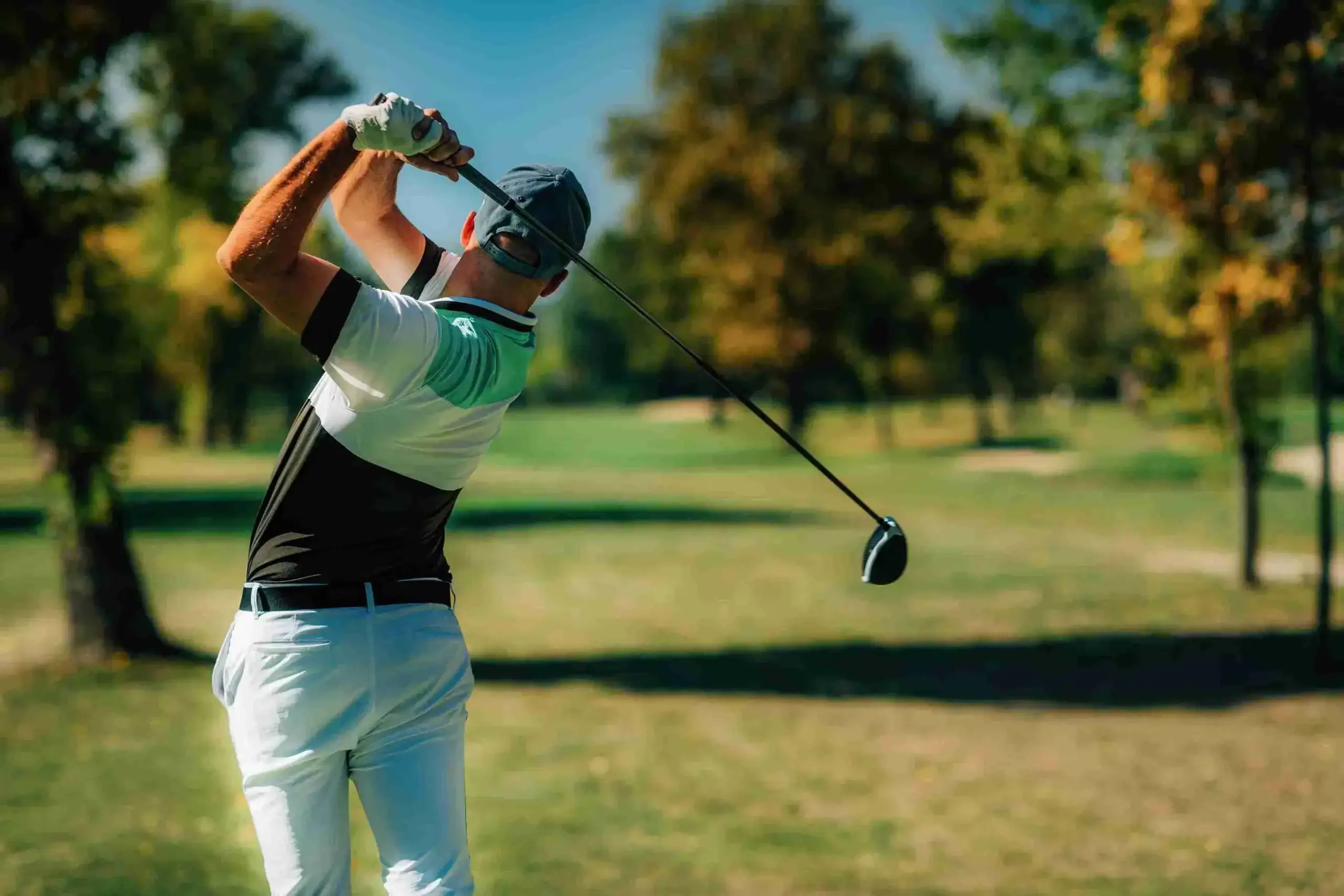
Golfer's elbow is most common among people who repeatedly use their wrists and forearms:
- Non-athletes (who make up the majority) experience degeneration
caused by long-term, habitual hand use - Housewives / Cooks / Hairdressers
- Ball sports athletes
- People who frequently lift heavy objects or use tools
- Concrete workers / Carpenters / Factory workers / Office workers
Tennis Elbow vs. Golfer's Elbow (Quick Guide)
| Comparison Criteria | Tennis Elbow | Golf Elbow |
|---|---|---|
| Location of Pain | Pain on the outer side of the elbow | Pain on the inner side of the elbow |
| Affected Muscle Groups | Wrist extensor muscles | Wrist flexor muscles |
| Triggering movements | Often associated with wrist extension and forearm rotation | Often associated with gripping and wrist flexion |
Treatment approaches vary depending on the specific location; a professional evaluation is recommended to avoid improper treatment.
Daily Prevention and Self-Care for Golfer's Elbow
1) Maintain proper posture to reduce strain on the tendons. Avoid using excessive
force in your wrists during exercise or physical labor; instead, distribute the force evenly across your shoulders and core.
2) Warm up and stretch thoroughly. Perform
wrist and forearm stretches before work or exercise to reduce the risk of injury.
3) Strength training to maintain balance: Use resistance
bands or light dumbbells to train the flexor and extensor muscles of the forearm, improving endurance and reducing the risk of recurrence.
4) Proper use of protective gear
: Position the elbow brace approximately three finger-widths below the medial epicondyle to help distribute tension (avoid direct pressure on tender points).
5) During the acute phase
of pain, apply ice to the inner side of the elbow for 15–20 minutes to help reduce inflammation and relieve pain; for chronic stiffness, switch to heat therapy as needed to promote circulation.
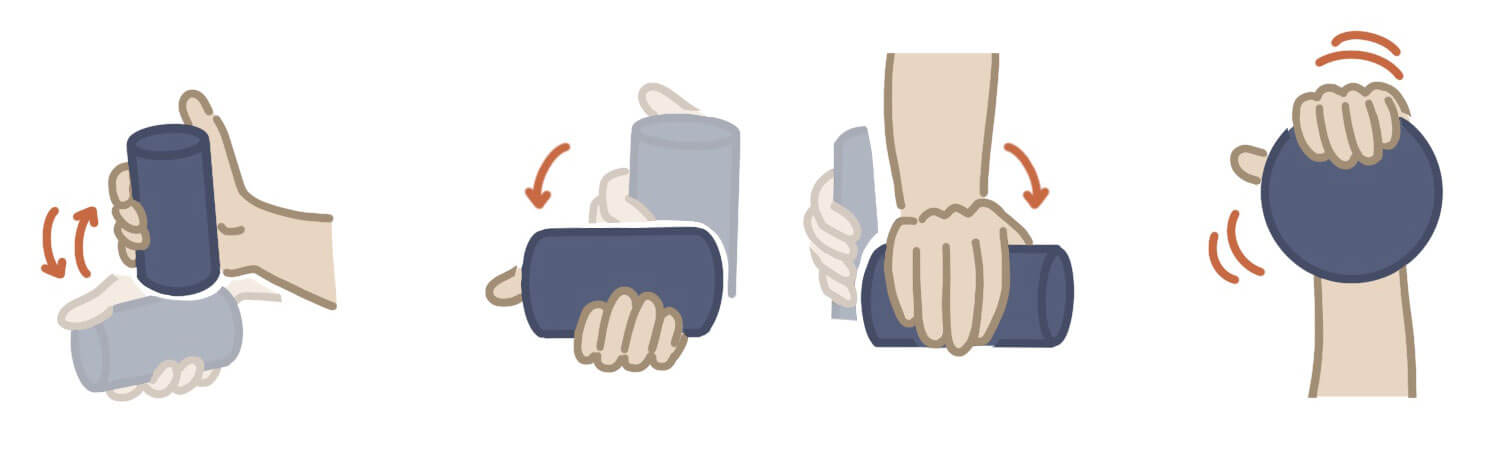
Strength training (using a plastic bottle or light dumbbells):
- Palms facing down → Slowly raise your wrists → Hold for 5 seconds
- Lower and rest → Repeat 10 times
Common Treatments for Golfer's Elbow
Treatment typically progresses from non-invasive to advanced rehabilitation, adjusted according to the course and severity of the condition.
① Conservative treatment and physical therapy (first-line)
- Rest and activity modification (avoid lifting heavy objects and gripping with force)
- Ice/heat therapy
- Bracing for decompression
- Manual therapy: soft tissue release, joint mobilization, stretching
- Stretching and eccentric strength training
- Therapeutic devices: electrotherapy, thermotherapy, ultrasound, etc.
- NSAIDs for anti-inflammatory and pain relief (short-term)
② Injection therapy (for chronic or recurrent cases)
- Steroid injections: Provide short-term pain relief but should be used with caution to avoid tendon fragility
- PRP/PRF regenerative injections: Aimed at tissue repair; suitable for chronic cases or those with poor response to conservative treatment
③ Surgical treatment (last resort)
- Surgery to remove diseased tissue and repair the tendon should only be considered if conservative or regenerative therapies fail to improve the condition and it significantly impacts daily life.
Frequently Asked Questions About Golfer's Elbow
What is golf elbow? Is it necessarily related to playing golf?
Not necessarily.
Golf’s elbow (medial epicondylitis) is a condition caused by the degeneration and micro-tears of the medial epicondyle tendon of the elbow due to repeated stretching and overuse. Although the name comes from the golf swing, most patients are not athletes, but rather develop it due to poor posture during work, housework, or fitness activities.
What are the differences between golfer’s elbow and tennis elbow?
The main difference lies in the location of the pain and the injured muscle group:
- Golf’s elbow: Pain on the “inner” side of the elbow, related to wrist flexion and gripping.
- Tennis elbow: Pain on the “outer” side of the elbow, related to wrist extension and forearm rotation. Different locations require different treatment strategies; accurate diagnosis is essential.
Will golf elbow heal on its own?
Mild, short-term symptoms may improve with sufficient rest and reduced strain.
However, if the pain persists or the wrist and forearm are used repeatedly, it can easily develop into chronic tendon degeneration, significantly prolonging the recovery time. Simply waiting for it to heal on its own is not recommended.
How long does it take for golfer’s elbow to heal?
Does golf elbow always require injections or surgery?
Not necessarily.
Most patients can improve their condition through conservative treatment and physical therapy first; PRP/PRF injections will only be considered if the condition is chronic, recurrent, or if conservative treatment is ineffective; surgery is usually a last resort, only for those whose condition cannot be improved in the long term and seriously affects their quality of life.
Are PRP or PRF really effective for golfer’s elbow?
It is quite helpful for chronic golfer’s elbow.
PRP/PRF contains a large amount of growth factors. When injected into the damaged tendon under ultrasound guidance, it can promote collagen production and tissue repair. It belongs to “reparative treatment” rather than simply pain relief, and is often used for patients with recurring pain or long-term unresolved pain.
Does golf elbow require imaging?
If symptoms persist or treatment is ineffective, a high-resolution musculoskeletal ultrasound is recommended.
Ultrasound can clearly show:
- whether the tendon is swollen or torn
- whether there are changes in blood flow indicating chronic poor repair.
This helps in accurately locating the problem and selecting the correct treatment approach.
Will golfer’s elbow keep recurring? How can it be prevented?
If only pain relief is provided without addressing hand habits and muscle imbalances, relapse is indeed likely.
Key prevention methods include:
- Adjusting work and exercise posture
- Avoiding prolonged gripping and excessive strain
- Regularly performing forearm extension and strength training
- Early treatment of initial pain
Related Articles
orthopedics Orthopedic pain Ankle and sole Text description, text description, text description, text description Please enter a title here Table of Contents Does your heel hurt when you take your first steps in the morning? Watch out for plantar fasciitis: Everything you need to know about the caus
orthopedics Orthopedic pain knee Table of Contents What Is Osteoarthritis? Don’t Put Up With Joint Pain, Stiffness, and Cracking Any Longer: A Comprehensive Guide to Causes, Symptoms, Diagnosis, and Treatment If you experience joint pain during physical activity, stiffness after sitting for long periods, difficulty climbing stairs, joint crepitus, or even find yourself reluctant to move due to pain, these symptoms aren’t necessarily just due to the weather or aging. Clinically, these symptoms are highly consistent with osteoarthritis (OA).Osteoarthritis is not simply “inflammation,” but a continuous process of structural degeneration:
orthopedics Orthopedic pain Lower back pain, back pain Please enter a title here Table of Contents Numb Hands, Neck Pain, and Dizziness? A Comprehensive Guide to Causes, Symptoms, Treatment, and Prevention! Due to prolonged use of smartphones and computers, combined with poor posture and a sedentary
orthopedics Orthopedic pain Wrist and fingers Please enter a title here Table of Contents The Ultimate Guide to De Quervain's Tenosynovitis | Symptoms, Causes, and Treatments Explained! The medical term for "mom's hand" is De Quervain's tenosynovitis. It primarily affects th
orthopedics Orthopedic pain knee Text description, text description, text description, text description Please enter a title here Table of Contents Ignoring Meniscus Injuries May Lead to Degenerative Arthritis Over Time | A Comprehensive Analysis of Acute Meniscus Sprains and Degenerative Wear and T
orthopedics Orthopedic pain Wrist and fingers Please enter a title here Table of Contents Does your wrist hurt when you twist it toward your little finger? It might not be a sprain—it could be your triangular fibrocartilage complex crying out for help! The triangular fibrocartilage complex (TFCC) i
