
Erector Spinae Pain Block

Regen Health
2025-11-26
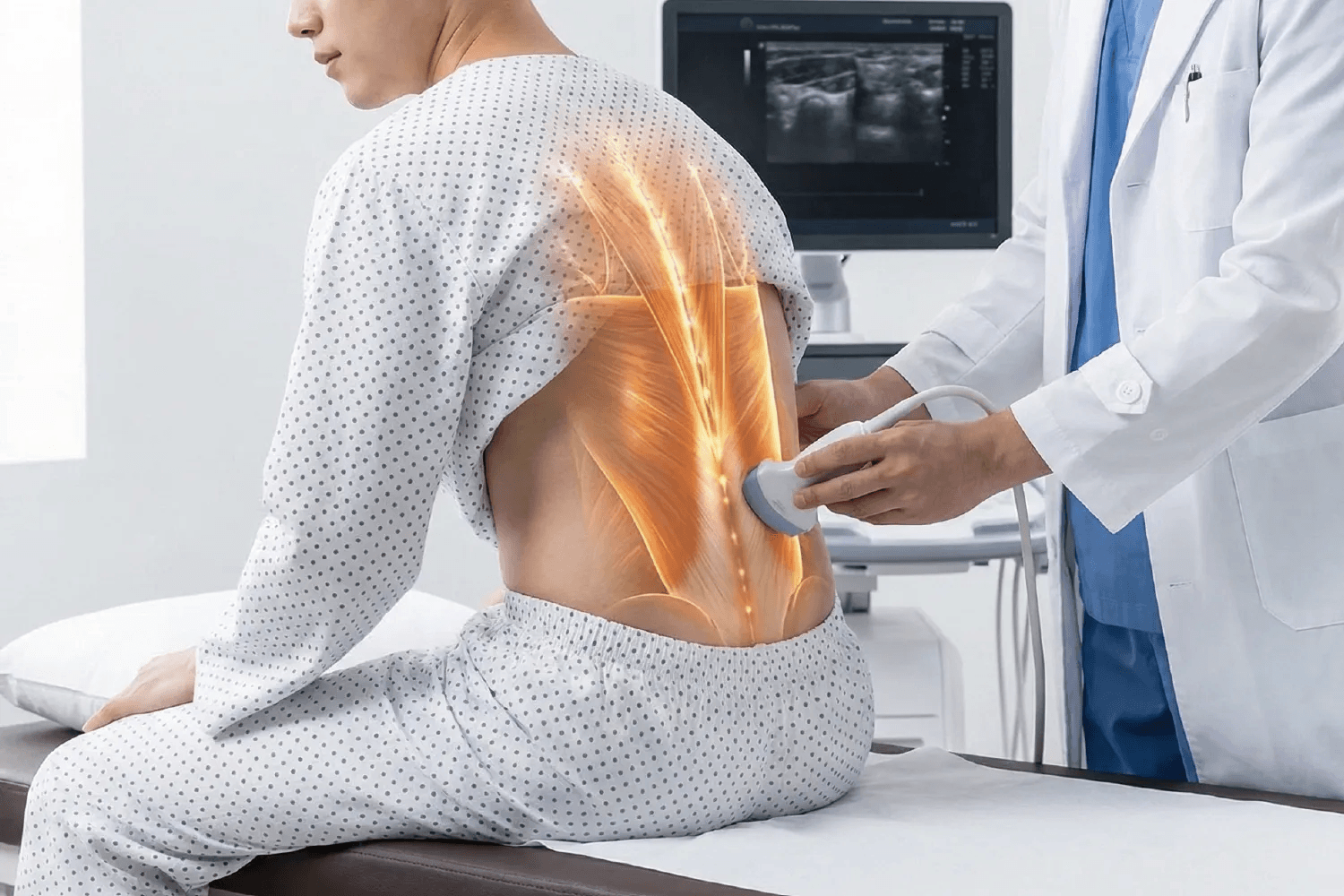
Spinal stenosis and lower back pain preclude surgery? ESPB Erector Spinae Plane Block: A new dawn of pain relief for elderly and cardiovascular patients
What is an erector spinae plane block (ESP block)?
Old age, spinal problems, but hesitant to undergo pain relief surgery due to cardiovascular history?” Many elderly individuals suffer from spinal stenosis and lower back pain, but are unable to undergo traditional deep anesthesia due to taking anticoagulants or their physical condition. The advent of ESPB (erector spinae plane block) changes everything. Because the injection site is shallower, avoiding the spinal cord and major blood vessels, its safety is 80% higher than traditional epidural injections. This precision medicine, combined with anatomical evidence, makes pain relief no longer a high-risk adventure, but a safe option for seniors to regain their quality of life.
What is Erector Spinae Plane Block?
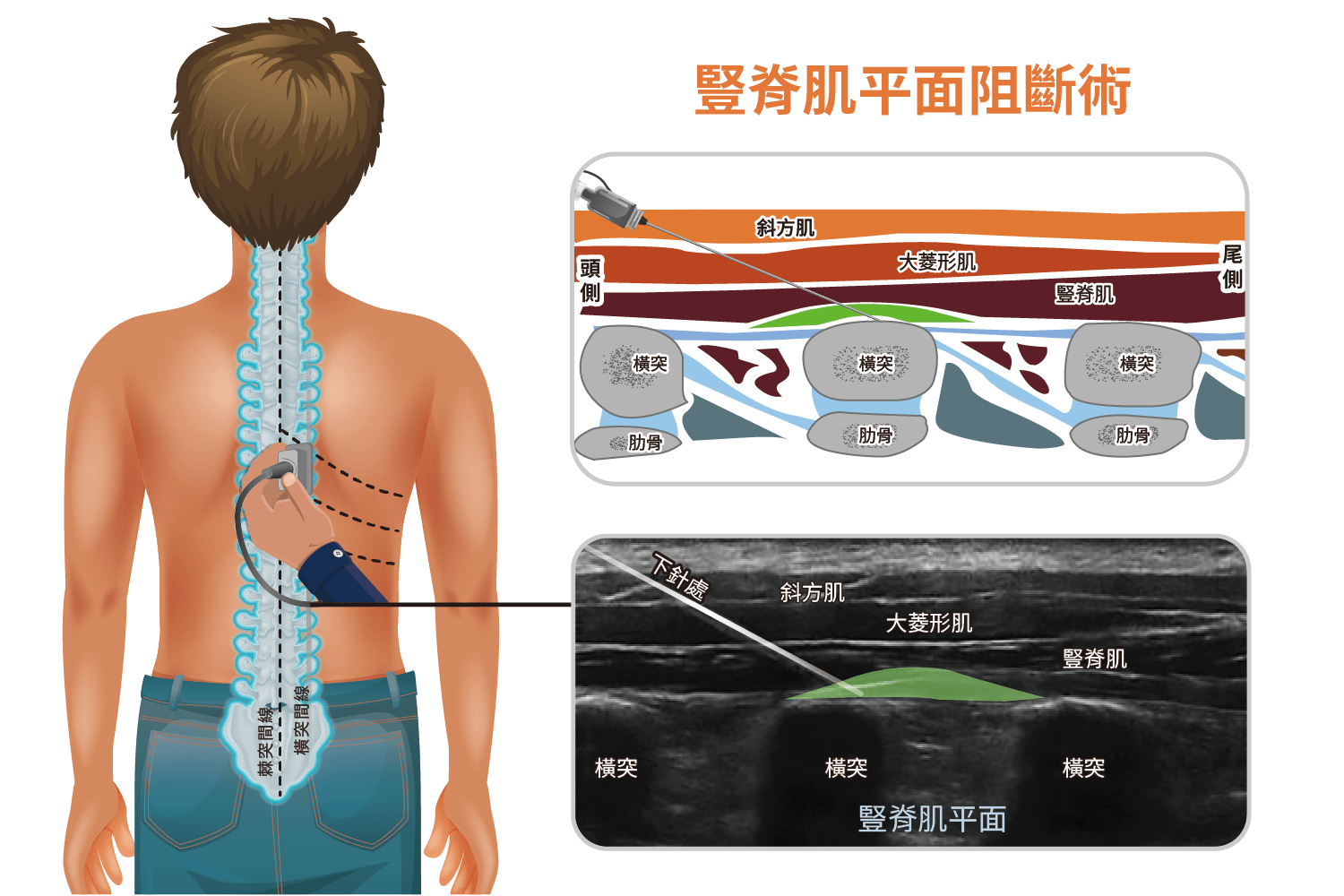
The erector spinae muscles are an important layer of muscles covering the vertebrae. The core logic of ESPB lies in “fascial plane diffusion.” Mechanism of Action: Under the guidance of advanced ultrasound imaging, the physician precisely injects local anesthetic drugs (or regenerative repair factors) into the fascial layer between the deep layer of the erector spinae muscles and the transverse processes. Pain Relief Network: The medication flows up and down along the interfascial spaces like water, covering the dorsal and ventral branches of the spinal nerves, while simultaneously affecting the sympathetic chain, effectively blocking pain signals from muscles, skin, and deep internal organs.
Is ESPB suitable? (Main Indications)
Based on clinical application, ESPB has shown significant effectiveness in the following four areas:
- Spinal and Orthopedic Disorders: Chronic back pain caused by lumbar disc herniation and spinal stenosis. Acute wound pain after thoracolumbar fusion surgery. Breath pain caused by rib fractures.
- Neurological Pain: Acute pain of shingles.Postherpetic neuralgia (PHN).
- Pain relief after thoracic and abdominal surgery: Massage, thoracoscopic surgery, cholecystectomy, and abdominal hernia repair.
- Special Needs: Patients on long-term anticoagulant therapy who are unsuitable for epidural anesthesia. Elderly patients with multiple medical conditions and extremely low surgical tolerance.
Safety improved by 80%! Analyzing international evidence from the Cochrane Review: Why ESPB is a safer pain relief option than traditional anesthesia.
[Clinical Data Summary] Empirical Efficacy of ESPB Erector Spinae Plane Block
Opioid Dosage Reduction: Reduces morphine requirement by 30-50% (within 24 hours).
Safety Advantage: Reduces complication risk by 80% compared to conventional epidural anesthesia.
Neuropic Pain Relief: 70% of shingles patients experienced a significant decrease in their pain index (VAS).
How to choose the ESPB?
Symptoms: Severe postoperative wound pain, rib fractures, or spinal pain patients currently taking anticoagulants.
Recommendation: ESPB (highest safety profile and broadest pain coverage).
Symptoms: Simple, single-point muscle inflammation, tendinitis.
Recommendation: Traditional local injections or regenerative therapies are sufficient.
ESPB Erector Spina Plane Block Complete Treatment Guidelines
1. Treatment Efficacy and Expectations: Acute pain shows effects within 15 minutes; chronic pain requires 3-5 sessions.
Acute pain: Rapidly takes effect within 15-30 minutes after injection. Significantly effective for postoperative or fracture pain, significantly shortening the recovery period.
Chronic pain: For intractable back pain, the effect of a single injection may last for several days to weeks. Clinically, a complete course of 3-5 sessions is often recommended, or, depending on the situation, continuous administration via a microcatheter to achieve long-term neuromodulation.
2. Safety Assessment: Ultrasound Guidance and Precise Medical History Review Before the procedure, a specialist will conduct a rigorous assessment:
Imaging Scan: Ultrasound is used to confirm the structure of the transverse processes of the vertebrae and rule out local infection or anatomical deformities.
Medical History Review: Allergy history and medication history (such as anticoagulants) are confirmed.
Contraindication Exclusion: The procedure is not recommended if there are open wounds at the injection site or severe systemic infection.
3. Postoperative Reactions: 30-Minute Rest Monitoring and Risk Prevention
Immediate Reactions: A brief warming or numb sensation may occur at the injection site after injection. Some patients may experience mild dizziness or blood pressure fluctuations, which usually subside after 30 minutes of rest.
Normal Reactions: Mild tenderness may occur at the injection site within 1-2 days.
Rare Risks: Under ultrasound guidance, the chances of pneumothorax, local anesthetic poisoning, or infection are extremely low (less than 0.1%).
Post-operative Safety Instructions: 4 Key Points for Home Care
Activity Restrictions: Avoid strenuous exercise, lifting heavy objects, or prolonged driving within 24 hours of injection. It is recommended that you be accompanied by a family member when returning home.
Affected Area Care: Keep the injection site dry for 24 hours. If there is slight redness and swelling, apply cold compresses intermittently (15 minutes each time).
Medication Adherence: Do not immediately discontinue your original oral medications after treatment. Adjust the dosage gradually as prescribed by your doctor, based on the degree of pain relief.
Warnings and Observation: If you experience difficulty breathing, persistent chest pain, confusion, or worsening redness, swelling, heat, and pain at the injection site, please contact a medical facility or seek medical attention immediately.
ESPB (Erector Spinal Block) FAQ
Q1: Will the ESPB injection be painful?
The doctor will administer local anesthesia. The actual procedure feels similar to a needle prick for blood, and most patients tolerate it well.
Q2: How is this different from a painkiller injection?
Traditional painkillers are metabolized systemically and have many side effects; ESPB is a “precision area block,” using a very small dose to precisely target the pain source.
Q3: I am taking anticoagulants, can I still have this treatment?
Yes. ESPB is injected away from major blood vessels and the dura mater, making it a relatively safe first-line pain relief option for patients with coagulation disorders.
Q4: Will ESPB cause weakness in the hands and feet?
Very rare. It mainly acts on the trunk nerves and does not affect the lower limb motor nerves. Patients can usually walk normally after the procedure.
Q5: How long does the treatment effect last?
Acute pain can usually be relieved during the critical recovery period; chronic neuralgia varies depending on the type of medication and usually requires a treatment plan.
Q6: What are the side effects?
Under ultrasound guidance, the procedure is extremely safe. A very small number of people may experience allergic reactions to the anesthetic or temporary fluctuations in blood pressure.
Q7: How long after treatment can I take a shower?
It is recommended to wait 6-12 hours until the needle puncture site closes before showering. Avoid bathing and swimming for 24 hours.
Q8: Is it covered by health insurance?
Currently, most hospitals list it as postoperative pain relief or outpatient regenerative therapy at your own expense. It is recommended to consult your attending physician first.
Related Articles
健立醫療 目錄 Say Goodbye to Chronic, Intractable Pain! Will RF (Radiofrequency Ablation) Therapy Be Painful? Post-operative Care and 7 Frequently Asked Questions! Want to undergo RF therapy but afraid of pain or worried about the recovery period? This guide provides detailed answers to the treatment process, wound care, and 7 frequently asked questions.It helps you understand how to safely block long-term chronic pain signals through local anesthesia and minimally invasive techniques, dispelling all treatment myths and allowing you to confidently regain a pain-free life! What is Radiofrequency Ablation (RF)? Radiofrequency

Please enter a title here Regen Health Please enter a title here Is Your Shoulder Burning with Pain? Ultrasound-Guided Calcification Aspiration: Clinical Data from the Past Decade and a Comprehensive Treatment Guide Many patients are often awakened in the middle of the night or early morning by sev

Regen Health [The Complete Guide to Arthroscopic Cartilage Repair] Everything You Need to Know About the Minimally Invasive Procedure, Indications, and Postoperative Rehabilitation! Do you experience knee pain so severe that you can’t squat, feel your knee lock up after walking for a while, or even

Regen Health Say Goodbye to Joint Degeneration and Chronic Pain: A Guide to PRP Regenerative Therapy Injections, Cost Estimates, and Non-Surgical Treatment PRP (Platelet-Rich Plasma) therapy is a clinically proven, non-surgical regenerative medicine technique. By drawing approximately 10–15 cc of th

Regen Health Advanced PRP Therapy | The Golden Treatment for Activating the "Self-Repair" Mechanism of Joints and Tendons PRF is a highly safe, naturally derived regenerative medicine therapy that utilizes growth factors and fibrin structures from the patient’s own blood to help the body a

Regen Health No Hospital Stay Required! The Complete Guide to BMAC Autologous Bone Marrow Concentrate Injection Therapy When traditional regenerative therapies or hyaluronic acid fail to address severe joint degeneration, BMAC (Bone Marrow Aspirate Concentrate) offers a more advanced option. This i
