
Orthopedic Pain
Knee
Orthopedic pain
knee
Iliotibial Band Syndrome
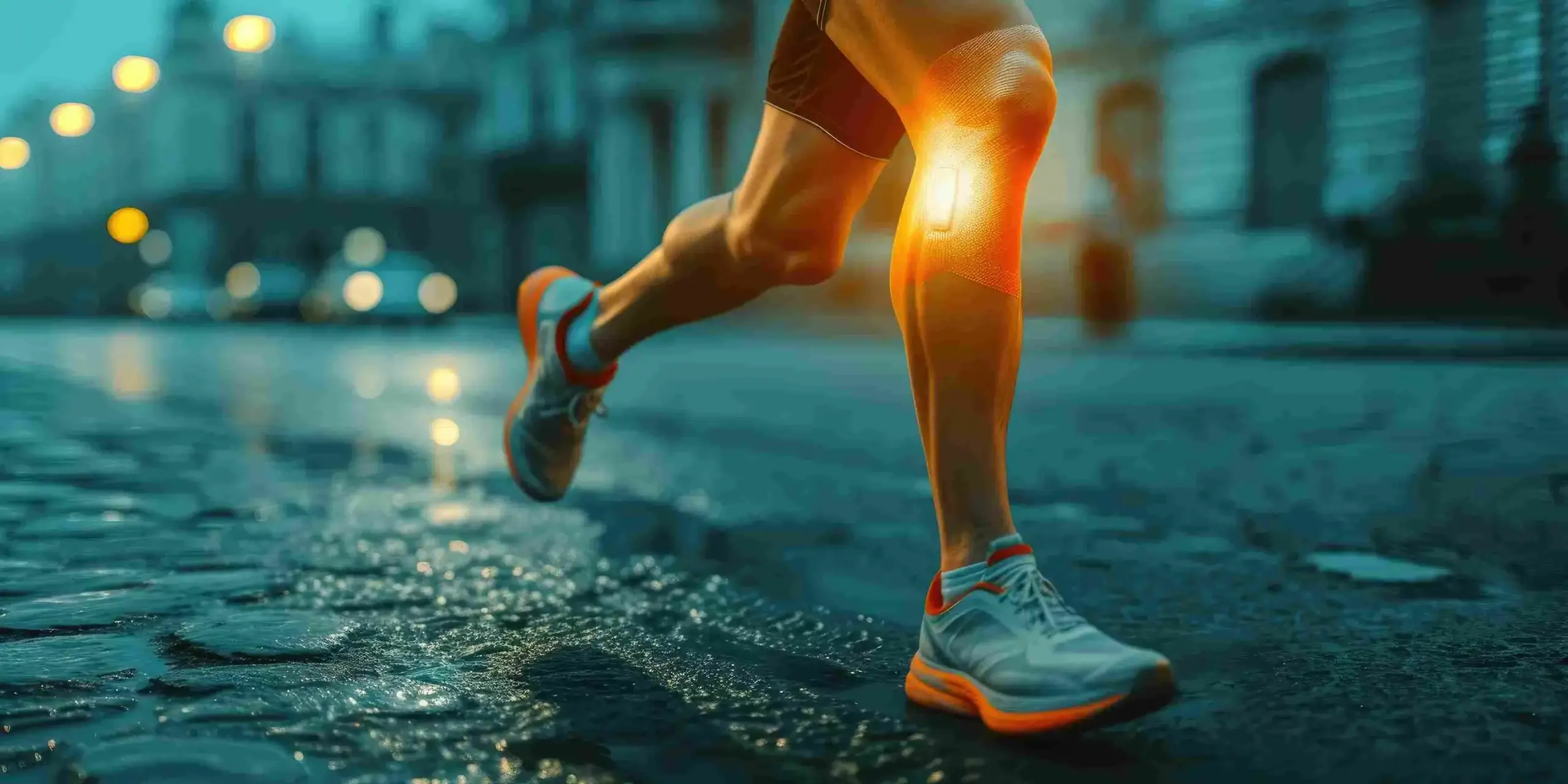
Table of Contents
Stabbing Pain on the Outer Side of Your Knee? A Comprehensive Guide to Runner's Knee (Iliotibial Band Syndrome): Causes, Symptoms, and Treatment
Runner's knee (iliotibial band syndrome) is a common form of sports-related knee pain caused by running, running on hills, or overtraining, which leads to repeated friction and inflammation of the iliotibial band on the outer side of the knee. Typical symptoms include a sharp, stabbing pain and tightness on the outer side of the knee, which worsens after activity. Treatment focuses on rest, ice application, stretching and relaxation, muscle strengthening, and rehabilitation to prevent the condition from becoming chronic or recurring.
Have you ever felt a sharp, stabbing pain on the outside of your knee while running—so intense that you couldn’t continue? This is iliotibial band syndrome (ITBS), commonly known as “runner’s knee.” It’s a nightmare for many athletes, not only affecting athletic performance but, in severe cases, even making it painful to climb stairs.Don’t worry—runner’s knee isn’t a terminal condition. By understanding its causes and adopting the right “multimodal treatment,” you can completely eliminate the pain and return to the field.
What is iliotibial band syndrome? Why does it cause pain?
The iliotibial band is a thick band of fascia that extends from the outer side of the pelvis to the outer side of the knee, primarily responsible for stabilizing the hip and knee joints. When we perform activities such as running, hiking, or cycling—which involve repeated bending and straightening of the knees—the iliotibial band slides back and forth over the lateral condyle of the femur on the outer thigh.The
Truth About the Pain: Friction or Compression? Traditionally, it was believed that the pain
resulted from inflammation caused by repeated friction. However, recent research suggests that the iliotibial band itself does not slide significantly. The true source of pain may be compression of the “fat pad” located beneath the iliotibial band, which in turn triggers nerve irritation and inflammation. This condition is therefore also known as “iliotibial band impingement syndrome.”
Self-Check: The 4 Most Common Symptoms of Iliotibial Band Syndrome
If you're unsure whether your knee pain is caused by runner's knee, check for the following symptoms:
- Pain on the outer side of the knee: This is the most distinctive feature. The pain is usually located about 2–3 centimeters above the outer side of the knee.
- Increased pain at specific angles: The pain is most pronounced when the knee is bent to about 30 degrees, commonly experienced while running, going downhill, or walking down stairs.
- Accompanied by a clicking or grinding sensation: You may feel a clicking sound or a sensation of friction on the outer side of the knee during movement.
- Radiating pain: In severe cases, the pain may radiate upward to the outer thigh and hip joint.
💡 Quick self-test: Try the "Noble compression test": Press on the lateral femoral condyle on the outer side of the knee while bending the knee to 20–30 degrees. If pain occurs, it is highly likely to be iliotibial band syndrome.
Why Do People Develop Iliotibial Band Syndrome (Runner's Knee)? An Analysis of the Key Causes
Runner's knee is typically not caused by a single factor, but rather by the cumulative effect of multiple factors. The following are the main culprits:
- Weak gluteal muscles (key factor): When the gluteus medius and gluteus maximus are weak, pelvic stability decreases. The body then forces the iliotibial band to increase tension to maintain stability, leading to excessive tightness.
- Muscle tightness and imbalances: Excessive tightness in the tensor fasciae latae (TFL) on the outer thigh and the gluteus maximus directly increases tension in the iliotibial band.
- Biomechanical Abnormalities: Structural issues such as overpronation caused by flat feet, bowlegs (genu varum), or leg length discrepancy can alter force transmission patterns.
- Training errors: Sudden increases in training volume (a sudden surge in running mileage), running on uneven surfaces (such as mountain trails or sloped tracks), or wearing heavily worn running shoes.
- Poor lifestyle habits: Prolonged sitting, the habit of crossing one’s legs, or sitting cross-legged can easily lead to tissue stiffness and uneven tension.
Common Treatments for Iliotibial Band Syndrome
- Rest and Activity Adjustments: Reduce running volume; avoid downhill running, squats, and jumping
- Ice Therapy for Inflammation and Pain Relief: Apply ice during the acute phase; use NSAIDs for a short period if necessary
- Physical Therapy and Rehabilitation: Electrotherapy, ultrasound, heat therapy, manual release, and myofascial therapy
- Iliotibial Band (ITB) Release: Foam rolling, stretching the ITB and gluteal muscles
- Gluteus Medius/Core Strengthening: Improve pelvic stability and knee alignment (reduce internal rotation)
- Quadriceps Training: Strengthen the vastus medialis (VMO) to improve patellar stability
- Running Form and Gait Correction: Adjusting stride frequency, foot strike technique, and shoe support
- Taping or Knee Brace Support: Kinesiology tape and patellar taping to reduce pain and friction
- Extracorporeal Shock Wave Therapy (ESWT): Accelerates healing of chronic tendon and fascia issues
- High-Intensity Laser Therapy (HILT): Deep anti-inflammatory pain relief, promotes circulation and healing
- Ultrasound-guided injections: Local anti-inflammatory injections, PRP/PRF regenerative therapy—for recurrent or chronic cases
- Imaging Assessment and Advanced Treatments: Ultrasound/MRI to identify structural issues and develop personalized treatment plans
Guide to Daily Prevention and Care for Iliotibial Band Syndrome (Runner's Knee)
To prevent runner’s knee from recurring, the key concept is “balance between tension and relaxation”—relaxing tight areas and strengthening weak ones.
- Foam rolling: Perform foam rolling on the outer thigh (tensor fasciae latae) and gluteus maximus to reduce fascial tension.
- Gluteal Strength Training: Strengthen the gluteus medius and gluteus maximus (e.g., clamshells, side leg lifts), which is key to improving pelvic and knee stability.
- Progressive Training: Follow the “10% Rule”—increase weekly mileage or intensity by no more than 10%.
- Cross-training: Don’t just run. Incorporate swimming, yoga, or cycling to avoid excessive repetitive stress on a single joint.
- Equipment Check: Choose running shoes with good support, and use arch supports to correct alignment if necessary.
Frequently Asked Questions
Is pain on the outside of the knee runner’s knee? How can I test myself for it?
Very likely. The pain point in runner’s knee is usually located about 2-3 cm above the outer edge of the knee joint line. You can try the “Noble Compression Test”: press on the pain point and bend your knee to about 30 degrees. If you experience significant pain, it is highly suspicious of iliotibial band syndrome.
How is this different from anterior knee pain (patellofemoral pain syndrome)?
Both are commonly known as runner’s knee, but their locations are quite different.
- Iliotibial band syndrome: Pain is located on the outer side of the knee, mainly due to fascial tightness and friction/compression.
- Patrofemoral pain syndrome: Pain is located on the front of the knee (around the patella), often related to pressure on the knee cartilage. It is recommended that a doctor perform an ultrasound examination for differential diagnosis to ensure the correct treatment approach.
Will runner’s knee heal on its own?
Mild symptoms may subside with rest and reduced intensity. However, if underlying causes such as “weak gluteal muscles,” “pelvic instability,” or “poor posture” are not addressed, symptoms are likely to recur once exercise resumes. If pain recurs, it is recommended to seek professional evaluation to address the underlying problem.
Should I apply ice or heat to my knees?
Depending on the stage of the illness:
- Acute phase (new injury, redness, swelling, heat, and pain): Apply ice for 15 minutes at a time to help reduce inflammation and relieve pain.
- Chronic phase (long-term stiffness and soreness): Apply heat to promote blood circulation and muscle relaxation.
Why does it still hurt even though I stretch?
This is a common misconception. Simply stretching can only temporarily relax a tight iliotibial band, but it cannot solve the problem of “weak gluteal muscles.” When the gluteal muscles are weak (this is the real culprit), the body forces the iliotibial band to compensate and maintain stability when running, causing it to repeatedly tighten. Therefore, “strengthening the gluteal muscles” is often more important than simply stretching.
How can we prevent recurrence in normal circumstances?
Remember the principle of “balance between tension and relaxation”:
Relaxation: Use a running roller to massage the outer thighs and buttocks.
Strength: Train the gluteus medius (e.g., clamshell exercises).
Equipment: Wear well-supported running shoes and avoid prolonged running on inclines or uneven surfaces.
How long after treatment can I start running?
It is recommended to gradually resume normal activities and basic movements for at least two weeks after achieving “complete pain relief.” Initially, significantly reduce your running volume (e.g., start from 50% of your original volume) and gradually increase it in 10% increments. If you experience pain again during exercise, stop immediately and reassess.
Related Articles
orthopedics Orthopedic pain Ankle and sole Text description, text description, text description, text description Please enter a title here Table of Contents Does your heel hurt when you take your first steps in the morning? Watch out for plantar fasciitis: Everything you need to know about the caus
orthopedics Orthopedic pain knee Table of Contents What Is Osteoarthritis? Don’t Put Up With Joint Pain, Stiffness, and Cracking Any Longer: A Comprehensive Guide to Causes, Symptoms, Diagnosis, and Treatment If you experience joint pain during physical activity, stiffness after sitting for long periods, difficulty climbing stairs, joint crepitus, or even find yourself reluctant to move due to pain, these symptoms aren’t necessarily just due to the weather or aging. Clinically, these symptoms are highly consistent with osteoarthritis (OA).Osteoarthritis is not simply “inflammation,” but a continuous process of structural degeneration:
orthopedics Orthopedic pain Lower back pain, back pain Please enter a title here Table of Contents Numb Hands, Neck Pain, and Dizziness? A Comprehensive Guide to Causes, Symptoms, Treatment, and Prevention! Due to prolonged use of smartphones and computers, combined with poor posture and a sedentary
orthopedics Orthopedic pain Wrist and fingers Please enter a title here Table of Contents The Ultimate Guide to De Quervain's Tenosynovitis | Symptoms, Causes, and Treatments Explained! The medical term for "mom's hand" is De Quervain's tenosynovitis. It primarily affects th
orthopedics Orthopedic pain knee Text description, text description, text description, text description Please enter a title here Table of Contents Ignoring Meniscus Injuries May Lead to Degenerative Arthritis Over Time | A Comprehensive Analysis of Acute Meniscus Sprains and Degenerative Wear and T
orthopedics Orthopedic pain Wrist and fingers Please enter a title here Table of Contents Does your wrist hurt when you twist it toward your little finger? It might not be a sprain—it could be your triangular fibrocartilage complex crying out for help! The triangular fibrocartilage complex (TFCC) i
