
Orthopedic Pain
Wrist & Fingers
Orthopedic pain
Wrist and fingers
Trigger Finger
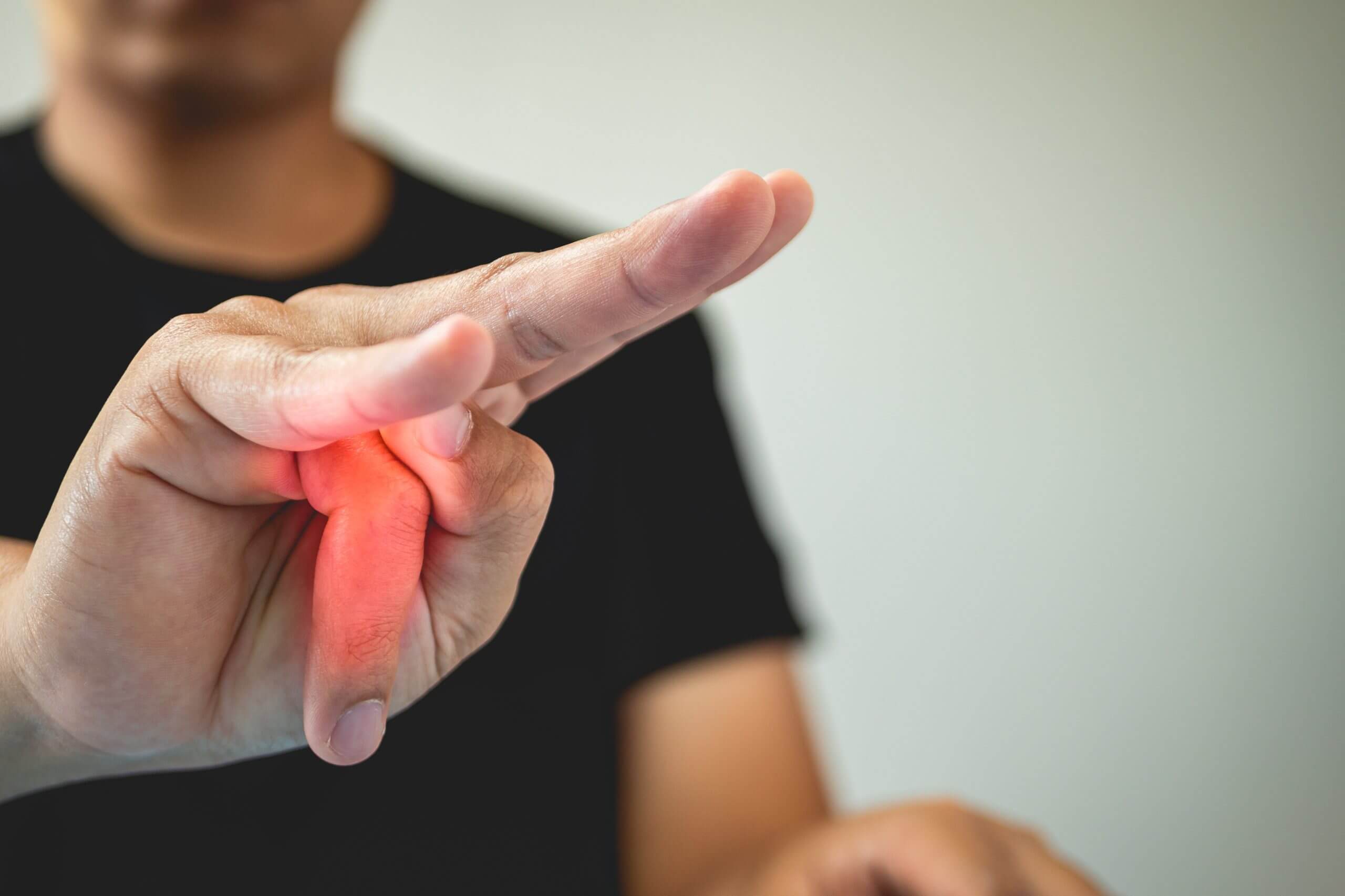
Table of Contents
Does your finger get stuck and snap back with a "click"? It might not be due to aging—it could be "trigger finger" | From causes and symptoms to treatment and prevention, learn everything you need to know about why your finger gets stuck and won’t straighten!
Have you ever experienced this: your finger
suddenly gets stuck after bending, and you have to use your other hand to “pop” it back into place, sometimes accompanied by noticeable pain and a snapping sound? Many people assume it’s just a case of “overuse” and that resting will fix it, only to find that the condition actually gets worse. This is actually a fairly common hand condition known as trigger finger. If left untreated, it can lead to limited finger movement, increased pain, and even affect your work and quality of life.
What is trigger finger?
Trigger finger, medically known as stenosing tenosynovitis of the flexor tendons, is a common tendon disorder of the hand.When the flexor tendon—which controls finger bending—becomes inflamed and swollen, preventing it from moving smoothly through the tendon sheath, the finger gets “stuck” during bending or straightening and requires external force to snap back into place. This motion resembles pulling a gun’s trigger, hence the name.
👉 It commonly affects the thumb and ring finger, but can occur in any finger.
What causes trigger finger?
Trigger finger does not develop overnight; it is a chronic condition that develops over time.
The main causes include:
- Repetitive flexing, extending, and gripping motions (scrolling on a phone, typing, wringing out a towel, lifting heavy objects)
- Long-term friction between the flexor tendons and the tendon sheath
- Inflammation leading to tendon swelling and narrowing of the tendon sheath
- The tendon becomes obstructed as it passes through, causing catching and snapping
Simply put:
👉 Thickened tendon × Narrowed tunnel = Finger gets stuck
Typical symptoms of trigger finger
If you experience the following symptoms, trigger finger should be strongly suspected:
1. The finger gets stuck or makes a
snapping sound; it is difficult to straighten after bending, and it snaps open with a "click" when straightened
2. Pain and swelling, with noticeable
tenderness at the base of the palm; sometimes a small nodule can be felt
3. Morning stiffness is most noticeable
upon waking and improves slightly with movement
4. In severe
cases, the finger may become completely locked and unable to straighten on its own
Common Treatments for Trigger Finger
Treatment options vary depending on the severity of the condition, ranging from conservative management to surgery:
1. Conservative treatment (suitable for mild cases)
- Stretching exercises: Stretching toward the back of the hand to promote the sliding of the tendon and tendon sheath.
- Night splinting: Immobilizes the metacarpophalangeal joints to prevent excessive finger flexion during sleep.
- Heat therapy: Improves blood circulation and reduces pain and stiffness.
2. Steroid injections
- Approximately 60% of patients experience significant improvement after a single injection.
- If symptoms recur, repeat injections can provide relief for over a year in 50% of patients.
3. Percutaneous release (needle release therapy)
A thick needle is inserted through the skin to directly release the A1 pulley, allowing the tendon to glide smoothly again.
- Advantages: Minimal incision, quick recovery, and short procedure time.
- A physician must evaluate whether this procedure is appropriate.
4. Minimally invasive surgery (suitable for severe or recurrent cases)
Considered the most effective treatment for trigger finger, with a success rate as high as 97%.
Who is at high risk for trigger finger?
- Housewives, chefs: Repeatedly wringing out towels, gripping spatulas
- Tech users, office workers: Typing for long periods, scrolling on smartphones
- Middle-aged women, pregnant women, and women going through menopause: hormonal changes
- Diabetics: Thickening of connective tissue, reduced healing capacity
- People with rheumatoid arthritis: Chronic inflammation affects tendon elasticity
- Obese individuals or those with metabolic syndrome: Tendons bear a greater load

Prevention and Daily Maintenance Tips for Trigger Finger
1️⃣ Avoid overuse and repetitive motions. Take regular
breaks during work to avoid prolonged, repetitive gripping and finger flexing.
2️⃣ Take regular breaks and stretch: Stretch your fingers every
30–60 minutes to promote tendon gliding.
3️⃣ Strengthen hand muscles
: Use a grip trainer or resistance bands to improve tendon endurance.
4️⃣ Avoid maintaining a bent position for long
periods. Avoid straining and reduce tendon fatigue.
5️⃣ Protect your hands and avoid the cold
. Cold temperatures can cause tendons to stiffen, so be sure to keep your hands warm.
6️⃣ Maintain a healthy weight and manage blood
sugar levels, as these directly affect tendon health.
7️⃣ Early detection and prompt treatment
: If you experience catching, pain, or stiffness, do not ignore it.
Conclusion: Trigger finger is not a minor issue, nor is it something you can simply “tough out.” The sooner you address it
, the better you can prevent worsening symptoms and permanent finger locking. 👉 If you are already experiencing finger locking, pain, or snapping, we recommend seeking an early evaluation to restore smooth finger movement and prevent further complications.
Common Issues with Trigger Finger
What is the trigger finger?
Trigger finger is a condition in which the flexor tendons become inflamed and swollen, obstructing the passage of the tendon sheath and causing the finger to get stuck and snap.
What causes trigger finger?
The main causes are repeated friction between the tendon and tendon sheath, coupled with overuse, metabolic diseases, or hormonal influences.
What are the symptoms of trigger finger?
It can cause stuckness, popping, pain, morning stiffness, and in severe cases, an inability to straighten the leg on its own.
Is trigger finger caused by overwork?
Yes, it is highly correlated with prolonged repetitive use of the fingers.
Will the trigger finger heal on its own?
Mild cases may improve, but if symptoms persist for more than 2 weeks, it is recommended to seek medical attention.
What’s the difference between trigger finger and arthritis?
Trigger finger is characterized by a stuck tendon that snaps; arthritis is characterized by swollen and painful joints that do not snap.
How to prevent trigger finger?
Reduce repetitive movements, stretch regularly, keep warm, and control weight and blood sugar.
Does trigger finger always require surgery?
Not necessarily. Most cases can be improved with conservative treatment in the early stages, and minimally invasive treatment is only considered in cases of severe or recurrent relapses.
Related Articles

CASE Testimonials Mrs. Chen had previously undergone total knee replacement surgery on her right knee. Fully aware of the hardships of the recovery period, she was extremely reluctant to undergo another operation despite suffering from severe osteoarthritis in her left knee, and could only endure th
orthopedics Orthopedic pain Wrist and fingers Please enter a title here Table of Contents The Ultimate Guide to De Quervain's Tenosynovitis | Symptoms, Causes, and Treatments Explained! The medical term for "mom's hand" is De Quervain's tenosynovitis. It primarily affects th
