Orthopedic Pain
Wrist & Fingers
Orthopedic pain
Wrist and fingers
Wrist & Fingers
Neck & Cervical Spine
Shoulder & Shoulder Joint
Elbow Joint
Wrist & Fingers
Lower Back & Lumbar Pain
Hip Joint
Knee
Ankle & Foot
Full Joint Checkup
Triangular Fibrocartilage Complex (TFCC) Injury
Table of Contents
Does your wrist hurt when you twist it toward your little finger? It might not be a sprain—it could be your triangular fibrocartilage complex crying out for help!
The triangular fibrocartilage complex (TFCC) is a key structure for wrist stability. If you experience catching, weakness, or recurring pain, early evaluation is essential to prevent the condition from becoming chronic.Many people assume that wrist pain is simply due to “overuse” and that rest will resolve it. However, if you notice that:the pain is on the little finger side;
turning bottle caps or wringing out a towel is particularly painful; or you
experience catching, clicking sounds, or increasing weakness with use
, it is highly likely that the problem is not muscular, but rather the Triangular Fibrocartilage Complex (TFCC) deep within the wrist.
What is the triangular fibrocartilage? Understand it in a single sentence
You can think of the triangular fibrocartilage as the “shock absorber and stabilizer of the wrist.” Located on the side of the wrist closest to the little finger, it performs three crucial functions:
1️ It prevents the wrist from wobbling or
twisting during rotation. 2️ It distributes the force exerted during movement
. 3️ It absorbs the impact from everyday use
. If the triangular fibrocartilage becomes damaged, the wrist is prone to pain, stiffness, and instability.
Why Do Triangular Fibrocartilage Injuries Occur? Two Common Causes
① Sudden sprains or impacts (acute injuries), such as:
- Bracing yourself with your hands when falling
- Twisting your wrist while playing sports or weight training
- Lifting heavy objects or sudden jerks
These types of injuries usually happen “all at once,” and many people clearly remember the specific incident that caused the injury.
② Long-term wear and tear (gradual deterioration) Some people
are naturally more prone to wear and tear of the triangular fibrocartilage due to their wrist structure. Combined with long-term use (mouse use, work, sports), this can lead to degeneration and damage over time.
Who is particularly at risk? If
you fit any of the following descriptions, pay special attention:
- Office workers who use a mouse and keyboard for long periods
- Chefs, hairdressers, designers, and construction workers
- People who frequently play sports or do weight training
- People over 40 whose wrists are beginning to show signs of degeneration
What are the symptoms of a triangular fibrocartilage injury?
The most common symptoms are:
- Pain on the little finger side of the wrist
- Pain that worsens when rotating the wrist or applying force
- Stiffness or a clicking sensation
- Weakened grip strength; difficulty holding objects
- Soreness after prolonged use and a feeling of instability
👉 If these symptoms keep coming back, it’s not a good idea to keep pushing through the pain.
How do doctors determine if it’s a triangular fibrocartilage complex issue?
During your appointment, the doctor will first use some "simple but accurate" methods to assess:
- Press toward the little finger to see if it hurts
- Pressing a specific spot to see if it hurts immediately
- Check if the wrist “wobbles” or feels unstable
Combined with:
- X-rays (to examine bones and structure)
- Advanced ultrasound (to visualize soft tissues in real time)
- MRI (when clearer imaging is needed)
👉 In most cases, surgery isn’t necessary right from the start.

Is surgery always necessary for a triangular fibrocartilage complex tear? Actually, in most cases, it isn’t.
Many people get anxious when they hear the term "cartilage tear," but
the truth is—most TFCC injuries can be treated without surgery. Common treatment
typically follows a three-step approach: Step
1: Prevent further deterioration
- Rest and reduce use
- Wear a wrist brace
- Anti-inflammatory and pain relief (as recommended by your doctor)
Step 2: Help the tissue heal and stabilize
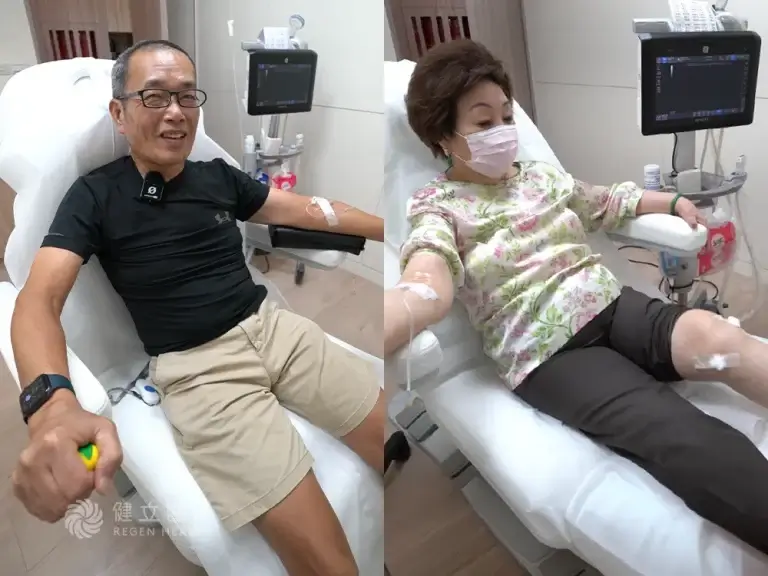
- Ultrasound-guided injections (e.g., PRP, PRF)
- Regenerative therapy
- Combined with deep tissue physical therapy to improve circulation and accelerate healing
By this stage, many patients have already seen significant improvement.
Step 3: Consider surgery only if there is truly
no improvement Typically:
- Pain lasting more than six months
- Significant wrist instability
- Conservative treatments have been ineffective
It is not the first option, but the last resort.
What can I do to take care of my wrist on a daily basis to prevent recurring pain?
A few simple but important principles:
- Keep your wrist straight when using the mouse
- Avoid repeatedly wringing out towels or forcing bottle caps open
- Wear a wrist brace when performing heavy tasks
- Perform stability exercises under professional guidance
⚠️ Do not attempt to stretch or manipulate the area yourself when it hurts.
Frequently Asked Questions About Triangular Fibrocartilage Injuries
How can I tell if wrist pain is caused by a triangular fibrocartilage (TFCC) injury?
If the pain is concentrated on the little finger side, and is particularly noticeable when turning bottle caps, wringing towels, or lifting heavy objects, and is accompanied by clicking sounds or a feeling of weakness, it is very likely related to triangular fibrocartilage, and it is recommended to have it evaluated and confirmed by a doctor.
Can a triangular fibrocartilage injury heal on its own?
Mild strain or initial inflammation may improve with rest and a wrist brace; however, if there is already a tear, recurring pain, or instability, further treatment is usually needed to prevent it from becoming a chronic problem.
Does a triangular fibrocartilage injury always require surgery?
Not necessarily. Most patients can start with conservative treatment, rehabilitation, and regenerative therapy. Surgery will only be evaluated if the pain and instability persist and the treatment is ineffective.
Does PRP/PRF injection help triangular fibrocartilage?
PRP and PRF are prepared from the patient’s own blood and can assist in the repair of ligaments and soft tissues. They are usually injected precisely under ultrasound guidance, have a high safety profile, and are commonly used for moderate to severe injuries.
How long does it take for a triangular fibrocartilage injury to heal?
Depending on severity:
Mild inflammation: Approximately 2–4 weeks
Moderate tear (conservative + regenerative therapy): Approximately 6–12 weeks
Concurrent degeneration or instability: May require several months to stabilize.
The earlier the treatment, the faster the recovery.
Do I need to wear a wrist brace all the time?
During the acute phase, it is generally recommended to wear the mask for 2–3 weeks to avoid secondary injury. After that, whether to continue wearing it depends on the symptoms and the doctor’s advice. Training is also necessary to truly improve the condition.
How can we avoid getting injured again in daily life?
Avoid repeatedly twisting your wrist, keep your wrist in a neutral position when using the mouse, wear a wrist brace when using it heavily, and undergo wrist stability training under professional guidance.
In what situations is a follow-up visit or further examination necessary?
If the pain continues to worsen, becomes significantly unstable, or shows a significant decrease in grip strength, or if there is no improvement after rest and treatment, it is recommended to return for a follow-up visit for further evaluation.
Related Cases
CASE Testimonials What Can Be Done About Recurrent Knee Pain Due to Degenerative Conditions? For many middle-aged and older adults, degenerative knee conditions often lead to a sharp decline in quality of life. Mr. Wu, an avid cyclist, has been suffering from recurring knee pain for over three month
CASE Testimonials Popular online content creator "Goodnight Old Si Ji" suffered from recurring plantar fasciitis due to prolonged standing and constant movement, with the pain becoming so severe that he could no longer put weight on his feet. Following a professional evaluation by the orth
CASE Testimonials Mr. Wang, who has long engaged in physically demanding work, suffered severe strains to his lumbar spine and deep muscles due to frequent bending and lifting of heavy objects. He has endured chronic lower back pain for years, and traditional rehabilitation has yielded limited resul
CASE Testimonials Mr. Xie, the owner of Hongda International, has maintained a regular fitness routine for many years, yet he has been plagued by a five-year-old shoulder injury that prevented him from raising his arm smoothly and even caused him to wake up in pain when turning over in bed at night.
CASE Testimonials Mrs. Chen, 70, had suffered from osteoarthritis for many years. After several PRP treatments, she noticed a significant improvement: not only has her knee pain decreased dramatically, but she can now play with her grandchildren freely and has regained her mobility! Afraid of surgic
CASE Testimonials Mrs. Chen had previously undergone total knee replacement surgery on her right knee. Fully aware of the hardships of the recovery period, she was extremely reluctant to undergo another operation despite suffering from severe osteoarthritis in her left knee, and could only endure th
Related Articles
orthopedics Orthopedic pain Ankle and sole Text description, text description, text description, text description Please enter a title here Table of Contents Does your heel hurt when you take your first steps in the morning? Watch out for plantar fasciitis: Everything you need to know about the caus
orthopedics Orthopedic pain knee Table of Contents What Is Osteoarthritis? Don’t Put Up With Joint Pain, Stiffness, and Cracking Any Longer: A Comprehensive Guide to Causes, Symptoms, Diagnosis, and Treatment If you experience joint pain during physical activity, stiffness after sitting for long periods, difficulty climbing stairs, joint crepitus, or even find yourself reluctant to move due to pain, these symptoms aren’t necessarily just due to the weather or aging. Clinically, these symptoms are highly consistent with osteoarthritis (OA).Osteoarthritis is not simply “inflammation,” but a continuous process of structural degeneration:
orthopedics Orthopedic pain Lower back pain, back pain Please enter a title here Table of Contents Numb Hands, Neck Pain, and Dizziness? A Comprehensive Guide to Causes, Symptoms, Treatment, and Prevention! Due to prolonged use of smartphones and computers, combined with poor posture and a sedentary
orthopedics Orthopedic pain Wrist and fingers Please enter a title here Table of Contents The Ultimate Guide to De Quervain's Tenosynovitis | Symptoms, Causes, and Treatments Explained! The medical term for "mom's hand" is De Quervain's tenosynovitis. It primarily affects th
orthopedics Orthopedic pain knee Text description, text description, text description, text description Please enter a title here Table of Contents Ignoring Meniscus Injuries May Lead to Degenerative Arthritis Over Time | A Comprehensive Analysis of Acute Meniscus Sprains and Degenerative Wear and T
orthopedics Orthopedic pain Neck and cervical spine Text description, text description, text description, text description Lumbar disc herniation Table of Contents Don’t ignore lower back pain any longer! A herniated disc may be compressing your nerves. Will a herniated disc heal on its own? We brea