Orthopedic Pain
Neck & Cervical Spine
Orthopedic pain
Lower back pain, back pain
Neck & Cervical Spine
Shoulder & Shoulder Joint
Elbow Joint
Wrist & Fingers
Lower Back & Lumbar Pain
Hip Joint
Knee
Ankle & Foot
Full Joint Checkup
Cervical Degeneration and Bone Spurs
Table of Contents
Numb Hands, Neck Pain, and Dizziness? A Comprehensive Guide to Causes, Symptoms, Treatment, and Prevention!
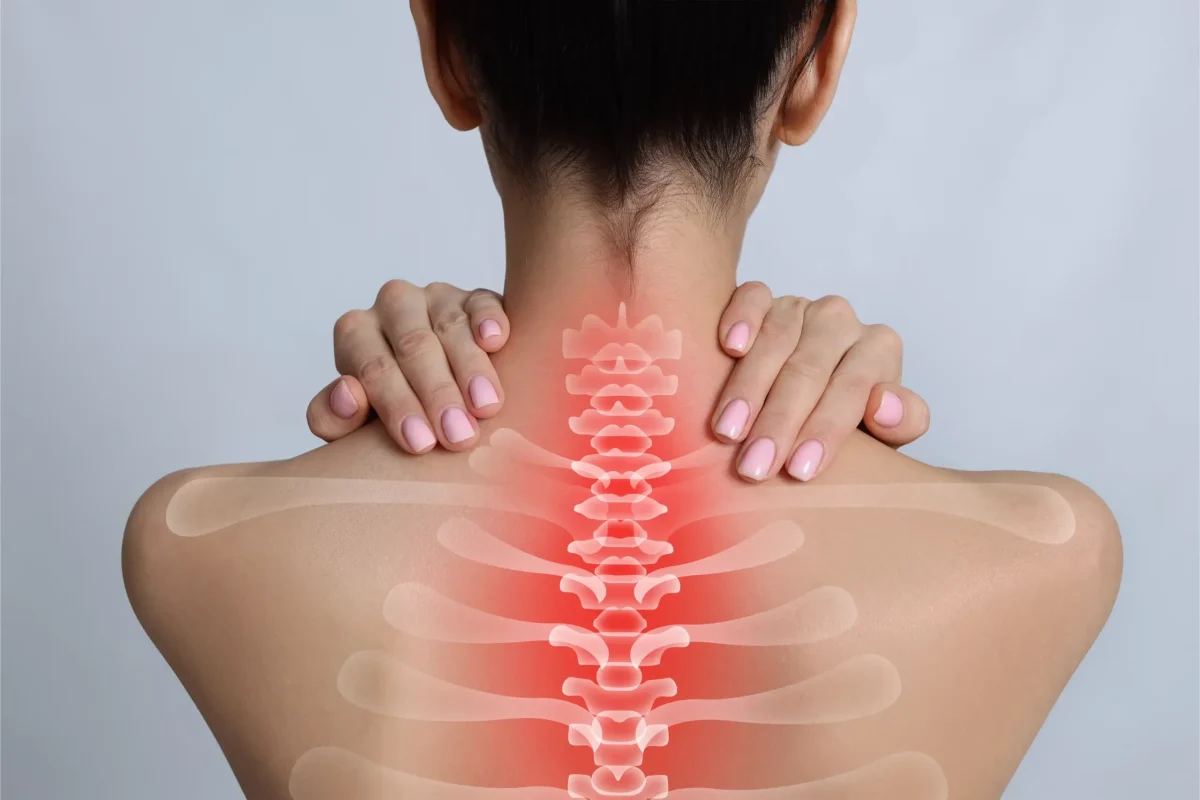
Due to prolonged use of smartphones and computers, combined with poor posture and a sedentary lifestyle, cervical spine degeneration and bone spurs have become among the most common issues seen in outpatient clinics. Many people experience shoulder and neck pain, stiffness, numbness in the hands, and headaches, assuming these symptoms are simply the result of a “stiff neck” or fatigue, unaware that they are actually caused by structural changes in the spine resulting from cervical spine degeneration.
What is cervical spondylosis? What are bone spurs?
1. Cervical spine degeneration is a natural part of aging
. The cervical spine consists of 7 vertebrae, with intervertebral discs in between that act as shock absorbers, and ligaments, joints, and muscles surrounding them that maintain stability. As we age or due to prolonged poor posture, the intervertebral discs gradually lose water content and thin out, placing increased strain on the joints, which can lead to:
- Disc degeneration
- Cervical arthritis
- Ligament thickening
- Bone spur formation
2. Bone spurs are not “extra bone growths,” but rather the body’s protective response
Osteophytes are often misunderstood by patients as “abnormal growths.” In fact, they are a “proliferative phenomenon” that occurs after joint degeneration as the body attempts to increase stability. However, if osteophytes form near nerve exit points, they can cause “nerve compression,” leading to numbness in the hands, weakness in the shoulders, and even dizziness or an inability to turn the neck.
Causes of Cervical Spine Degeneration and Bone Spurs
1. Poor posture (the most common cause) – increases strain on the cervical spine, leading to premature degeneration.
- Spending long periods looking down at a smartphone (commonly known as “tech neck”)
- Leaning forward for extended periods while using a computer
- Using a pillow that is too high or sleeping with your head tilted to one side for extended periods
2. Age and natural aging—After age 40, the cervical spine begins to show significant degeneration, and bone spurs are more likely to develop at this stage.
3. Overuse from exercise or work
- People whose jobs require prolonged forward head posture
- Workers who repeatedly lift heavy objects or perform rotational movements
- Long-distance runners or those with poor form during strength training
4. Traumatic Injuries and Untreated Old Injuries—Car accidents, sprains, and sports injuries can all accelerate joint wear and tear.
5. Genetic predisposition or family history of joint degeneration—Some people experience faster joint degeneration naturally and should pay even greater attention to joint care.
Common Symptoms of Cervical Spondylosis and Bone Spurs
Symptoms vary depending on the degree of degeneration and the location of nerve compression, but the most common include:
1. Shoulder and neck pain, stiffness, and difficulty turning the head
. Overcompensation by the neck muscles leads to chronic stiffness and a dull ache.
2. Numbness in the hands, weakness in the hands, and tingling in the fingers
. Bone spurs or degenerated intervertebral discs compressing the nerve roots are the most typical symptoms.
3. Radiating pain toward the shoulders and arms (commonly referred to as the “cervical version” of sciatica). The
pain spreads from the shoulders → arms → fingers.
4. Headaches, tightness at the back of the head, and dizziness
. Inflammation of the cervical spine and muscle tension can affect blood flow to the head.
5. Upper back pain and a pinching sensation on the inner side
of the shoulder blades: Cervical nerves innervate the thoracic and back regions, making it common for pain to radiate to these areas.
If you experience the following symptoms, it may indicate severe cervical nerve compression or spinal pathology; seek immediate medical attention:
- Weakness in both hands or both feet
- Noticeable numbness, unsteady gait
- Inability to lift or turn the head
- Pain severe enough to prevent sleep at night

Which groups are more prone to cervical spine degeneration?
High-risk groups:
- Office workers who use mobile phones or computers for extended periods
- People who work in positions requiring them to look down (beauticians, engineers, dentists)
- People aged 50 and older
- Individuals with a family history of osteoarthritis
- Athletes or those who carry heavy loads for extended periods
- Individuals with chronic, untreated shoulder and neck pain
Common Treatments for Cervical Spondylosis and Bone Spurs
1. Non-surgical conservative treatment: The first choice for patients with early- to moderate-stage
conditions Most patients with cervical spondylosis and osteophytes can achieve significant improvement through conservative treatment during the early to moderate stages.
(1) Medication
- Nonsteroidal anti-inflammatory drugs (NSAIDs): Reduce pain and inflammation.
- Muscle relaxants: Relax tight and stiff neck muscles.
- Neuropathic pain medications: Relieve nerve-related symptoms such as numbness in the hands and radiating pain.
(2) Physical Therapy and Rehabilitation
- Heat therapy, electrotherapy, and ultrasound: Reduce pain and promote circulation.
- Cervical traction: Increases intervertebral space and reduces nerve compression.
- Manual therapy and exercise prescriptions: Strengthen deep neck muscles, improve posture, and enhance cervical spine stability.
(3) Injection Therapy
- Steroid injections: Provide rapid local pain relief, but should not be used frequently.
- Regenerative Medicine (PRP/Amniotic Growth Factors): Utilizes autologous platelets or amniotic growth factors to repair soft tissue damage, enhance cervical stability, and reduce chronic pain. Amniotic growth factors, containing multiple growth factors, offer greater potential for nerve repair and tissue regeneration, making them suitable for patients with recurrent pain, significant degeneration, or those unsuitable for surgery.
2. Surgical Treatment: When conservative treatment is ineffective
or symptoms are severe If there is no improvement after 3–6 months of conservative treatment, surgery should be considered. Common surgical procedures include:
- Anterior Cervical Discectomy and Fusion (ACDF): Removal of the disc or bone spurs compressing the nerves, followed by fusion and stabilization.
- Artificial Disc Replacement (ADR): A surgical option that preserves mobility by implanting an artificial disc instead of performing fusion.
- Cervical Posterior Laminectomy: This procedure enlarges the spinal canal and is commonly used for multi-level spinal cord compression.

Daily Care and Prevention Tips for the Cervical Spine
1. Proper posture is key
- Raise the computer screen to eye level
- Hold your phone above chest level
- Keep your shoulders relaxed and your elbows at a 90-degree angle while typing
- Avoid leaning forward or hunching your shoulders for extended periods
2. Get up and move around every 45–60 minutes
This improves blood circulation and reduces muscle tension.
3. Core and deep cervical muscle training
Strengthen cervical stability and slow down the rate of degeneration.
4. Avoid high or hard pillows
Choose a pillow height that maintains the natural curve of the cervical spine.
5. Get regular professional checkups
- Use ultrasound to assess soft tissues
- X-ray examination of cervical curvature and bone spurs
- MRI to assess nerve compression when necessary
When should you see a doctor for neck pain?
If you experience any of the following symptoms, we recommend seeking an evaluation from an orthopedic physician as soon as possible:
- Neck and shoulder pain that has persisted for more than 2–4 weeks without improvement
- Numbness in the hands or tingling in the fingers
- Noticeable weakness in the deltoid muscle or arm
- Headaches accompanied by neck stiffness
- Recurrent stiffness or pain in the upper back or inner side of the shoulder blades
Cervical spine degeneration is not an "inevitable consequence of aging"; with proper treatment and lifestyle adjustments, most people can see significant improvement.
Frequently Asked Questions About Neck Pain
How can I tell if my neck pain is caused by “degeneration” or “bone spurs”?
Typical symptoms of cervical spondylosis include neck and shoulder pain, difficulty turning the head, numbness in the hands, dizziness, and pain on the inner side of the scapula. If symptoms persist for 2–4 weeks without improvement, recur frequently, or if numbness and weakness in the hands become more pronounced, it is recommended to have an X-ray, ultrasound, or MRI to evaluate for bone spurs, intervertebral disc degeneration, or nerve compression.
Will bone spurs disappear on their own? Do I need immediate surgery?
Bone spurs are hyperplasia resulting from joint degeneration and will not disappear on their own, but symptoms can be significantly improved with conservative treatment. Surgery is only necessary when there is significant weakness, gait instability, or bowel and bladder dysfunction due to spinal cord compression. Most patients can control their symptoms without surgery.
Is numbness in the hand caused by nerve compression? What tests should be done?
Persistent or recurrent hand numbness is mostly related to nerve root compression caused by cervical spondylosis.
Common examinations include:
X-ray: to check for bone spurs and cervical curvature
Ultrasonogram: to assess muscles, ligaments, and inflammation
MRI: to confirm the degree of nerve compression
Will taking painkillers be enough? Or will it make my condition worse?
Medications (NSAIDs, muscle relaxants, nerve pain relievers) can provide short-term symptom relief, but they cannot reverse degeneration or eliminate bone spurs. Long-term reliance on painkillers alone may delay treatment; combining them with posture correction, exercise, physical therapy, or regenerative therapy is recommended for better results.
I have chronic neck and shoulder pain. Is it a posture problem or degeneration?
Both often coexist. **Poor posture accelerates degeneration, and degenerated muscles become even tighter, creating a vicious cycle.** If you already experience:
**easily experiencing stiffness and pain after prolonged sitting**
**stiff neck upon waking in the morning**
**increasing muscle soreness the longer you work**
You may have progressed from posture issues to structural degeneration. It is recommended that you be evaluated by an orthopedic surgeon.
How can we prevent cervical spine degeneration in daily life?
- Raise the screen to eye level
- Avoid prolonged periods of looking down at your phone
- Get up and move around every 45–60 minutes
- Use a pillow that conforms to the curve of your cervical spine when sleeping
- Perform deep cervical muscle group exercises weekly (such as chin tuck exercises)
Good posture and stable muscle strength are fundamental to preventing degeneration.
Related Articles
CASE Testimonials Mr. Wang, who has long engaged in physically demanding work, suffered severe strains to his lumbar spine and deep muscles due to frequent bending and lifting of heavy objects. He has endured chronic lower back pain for years, and traditional rehabilitation has yielded limited resul
Regen Health SIS 超磁場治療儀是一種獲得美國 FDA 與台灣衛福部認證的非侵入性復健設備。它利用 HIFEM 高強度聚焦電磁場技術,能穿透皮下 10 公分,針對深層肌肉與神經進行修復。臨床證實能有效改善急性/慢性疼痛、促進骨折癒合、放鬆肌肉,並廣泛應用於奧運選手的運動傷害恢復。 What Is the SIS Super Inductive System Therapy? Principles and Core Technology SIS (Super Inductive System) is a groundbreaking rehabilitation medical device whose core technology is HIFEM (High-Intensity Focused Electromagnetic).Unlike traditional electrotherapy, which acts only on the epidermis, SIS generates a magnetic field with an intensity of up to 2.5 Tesla, capable of safely penetrating human tissue up to 10 centimeters without skin contact. This means it can directly target deep structures such as the spine, nerve roots, bones, and