Orthopedic Pain
Shoulder & Shoulder Joint
Orthopedic pain
Shoulder joint
Shoulder & Shoulder Joint
Neck & Cervical Spine
Shoulder & Shoulder Joint
Elbow Joint
Wrist & Fingers
Lower Back & Lumbar Pain
Hip Joint
Knee
Ankle & Foot
Full Joint Checkup
Calcific Tendinitis
Table of Contents
Does your shoulder hurt when you raise your arm, or do you experience sharp pain at night? Watch out for calcific tendinitis.
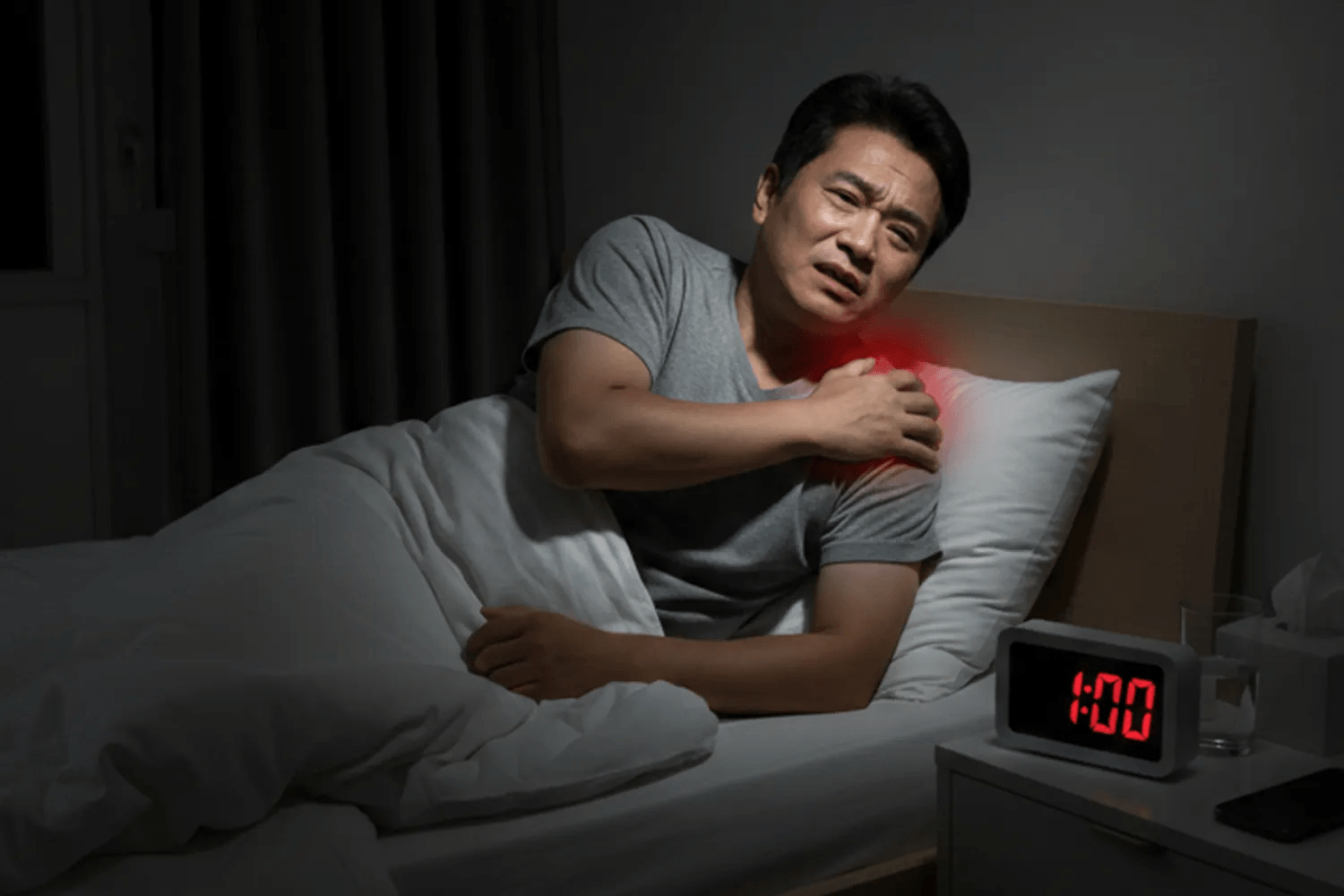
Do you experience sharp, stabbing pain in your shoulder—or even pain severe enough to keep you awake at night—when raising your arm, getting dressed, or turning over in bed? If this pain comes on suddenly, is intense, and makes it difficult to perform everyday movements, you should take special note: this is likely not just a simple strain, but a common yet often overlooked shoulder condition known as calcific tendinitis.
What is calcific tendinitis?
Calcific tendinitis refers to the abnormal deposition of calcium salts within tendons, which causes inflammation and pain. It most commonly occurs in the rotator cuff tendons of the shoulder (particularly the supraspinatus tendon). In severe cases, the pain can be excruciating and may even limit shoulder joint movement, making even simple tasks like raising the arm difficult.
Tendons are vital structures that connect muscles to bones. When calcium deposits form within them, they not only cause pain but also impair force transmission and the smooth movement of the shoulder. While calcific tendinitis can occur in the hip, elbow, or knee, the shoulder remains the most common site.
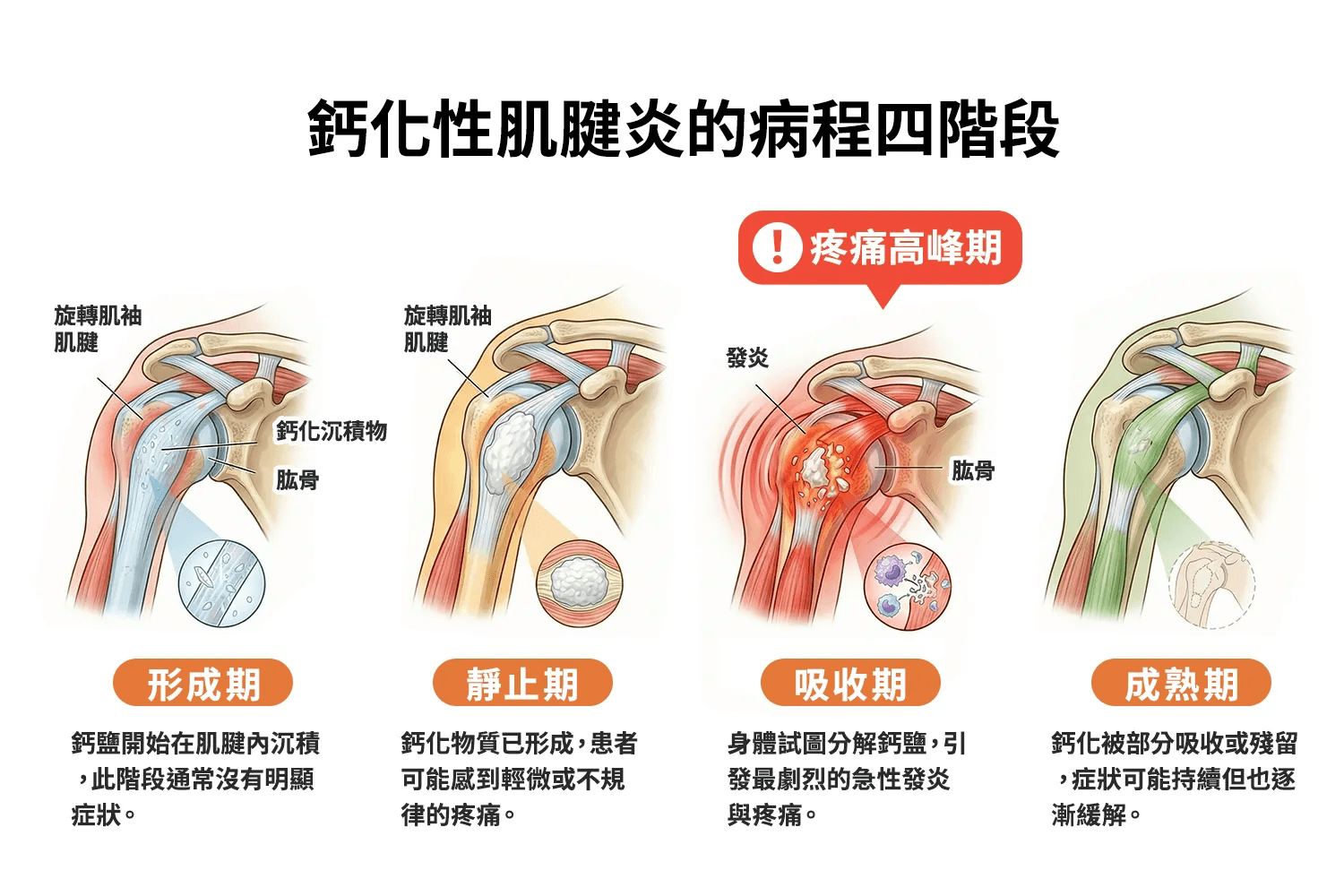
The Four Stages of Calcific Tendinitis
- Formation stage: Calcium salts begin to deposit; symptoms are mild
- Stable phase: Calcification forms; pain is mild or irregular
- Resorption Phase: The body attempts to break down calcium deposits; inflammation is most severe and pain is most pronounced
- Mature Phase: Partial resorption of calcifications with residual deposits; symptoms may persist
👉 Clinically, the most unbearable aspect for patients is often the severe pain during the resorption phase.
The main causes of calcific tendinitis
Clinically, they can be divided into two main categories:
1. Reactive calcification
Due to prolonged uneven stress, overuse, or microtears, tendon cells are subjected to inflammatory stimulation before they can repair themselves. This causes them to undergo abnormal differentiation into cells resembling osteocytes, leading to calcium salt deposition.
2. Degenerative calcification
With age and joint degeneration, calcium ions gradually deposit, forming hard calcifications that rub against surrounding bones or ligaments, exacerbating inflammation and pain.
Common contributing factors include:
- Local ischemia and poor blood circulation
- Abnormal metabolism of tendon cells
- Aging
- Long-term repetitive arm-raising movements
- Genetic factors
- Metabolic disorders such as diabetes and thyroid dysfunction
Common Symptoms of Calcific Tendinitis
- Shoulder pain: dull, stabbing, or severe
- Pain worsens when raising, abducting, or rotating the arm
- Nighttime pain; often wakes up due to pain on the affected side when sleeping on that side
- Pain may radiate to the upper arm or neck
- Limited range of motion; severe cases may lead to secondary frozen shoulder
- Local tenderness, swelling, and signs of inflammation
Populations at risk for calcific tendinitis
- Adults aged 40–60 (especially those aged 40–50)
- Women (slightly more common than in men)
- People who engage in prolonged overhead work or sports (teachers, painters, pitchers, swimmers)
- People with diabetes or endocrine disorders
- Individuals with a history of shoulder injury or degeneration
How can calcific tendinitis be prevented?
- Warm up thoroughly before exercising and stretch afterward
- Avoid slouching, hunching, or raising your arms overhead for extended periods
- Avoid overusing your shoulders
- Maintain a balanced diet; there is no need to deliberately restrict calcium intake
- Keep your shoulders warm and apply moderate heat to promote circulation
- If you experience shoulder discomfort, seek medical attention promptly to prevent worsening
Traditional treatments for calcific tendinitis
1. Conservative treatment
- Oral anti-inflammatory and pain-relieving medications (NSAIDs)
- Physical therapy: heat therapy, electrotherapy, ultrasound
- Extracorporeal Shock Wave Therapy (ESWT)
- Steroid injections (short-term use)
- Rest and activity modification
2. Invasive treatments
- Ultrasound-guided aspiration of calcifications (needle aspiration and irrigation)
- Minimally invasive arthroscopic surgery (for a small number of severe cases)
3. Regenerative and Repair Integrated Therapy
✔ Ultrasound-Guided Calcific Tendinopathy Aspiration
Under real-time guidance of high-resolution ultrasound, the needle tip is precisely directed to the calcification site to directly aspirate calcium deposits and irrigate the inflamed tissue. Compared to traditional blind aspiration, this method offers higher success rates and greater safety, providing rapid relief from severe pain.
✔ PRP/PRF Regenerative Therapy
High-concentration growth factors derived from the patient’s own blood are injected into the damaged tendon to promote repair, improve circulation, and suppress inflammation. PRF features a three-dimensional structure that enables sustained release of growth factors, enhancing the quality of tissue repair.
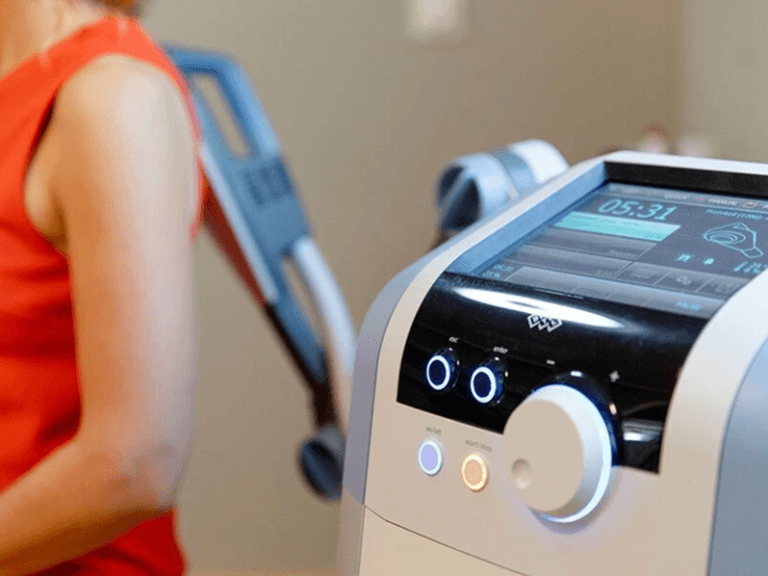
✔ SIS Super Magnetic Therapy
This non-invasive, high-intensity electromagnetic field therapy penetrates deep into tissues to relieve pain, reduce inflammation, relax muscles, and improve circulation. It is particularly effective for managing severe pain during the resorption phase.
Calcific tendinitis is not a minor issue; delaying treatment can lead to increased pain and make it harder to treat.
Through precise diagnosis and appropriate minimally invasive integrated therapies, most patients can effectively reduce pain and restore shoulder function.
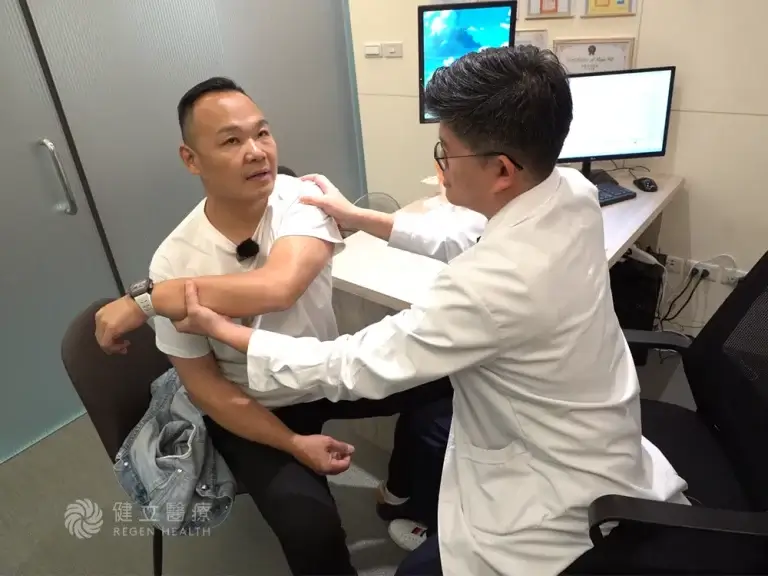
If you are currently suffering from severe shoulder pain, we invite you to schedule a consultation so our professional team can help you find the most suitable solution.
Frequently Asked Questions About Calcific Tendinitis
Does calcific tendinitis always require surgery?
Not necessarily; most cases can be improved through suction or regeneration therapy.
Is calcified tendinitis and calcification aspiration very painful?
Minimally invasive procedure, combined with local anesthesia, resulting in minimal pain.
Can PRP/PRF replace surgery for calcific tendinitis?
It can be used as an important repair method, but it needs to be evaluated according to the calcification status.
What are the differences between SIS and electrotherapy for calcific tendinitis?
SIS penetrates deeper and has a more comprehensive effect.
Will calcific tendinitis recur?
Relapse is still possible if posture and usage habits are not improved.
What tests are needed for calcific tendinitis?
High-resolution ultrasound is the preferred method, and X-rays may be used in conjunction when necessary.
How long does it take to recover from calcific tendinitis?
Most patients show significant improvement within 1–4 weeks, but this may vary depending on individual circumstances.
Who is at highest risk for calcific tendinitis?
Women aged 40–60, those who work with their shoulders above the ground, and those with metabolic diseases.
Related Articles
CASE Testimonials Mr. Xie, the owner of Hongda International, has maintained a regular fitness routine for many years, yet he has been plagued by a five-year-old shoulder injury that prevented him from raising his arm smoothly and even caused him to wake up in pain when turning over in bed at night.
Regen Health SIS Super Magnetic Therapy Device: Medical-grade HIFEM technology—a powerful tool for chronic pain management! The SIS Super Inductive System (SIS) is an advanced non-invasive therapy that utilizes HIFEM (High-Intensity Focused Electromagnetic) technology. With an intensity of 2.5 Tesla