
Prolotherapy
Integrative Medicine
Regenerative Therapy
PRP Hair Regrowth
Table of Contents
PRP Hair Regrowth: Natural Technology That Stimulates Hair Follicle Regeneration for Thick, Healthy Hair
What is PRP hair regrowth?
PRP (Platelet-Rich Plasma) is a cutting-edge regenerative medicine technology. Its core principle involves using the patient’s own blood and high-tech centrifuge equipment to extract platelets and growth factors at concentrations several times higher than those found in normal blood.
This technology was initially widely used in sports medicine and skin repair, and in recent years has achieved breakthroughs in the field of hair restoration. Because it is derived from the patient’s own body, it possesses extremely high biocompatibility and is hailed as a “natural hair restoration method with no side effects.”
The Science Behind PRP Hair Regrowth: How Do the Six Key Growth Factors “Reactivate” Hair Follicles?
The key to PRP’s hair-regrowth effects lies in the “cell signaling molecules” released by platelets. When these highly concentrated growth factors are injected into the scalp, they trigger a series of biological repair mechanisms:
Platelet-Derived Growth Factor (PDGF): Stimulates hair follicle cell division and reactivates the regeneration process.
Vascular Endothelial Growth Factor (VEGF): Induces microvascular angiogenesis, improves scalp blood circulation, and delivers nutrients precisely to the hair follicle roots.
Transforming Growth Factor Beta (TGF-β): Exerts anti-inflammatory effects, stabilizing the damaged scalp environment.
Epidermal Growth Factor (EGF): Repairs damaged epidermal tissue and extends the hair’s “anagen phase.”
Insulin-like Growth Factor 1 (IGF-1): Strengthens the hair root structure, effectively reducing abnormal hair shedding.
Fibroblast Growth Factor (FGF): Promotes collagen synthesis, rebuilding the supportive tissue surrounding the hair follicles.
Differences Between PRP, Medication, and Hair Transplantation
| Features | PRP Hair Therapy | Medication Treatment | Hair Transplant Surgery |
|---|---|---|---|
| Natural | Autologous blood | Relies on drug ingredients | Manual procedure |
| Duration | Long-lasting release of growth factors | Requires continuous use to maintain | One-time surgical procedure |
| Safety | Autologous source (very high) | Possible side effects | Surgical risks |
| Invasiveness | Microneedle injections | None | Highly invasive |

Six Key Features and Benefits of PRP Hair Regrowth
Compared to traditional oral medications or hair transplant surgery, PRP offers a more balanced solution:
- Stem cell activation: Stimulates dormant hair follicle stem cells.
- Improved circulation: Addresses disrupted nutrient supply caused by poor blood circulation.
- Extended growth phase: Shortens the resting phase, allowing hair to grow longer and thicker.
- Structural remodeling: Enhances scalp thickness and overall tissue health.
- Increased density: Thickens existing hair shafts, improving visual density.
- Reduced hair loss: Effectively slows hair shedding caused by stress or hormonal factors.
Indications and Suitable Candidates for PRP Hair Regrowth
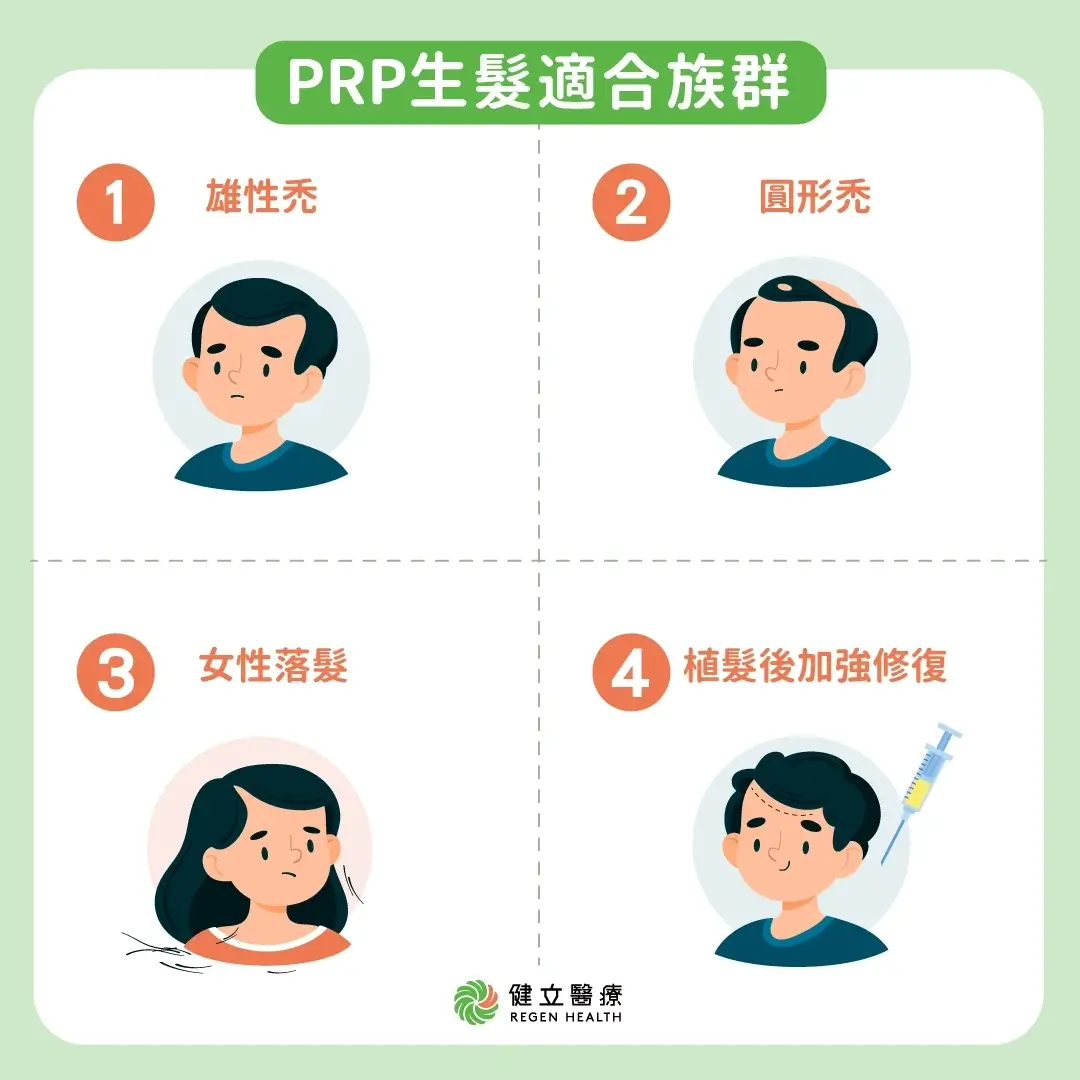
1. Common Indications
- Androgenetic alopecia (M-shaped recession, vertex balding): Targets early to mid-stage hereditary hair loss.
- Female pattern hair loss: Improves thinning along the part line and reduced hair volume at the crown.
- Alopecia areata: Supports immune regulation and promotes localized regeneration.
- Stress-related hair loss: Suitable for postpartum shedding and acute telogen effluvium caused by psychological stress.
- Scalp aging: Addresses finer, weaker hair quality due to aging.
2. Suitable Candidates
- Those seeking natural treatments and wishing to avoid synthetic medications.
- Individuals concerned about the risks and recovery period of hair transplant surgery.
- Those who have not seen satisfactory results from medication or are concerned about side effects (e.g., impact on sexual function or liver/kidney burden).
- Post–hair transplant patients যারা wish to improve graft survival rate as an adjunct therapy.
PRP International Clinical Data: Evidence of Hair Regrowth Efficacy Over the Past Decade
According to multiple studies published over the past decade in the Journal of Clinical and Aesthetic Dermatology (JCAD) and the International Journal of Molecular Sciences (IJMS), PRP has demonstrated significant evidence in promoting hair growth:
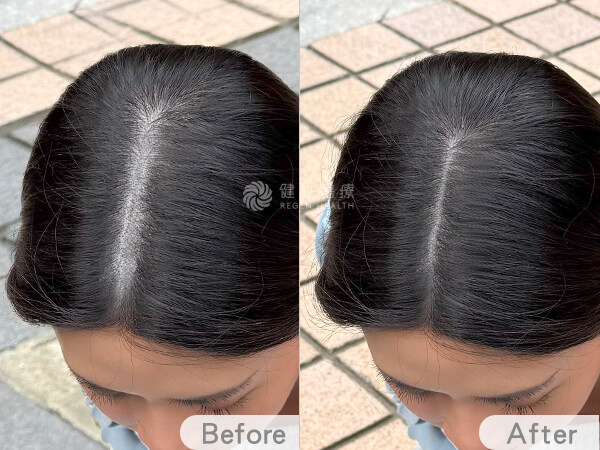
- Increased hair density: Clinical studies indicate that patients who underwent 3–6 PRP sessions experienced an average increase in hair density of approximately 15% to 30%.
- Thicker hair shafts: Microscopic observations show that the average hair shaft diameter increased by about 20% after treatment, enhancing overall fullness.
- High satisfaction rate: In randomized, double-blind controlled trials for androgenetic alopecia (AGA), over 80% of patients observed a significant reduction in hair shedding.
- Long-term stability: Data suggests that combination therapy (PRP with medication) provides up to 1.5 times better maintenance results compared to medication alone.
PRP Hair Regrowth Treatment Process: Precise, Effective, and Safe
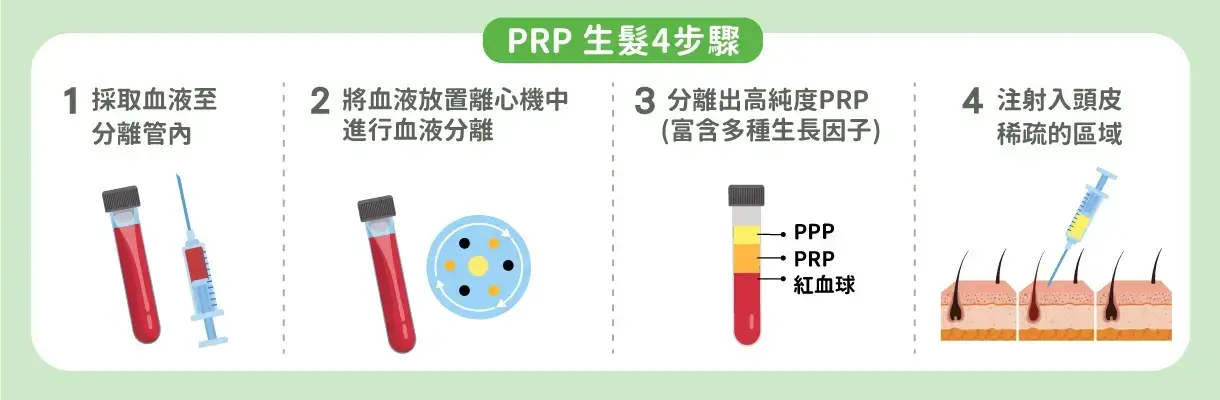
- Professional consultation: A physician conducts a scalp assessment to evaluate hair follicle viability.
- Blood collection: Approximately 10–20 ml of autologous blood is drawn (similar to a routine health check).
- Centrifugation: A specialized centrifuge is used to isolate high-concentration PRP.
- Scalp desensitization: Patented anesthetic spray or mild pain-reduction techniques are applied.
- Targeted injection: Growth factors are precisely injected into the dermal layer of the scalp in target areas.
Important Information About PRP Hair Regrowth Treatments
- Before treatment: Avoid anticoagulants such as aspirin within 48 hours; ensure adequate sleep and hydration.
- After treatment: Avoid washing hair for 24 hours; refrain from vigorous exercise or saunas for 48 hours; avoid hair coloring or perming for one week.
- Contraindications: Not suitable for individuals with platelet function disorders, severe anemia, sepsis, or acute scalp infections.
Common Questions about PRP Hair Growth Treatment
How many PRP hair regrowth treatments are needed to see results?
It is generally recommended to complete a full course of treatment with 3-6 sessions, each spaced approximately 4-6 weeks apart. Most patients notice a reduction in hair loss and a thicker hair texture after the 2nd-3rd treatment.
How long does the effect of PRP last?
Results may vary depending on individual circumstances. After completing the basic treatment, it is recommended to have maintenance treatments 1-2 times a year to maintain optimal hair follicle activity.
Will the PRP treatment process be painful?
Our hospital uses a professional scalp anesthetic spray, which significantly reduces the pricking sensation. Most patients report only a slight tingling sensation and minimal discomfort.
Can PRP be done after hair transplantation?
Highly recommended. PRP can optimize the scalp environment, improve the survival rate of transplanted hair follicles, and accelerate the healing speed of the donor and recipient areas.
Does PRP have any side effects?
Because it uses your own blood, there are virtually no issues with rejection or infection. Only a small number of people may experience slight redness, swelling, or tightness after the procedure, which usually subsides naturally within 24-48 hours.
Is postpartum hair loss suitable for women?
It’s perfect. Postpartum hair loss is mostly telogen effluvium, and PRP can quickly provide the hair follicles with the nutrients they need, helping hair enter the growth phase as soon as possible and restore its former volume.
Are there any precautions to take beforehand?
Avoid blood thinners: Avoid taking aspirin or other anticoagulants for 48 hours before treatment (confirm with your doctor).
Maintain a healthy diet: Ensure optimal blood quality.
Stay hydrated: Ensure good blood circulation on the day of treatment.
Related Articles

Hsu Fang-Wei (Orthopedic Physician, Regen Clinic) What is PRP? Activating the Body’s “Special Repair Forces” PRP (Platelet-Rich Plasma) is the gold-standard therapy in regenerative medicine in recent years. The principle involves drawing the patient’s own blood, then using professional centrifugatio
