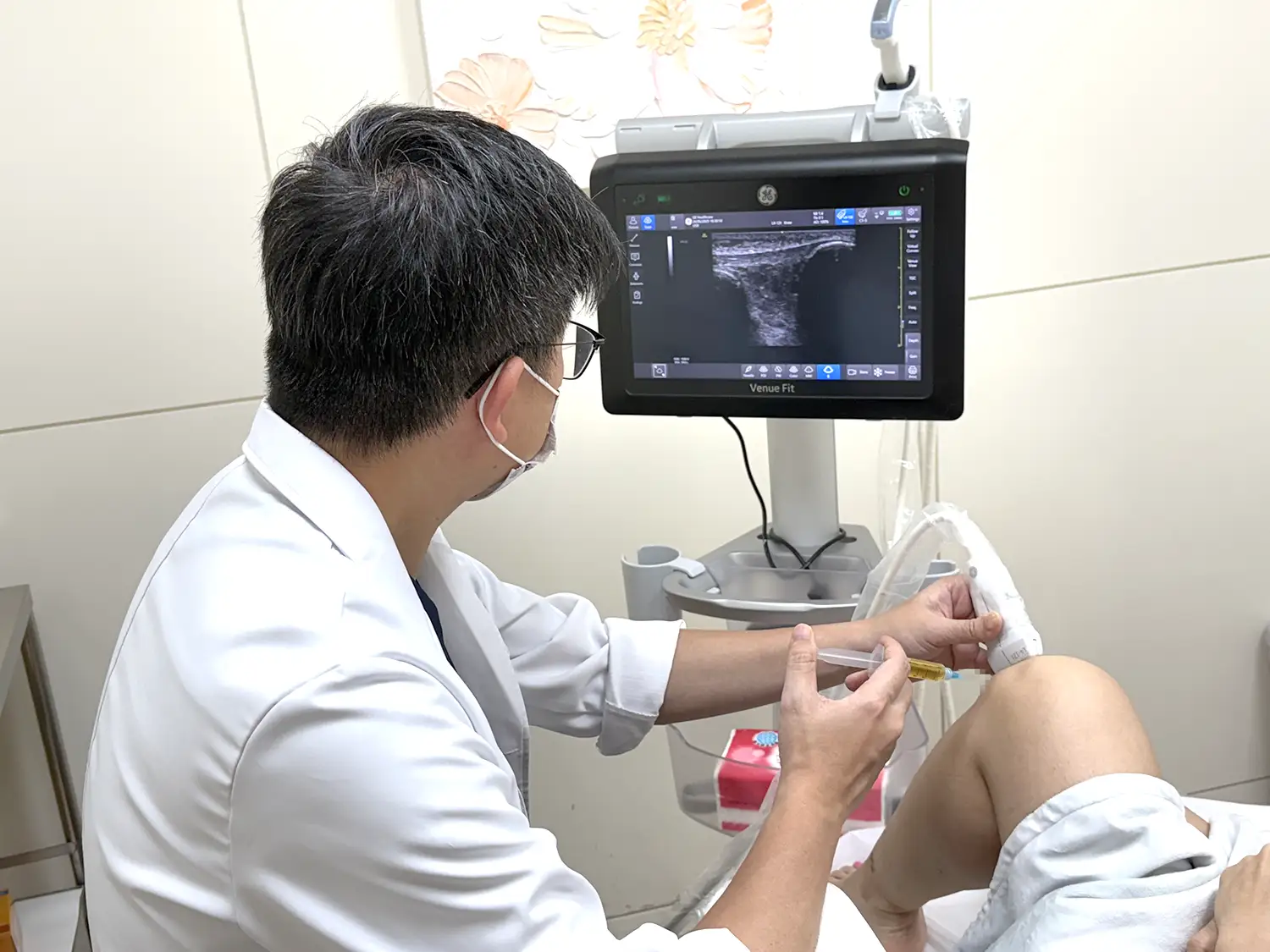
PRP Therapy Complete Guide: Non-Surgical Regenerative Technology for Knee Degeneration and Sports Injuries

Hsu Fang-Wei (Orthopedic Physician, Regen Clinic)

2025-02-27
What is PRP? Activating the Body’s “Special Repair Forces”
PRP (Platelet-Rich Plasma) is the gold-standard therapy in regenerative medicine in recent years. The principle involves drawing the patient’s own blood, then using professional centrifugation techniques to separate and extract plasma rich in “platelets” and “growth factors.”
This technology is widely applied in the treatment of orthopedic pain and sports injuries, particularly for degenerative knee osteoarthritis, tendon tears, and chronic pain. Dr. Hsu Fang-Wei, an orthopedic physician at Regen Clinic, emphasizes that the core value of PRP lies in “not relying on medications” but using the body’s natural materials to reduce inflammation, repair cartilage and tendons, and help patients regain joint mobility.
Why Choose PRP? Analysis of Five Core Advantages
For patients who fear surgery or are concerned about the long-term side effects of painkillers, PRP offers an alternative treatment dimension:
1. Non-drug, steroid-free, non-surgical
PRP relies purely on the body’s self-repair mechanisms, contains no steroids or synthetic chemicals, and does not involve surgical incision or tissue removal.
Suitable for: Patients worried about kidney damage from long-term medication, fearful of surgical risks, or those with recurrent chronic arthritis.
2. Autologous, no rejection risk
Prepared entirely from the patient’s own blood, PRP carries no risk of rejection or cross-infection, embodying the regenerative medicine principles of “natural, safe, and stable.”
3. Gently activates repair while preserving original tissue
Unlike artificial joint replacement that requires bone removal, PRP injects growth factors into the affected area to “guide” the body’s self-repair rather than forcibly “replace” tissue.
4. Delay degeneration: “knee preservation” strategies at all stages
For early to mid-stage degeneration, PRP can slow cartilage wear, improve pain and mobility, and effectively reduce the likelihood of future knee replacement or ligament reconstruction surgeries.
5. Combined therapies for enhanced effects (1+1>2)
PRP does not work in isolation. Dr. Hsu Fang-Wei recommends combining it with the following non-invasive treatments for optimal results:
- SIS Super Magnetic Therapy: Strengthens muscle tone and stabilizes periarticular muscles.
- Physical therapy and joint rehabilitation: Corrects improper posture and restores proper joint function.
- Nutritional supplementation: Optimizes metabolic environment to provide building blocks for tissue regeneration.
Is PRP Really Effective? Dr. Hsu Fang-Wei Reveals the Key to Success!
The Key Truth: Why Do Some People Feel PRP Is Ineffective?
Dr. Hsu Fang-Wei emphasizes: “PRP is not effective just by getting the injection; concentration and technique are the keys to success.” Here are five major reasons why treatment may feel ineffective:
1. Insufficient “dosage,” inadequate repair capacity
According to the latest 2024 U.S. study (Berrigan WA et al., Curr Rev Musculoskelet Med), the absolute number of platelets directly affects prognosis:
- < 5 billion platelets: limited improvement.
- 5–10 billion platelets: moderate effect.
- > 10 billion platelets: gold standard. Significant functional improvement (walking, stair climbing easier) and optimal pain reduction.
2. Injection method too simple
Knee degeneration is usually a “complex problem,” involving not only cartilage wear but also ligament laxity, meniscus damage, or tendon inflammation.
- Knee joint repair therapy: one injection into the joint cavity is not enough.
- Multi-site injection: targeting ligaments, meniscus lesions, tendon attachment points, and even performing “intra-bone injection” to improve bone marrow lesions is necessary to truly stabilize the knee.
3. Improper patient selection
PRP relies on the patient’s own blood for repair. The following conditions may increase failure risk:
- Low platelet count or poor platelet function.
- Use of anticoagulant medications.
- Severe obesity or high-fat diet (chylous blood affects extraction).
- Stage IV severe degeneration (surgery may be required at this point).
4. Misdiagnosis or incorrect diagnosis
Knee pain is not always due to degeneration; sometimes it originates from the spine or hip joint. If the true cause is not identified (e.g., hip problems causing knee compensation), no amount of PRP will resolve the issue.
5. Improper post-treatment recovery
PRP provides repair material, but muscle strength supports the joint. Without post-injection strength training, weight management, or dietary adjustments, the effectiveness will be significantly reduced.
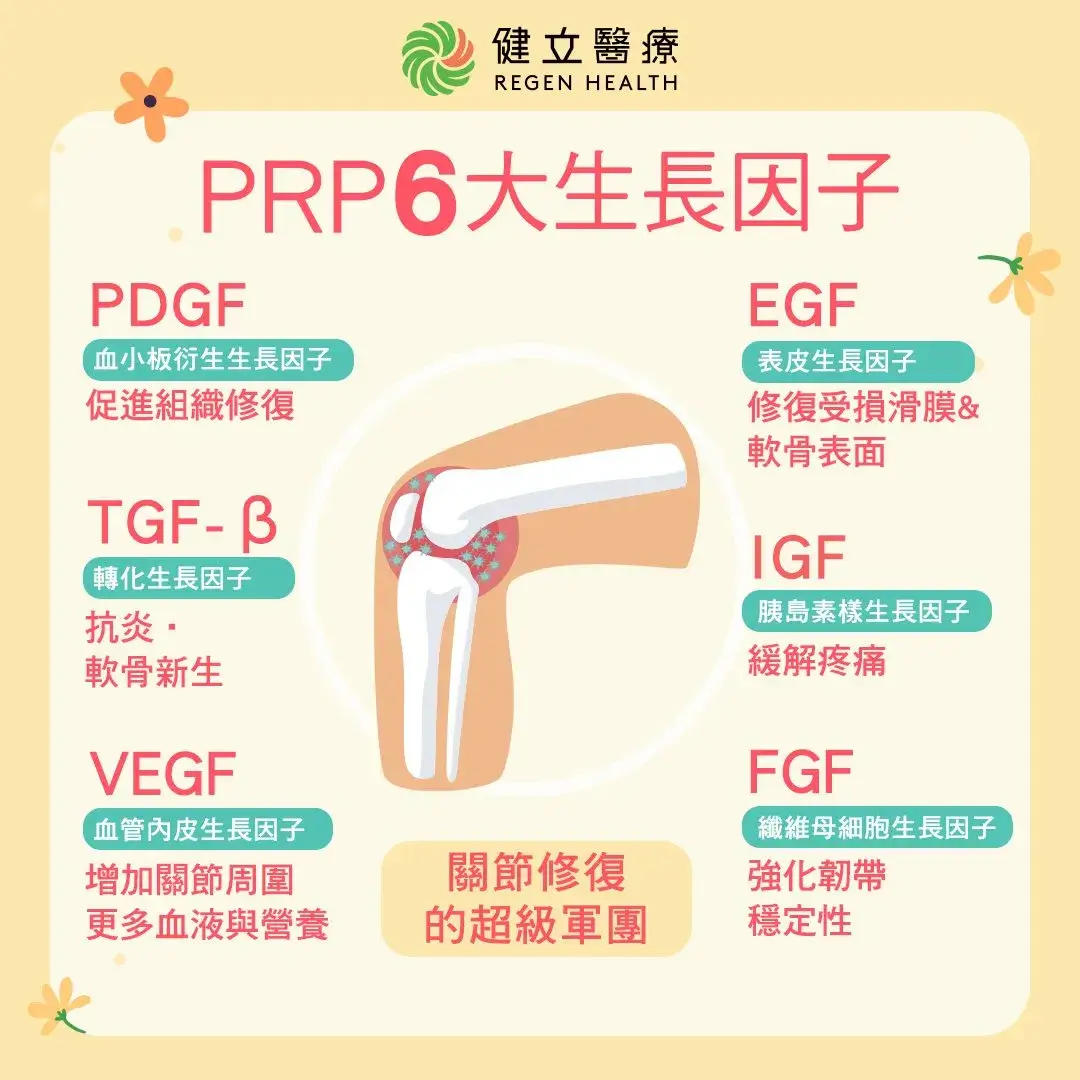
Unveiling PRP’s “Super Repair Squad”: 6 Key Growth Factors
PRP is effective because the growth factors released by platelets act like the body’s “foremen” and “architects,” directing cells to carry out repair.
| Growth Factor | Full Name | Main Function |
|---|---|---|
| PDGF | Platelet-Derived Growth Factor | Repair Pioneer: Accelerates cell proliferation and promotes new blood vessel and tissue formation. |
| TGF-β | Transforming Growth Factor | Stability Master: Suppresses inflammatory responses, regulates immunity, and alleviates chronic pain. |
| VEGF | Vascular Endothelial Growth Factor | Nutrient Supply: Promotes angiogenesis, improving nutrient delivery to chondrocytes and synovial cells. |
| EGF | Epidermal Growth Factor | Tissue Renewal: Enhances repair speed of damaged fascia and ligaments. |
| IGF-1 | Insulin-Like Growth Factor 1 | Anti-Aging & Elasticity: Stimulates collagen production, slowing joint aging. |
| FGF | Fibroblast Growth Factor | Structural Reconstruction: Strengthens tissues, reducing joint stiffness and cracking. |
Who is Suitable for PRP Regenerative Therapy?
Suitable Candidates
- Knee osteoarthritis, Stage 1–2 (mild to moderate); limited effect in advanced stages.
- Those with recurrent knee inflammation, swelling, or pain due to effusion.
- Patients who have tried anti-inflammatory drugs, hyaluronic acid injections, or physical therapy without success.
- Aged 40–75, without serious blood disorders, and wish to avoid joint replacement.
- Individuals whose work requires prolonged walking or heavy lifting.
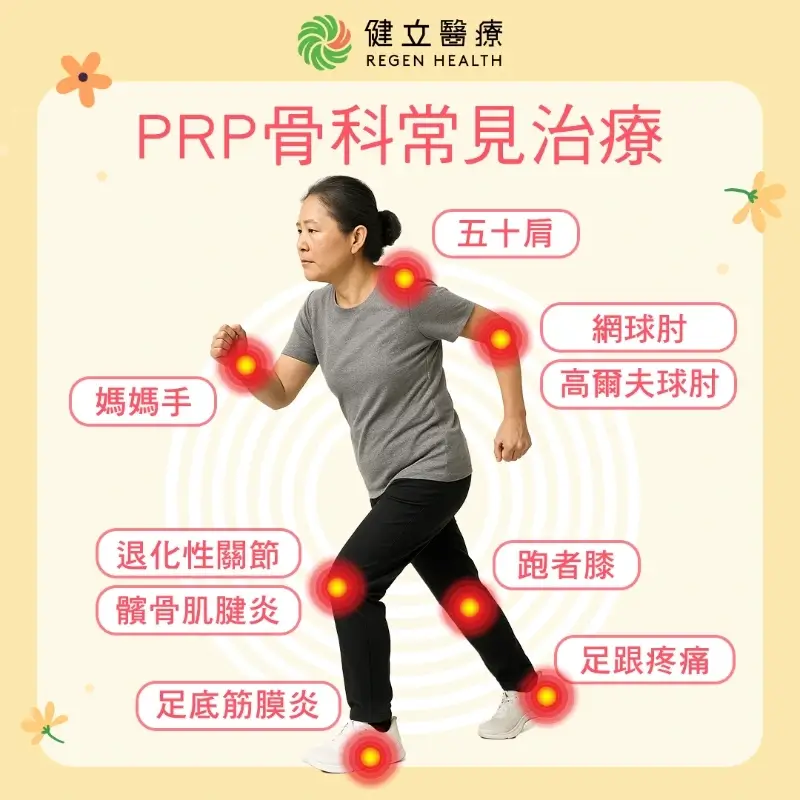
Common Indications (Full-Body Repair)
- Knees: Osteoarthritis, patellar tendinitis (jumper’s knee).
- Hips/Pelvis: Hip arthritis, bursitis.
- Shoulders/Hands: Tennis elbow, golfer’s elbow, shoulder impingement syndrome, de Quervain’s tenosynovitis (mommy thumb).
- Feet: Plantar fasciitis, Achilles tendinitis.

PRP Regenerative Therapy – The Choice of Elite International Athletes
PRP has become a standard in professional sports, helping athletes shorten recovery times and return to peak performance:
- Stephen Curry (NBA): Treated a medial collateral ligament (MCL) sprain, quickly returning for the playoffs.
- Kobe Bryant (NBA): Underwent knee PRP therapy, extending his career while maintaining high scoring performance.
- Shohei Ohtani (MLB): Used PRP to repair ulnar collateral ligament (UCL) in his elbow, successfully returning to two-way play.
- Bryce Harper (MLB): Treated an elbow ligament tear, earning the National League Championship Series MVP.
- Rafael Nadal (Tennis): Long-term use of PRP to manage chronic knee and wrist inflammation.
- Cristiano Ronaldo (Soccer): Received PRP therapy for muscle injuries ahead of the World Cup.
Related Articles
Please enter a title here Hsu Fang-wei (Orthopedic Surgeon at Jianli Clinic) | Orthopedic Specialist License No. 002188 Please enter a title here What Is Piriformis Syndrome? A Common Nerve Compression Problem in People Who Sit for Long Periods Every time you walk into an office or a coffee shop, t
Please enter a title here Hsu Fang-wei (Orthopedic Surgeon at Jianli Clinic) | Orthopedic Specialist License No. 002188 Please enter a title here Lately, in my clinic, I often see middle-aged women rush in, looking panicked, pointing to the middle joint of their finger and asking, “Doctor, is my fin
For degenerative knee osteoarthritis, conventional treatments can only relieve pain, whereas PRP (platelet-rich plasma) and PRF (platelet-rich fibrin) work through six scientifically proven mechanisms—“promoting cartilage regeneration,” “modulating inflammation,” and “improving mitochondrial functio