2025 Regenerative Medicine’s Rising Star: Exosomes – Benefits, Sources, and Complete Guide to Aesthetic Applications

Regen Health
2026-01-13
What is an Exosome? The \"Neural Navigation Courier\" Between Cells
Exosomes are tiny vesicles with a diameter of approximately 50nm to 150nm, secreted by cells into the extracellular space. Previously thought to be cellular metabolic waste, exosomes rose to prominence in regenerative medicine after James Rothman and two other scientists were awarded the Nobel Prize in Physiology or Medicine in 2013 for discovering the \”cellular vesicle transport mechanism.\”
Structure and Characteristics of Exosomes
- Lipid bilayer structure: Highly biocompatible, protecting the contents from degradation.
- Rich in bioactive molecules: Contain DNA, RNA, miRNA, proteins, and other active factors.
- Precise targeting ability: Like a \”courier\” between cells, capable of crossing biological barriers (e.g., the blood-brain barrier) to deliver repair signals accurately.
Four Major Sources of Exosomes: Broad Applications from Medicine to Agriculture
Depending on their source, exosomes exhibit diverse biological properties and functions:
| Source Category | Main Applications | Features and Functions |
| Human-derived | Disease diagnostics, immunotherapy, drug delivery | Derived from umbilical cord, bone marrow, etc.; highest biocompatibility with humans and strongest medical potential. |
| Animal-derived | Regenerative medicine research, disease models | Used in research and development to explore cross-species repair mechanisms. |
| Plant-derived | Agricultural biotechnology, stress-resistance studies | Involved in plant growth regulation and microbe interactions; high safety profile. |
| Engineered | Targeted drugs, precision medicine | Genetically modified to give exosomes specific navigation functions. |
In-Depth Analysis of Exosomes: Four Key Human-Derived Sources
- Umbilical Cord-derived: Includes umbilical cord blood and mesenchymal stem cells (MSCs). Exhibits strong immunomodulatory and anti-inflammatory capabilities, making it a gold standard source for tissue engineering.
- Blood-derived: Contains vesicles secreted by red blood cells, white blood cells, and platelets. Commonly used for early biomarker detection in cancer and cardiovascular diseases.
- Bone Marrow-derived: Demonstrates significant effects on bone regeneration and nerve repair, particularly in fracture healing and spinal cord injury treatment.
- Amniotic Fluid-derived: Rich in growth factors such as EGF and VEGF, strongly promoting cell proliferation and accelerating complex wound repair.
Exosomes vs. Stem Cells: Why Exosomes Are the Better Choice
In regenerative medicine, exosomes are often regarded as the preferred \”cell-free therapy.\” Compared to traditional stem cell treatments, they offer the following advantages:
- Greater stability: Stem cells require cryopreservation and revival, whereas exosomes can be formulated for storage and used on demand.
- Enhanced safety: Exosomes are small molecules without a nucleus, greatly reducing the risks of immune rejection and tumor formation.
- Less invasive: Stem cells often require surgical implantation, while exosomes can be administered via microneedles, sprays, or topical application.
- Better quality control: Standardized industrial processes (e.g., large-scale culture and purification) ensure consistent activity across batches.
Eight Key Applications of Exosomes in Aesthetic Medicine and Regenerative Medicine
1. Aesthetic Repair and Anti-aging
Exosomes can penetrate the dermis, stimulating collagen and elastin regeneration, improving skin laxity and wrinkles.
- Four Repair Stages: From homeostasis, inflammation, proliferation to remodeling, shortening post-laser redness and swelling periods.
- Scar Suppression: Modulates fibroblast activity to prevent hypertrophic scars.
2. Hair Regrowth and Follicle Activation
Exosomes carry Wnt signaling pathway activators that awaken dormant hair follicle stem cells:
- Promotes proliferation of hair follicle progenitor cells, increasing hair thickness.
- Does not affect human androgen balance, avoiding drug side effects.
3. Bone and Soft Tissue Repair
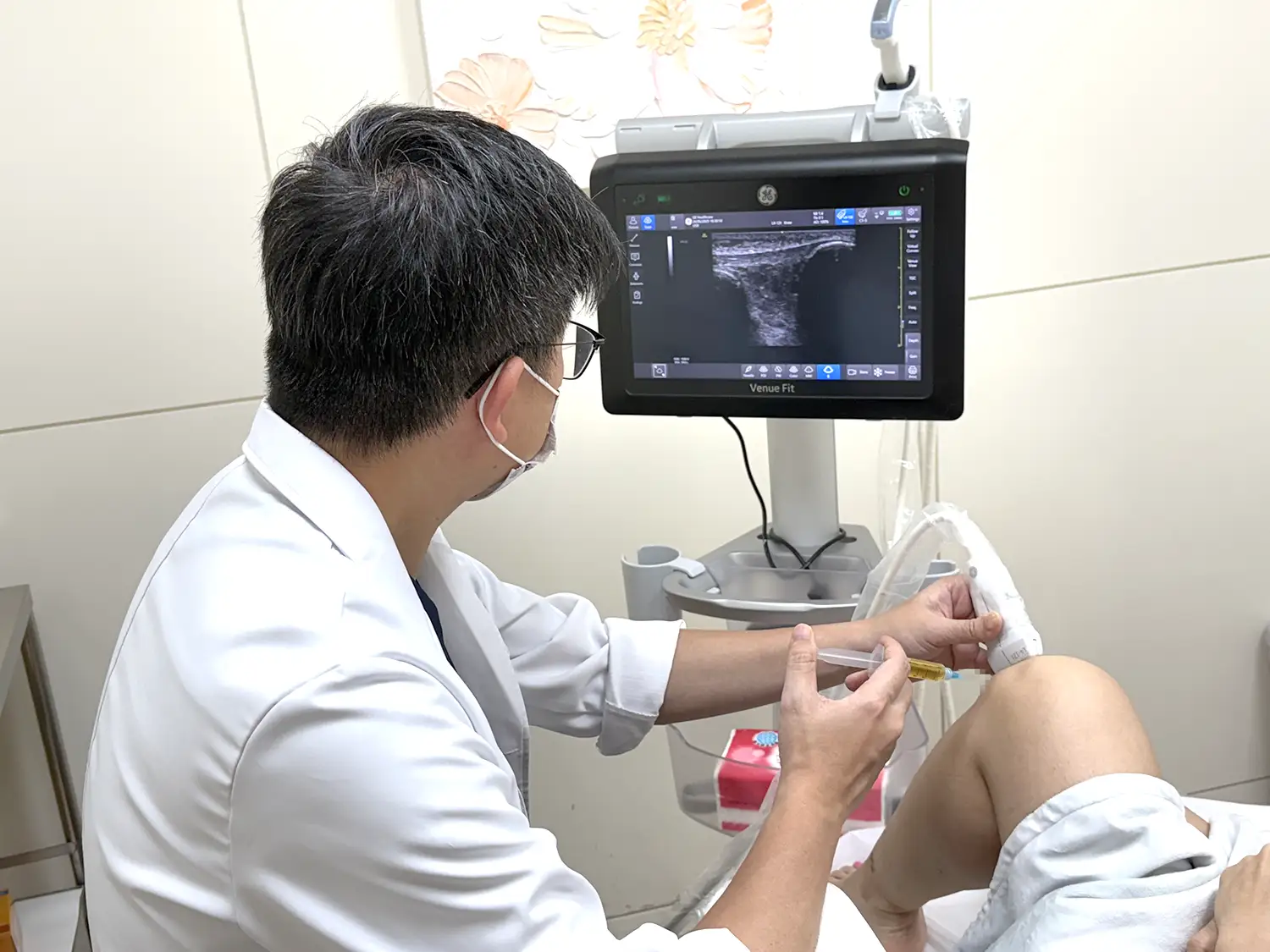
For degenerative arthritis and sports injuries, exosomes secrete anti-inflammatory factors, promote cartilage regeneration, and reduce joint pain.
4. Neurodegenerative Disease Monitoring
Exosomes contain Aβ and tau proteins, serving as important early diagnostic markers for Alzheimer\’s and Parkinson\’s diseases.
5. Chronic Wound and Burn Treatment
For diabetic chronic ulcers or severe burns, exosomes accelerate angiogenesis and facilitate rapid tissue closure.
6. Early Disease Diagnosis (Liquid Biopsy)
Using miRNA within exosomes for liquid biopsy enables detection of cancer signals before imaging reveals lesions.
7. Efficient Drug Delivery
Their natural lipid bilayer allows loading of chemotherapeutic or gene therapies, bypassing immune system attacks and delivering precisely to the affected area.
8. Immune System Modulation
Exosomes can regulate T cell and macrophage polarization, providing new treatment avenues for autoimmune diseases such as systemic lupus erythematosus.

Taiwan Regulatory Update: 2024 New Milestone in the Aesthetic Medicine Market
In March 2024, Taiwan’s Ministry of Health and Welfare (MOHW) officially announced the conditional approval of \”human-derived exosomes\” as cosmetic ingredients, making Taiwan the fifth country worldwide, after the US, Canada, Japan, and South Korea, to legally permit their use. This move not only aligns with international trends but also strengthens the technical competitiveness of domestic biotech companies in the fields of aesthetic skincare and minimally invasive cosmetic repair.
Professional Advice: When selecting exosome products, choose suppliers with international certifications (such as INCI names), high-purity purification technologies, and third-party efficacy validation to ensure safety and effectiveness.
Related Articles
Please enter a title here Hsu Fang-wei (Orthopedic Surgeon at Jianli Clinic) | Orthopedic Specialist License No. 002188 Please enter a title here What Is Piriformis Syndrome? A Common Nerve Compression Problem in People Who Sit for Long Periods Every time you walk into an office or a coffee shop, t
Please enter a title here Hsu Fang-wei (Orthopedic Surgeon at Jianli Clinic) | Orthopedic Specialist License No. 002188 Please enter a title here Lately, in my clinic, I often see middle-aged women rush in, looking panicked, pointing to the middle joint of their finger and asking, “Doctor, is my fin
For degenerative knee osteoarthritis, conventional treatments can only relieve pain, whereas PRP (platelet-rich plasma) and PRF (platelet-rich fibrin) work through six scientifically proven mechanisms—“promoting cartilage regeneration,” “modulating inflammation,” and “improving mitochondrial functio
Regen Health Don’t Let the “Three Lows” Steal Your Quality of Life in Old Age We often hear about the dangers of the “Three Highs” (high blood pressure, high cholesterol, high blood sugar). However, as Taiwan officially enters a super-aged society in 2025, few pay attention to the equally critical