
Does osteoarthritis of the knee always require surgery? Dr. Hsu Fang-Wei explains the PRP (proliferative prostate injection) treatment procedure, evidence, and postoperative precautions!

許芳偉醫師(健立診所醫療長/骨科醫師)骨專醫字號002188號
2026-05-18
目錄
Does degenerative knee arthritis require surgery? This is the question that many patients with joint degeneration resist most and ask most.
In fact, according to the latest international empirical medicine, early and mid-term knee cartilage wear and chronic pain are not only two extreme options of “long-term medication” and “artificial joint replacement surgery”.
PRP (high concentration platelet plasma) hyperplasia injection, which has been widely discussed in the medical community in recent years, has become a core therapy between conservative rehabilitation and surgery.
This article will objectively analyze the scientific repair principles of PRP, international literature evidence, reasonable cost range, and postoperative precautions related to the success or failure of treatment from the perspective of an orthopedic specialist to help you make the most rational joint care decisions.
Knee pain is really not a sudden breakdown
In the outpatient clinic, I often encounter elders with deep brows asking me, “Dr. Xu, my knee was fine, why did it suddenly hurt so much recently that I can’t even climb the stairs?”
In fact, knees rarely break down “suddenly”.
Many people at first just feel that “walking for a little longer will make you sore”, “going up and down the stairs is a bit stuck”, “squatting down to stand up quite difficult”. But because I can still bear it, I hold on first. Until one day, finding yourself afraid to climb stairs, dare not walk out, even even traveling with family began to worry, I was surprised: it turns out that knee pain, has silently eaten a large part of your quality of life.
For early to middle stages of degenerative knee arthritis and chronic joint pain, in addition to medication and rehabilitation, PRP hypertrophy therapy is currently a widely applied regenerative treatment in the medical community. Today, I want to talk to you objectively about what PRP can bring to your knees.
What is PRP (Platelet-Rich Plasma) for Joint Repair?
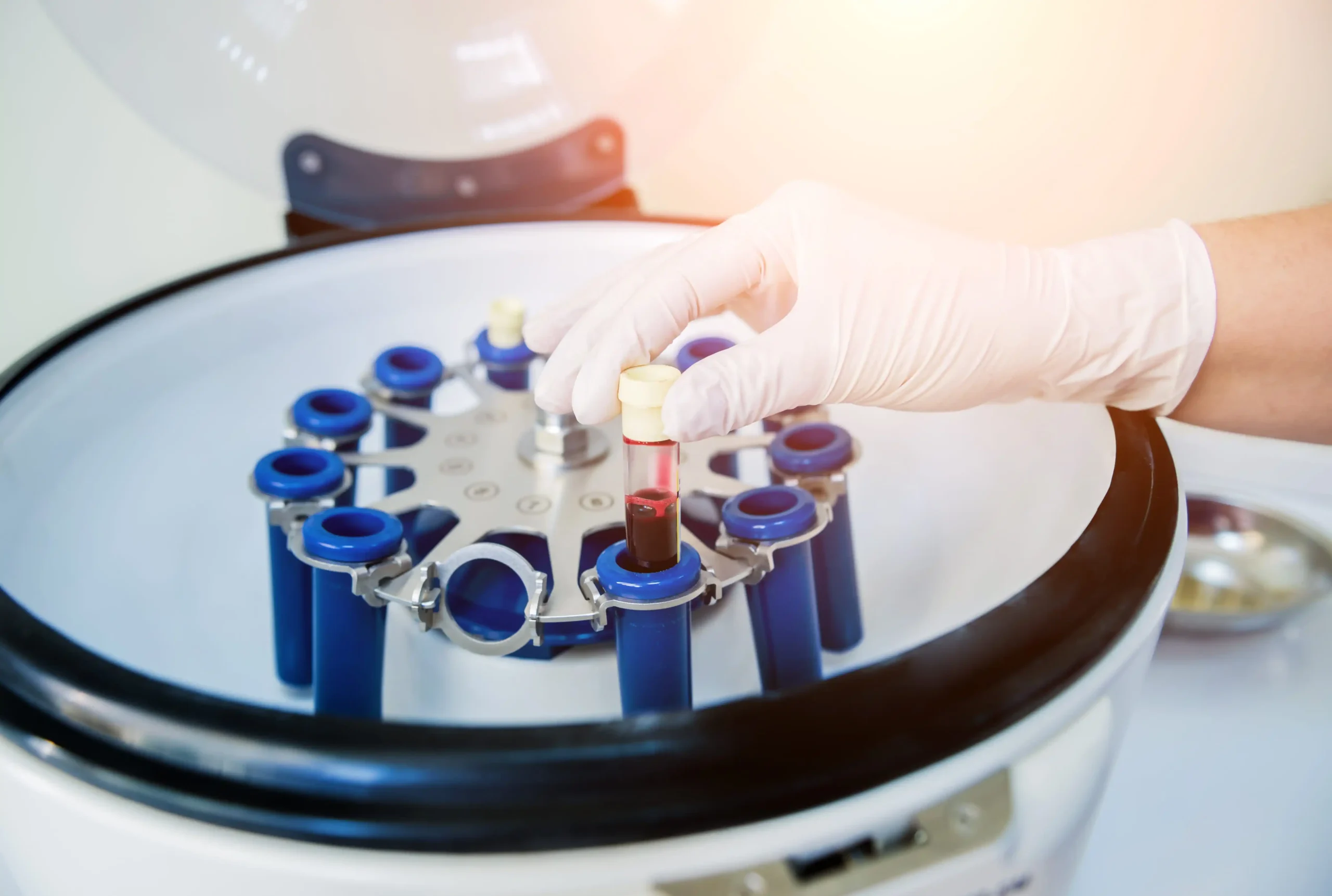
PRP stands for Platelet-Rich Plasma. It’s not a painkiller, nor is it an artificial joint. Instead, it utilizes the body’s own “repair force” in the bloodstream to assist in initiating repair and regulating inflammatory responses within the joint.
Simply put, PRP is like concentrating the body’s natural repair signals and precisely delivering them to the affected area.
⚠️ [The Chief Physician’s Objective Medical Perspective]:
At Regen Clinic, we insist that health education shouldn’t be presented like medical magic. PRP doesn’t involve injecting “brand new cartilage,” nor does it instantly restore joints to their 18-year-old state. It’s more like providing a high-quality “repair microenvironment,” allowing previously blocked self-healing mechanisms to restart.
What are the Substantial Benefits of PRP for Knee Degeneration?
Current international clinical research shows that PRP helps improve pain and functional performance in some patients with knee degeneration. It’s not an exaggerated claim that “it works for everyone,” but rather a scientifically based adjunctive treatment. Key benefits include:
Regulating inflammation: Reducing chronic inflammation within the joint, fundamentally alleviating pain.
Improving joint mobility: As pain and swelling decrease, walking and climbing stairs become smoother.
Supporting tissue repair: Concentrated growth factors participate in repair signal transmission, providing nutrients for soft tissue repair.
Slowing functional deterioration: When combined with rehabilitation and muscle strengthening exercises, it can effectively extend the lifespan of the joint.
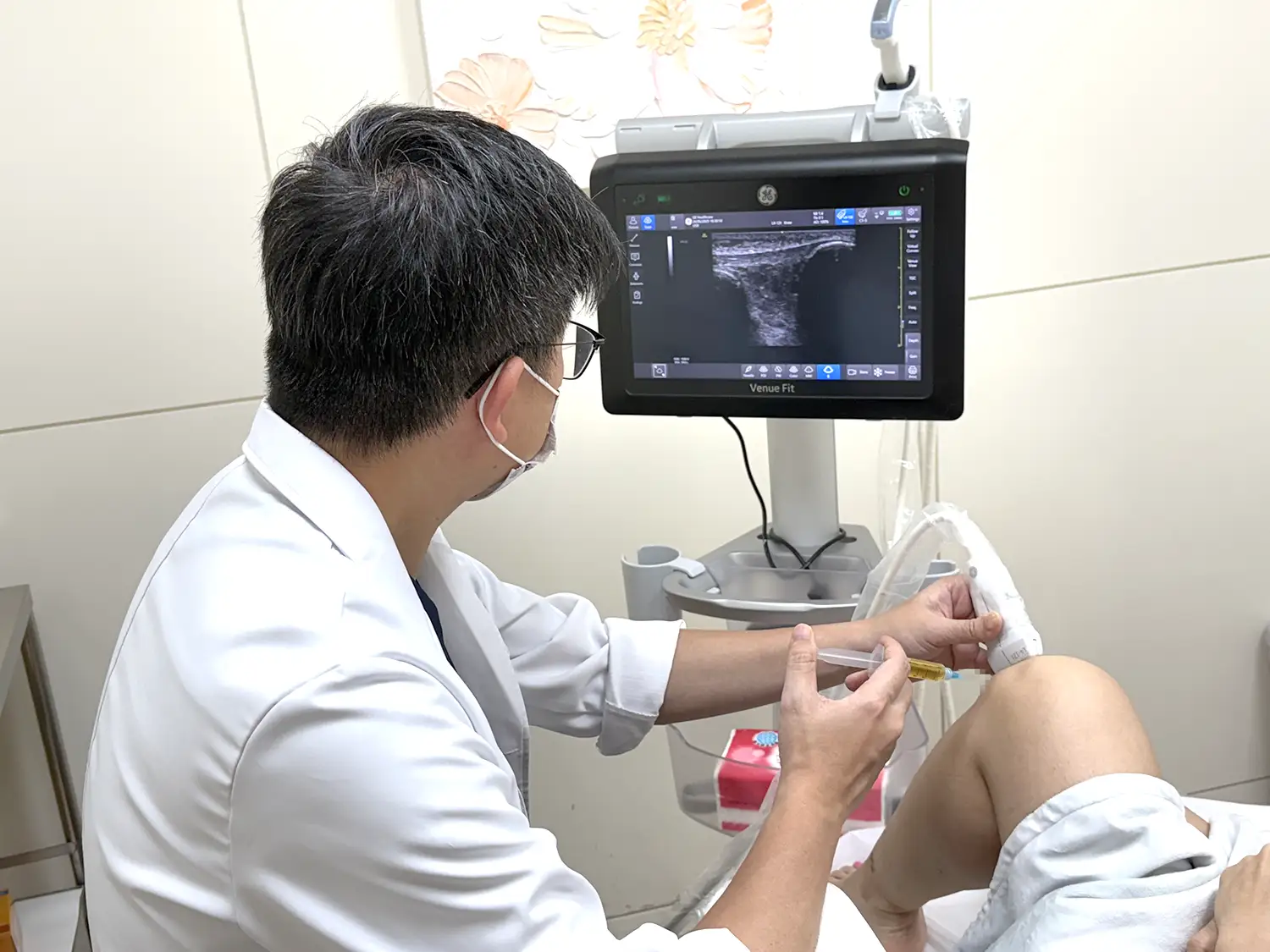
Why do I insist on precise "ultrasound-guided" injections?
The knee joint may appear large, but the actual inflamed areas requiring injection cannot be simply “approximately injected.” Especially when the problem involves specific tendons, ligaments, or bursae, precision directly impacts the quality of treatment.
|
Therapy |
Traditional Blind Injection |
Advanced Ultrasonic Guided Injection (Regen Clinic’s flagship therapy) |
|---|---|---|
|
Location Method |
Relies solely on anatomical location and the physician’s personal tactile experience. |
Allows real-time visualization of subcutaneous tissue and needle position. |
|
Differences |
Easily affected by patient body size, joint swelling, or structural variations. |
Precisely avoids blood vessels, nerves, and non-target tissues. |
| Treatment Quality |
Difficult to 100% confirm drug distribution. |
Significantly increases the probability of injection into the target lesion. |
PRP is an extremely precious autologous repair material. Since it’s being injected, it should be injected where it’s truly needed. It’s like ordering takeout – it shouldn’t just be delivered to the community gate, but precisely to your doorstep; otherwise, the damaged knee will feel, “Where did my repair nutrients go?”
A memorable outpatient experience: Slowly regaining life
I once treated a 60-year-old retired teacher who loved walking and tending to her garden. But in recent months, she had become very cautious, afraid to go up and down stairs, and her knees would make clicking sounds. For her, the most troubling thing wasn’t the pain, but the “slowly shrinking social circle.”
After a complete physical and imaging evaluation, I found that her knee joint was in the early to mid-stage of degeneration and chronic inflammation, not yet at the point where surgery was necessary. After discussion, we arranged for ultrasound-guided PRP injection and prescribed follow-up muscle strengthening exercises.
About a month later, at her follow-up appointment, she happily told me that the clicking in her knee had decreased, and most importantly, she was back in her garden tending to her plants, no longer limiting her movements because of fear of pain. This is not a story of “a miracle happening with just one injection,” but rather a process in which patients gradually win back the life they love through accurate diagnosis, precise treatment, and continuous care.
PRP Treatment Guidelines: Time, Frequency, and Cost Assessment
1. How long does it take for treatment to be effective?
PRP is not an anesthetic or steroid; it requires time for the body to initiate a repair response:
1-3 days after treatment: Mild soreness or tightness may occur locally (normal inflammatory repair initiation).
1-2 weeks after treatment: Soreness gradually decreases; daily activities should still be controlled to avoid overexertion.
3-4 weeks after treatment: Some patients begin to experience reduced pain and improved joint stiffness.
1-3 months after treatment: Entering a more significant repair observation period.
2. How many treatments are usually needed?
There is no absolute standard for the number of PRP injections; it depends on the degree of degeneration and symptom response:
Mild degeneration: Observation after a single treatment.
Moderate degeneration: A complete course of 1-3 treatments is commonly planned.
Severe Degeneration: If the cartilage is severely worn, the effectiveness of PRP may be limited, and surgery or other treatment options should be discussed.
3. Approximate Cost?
PRP is a self-funded treatment. For a single injection, the cost ranges from approximately NT$8,000 to NT$15,000. Factors affecting the cost include:
Number of injection sites (single knee, both knees, or with surrounding tendons).
PRP centrifugation system and preparation concentration quality.
Whether advanced ultrasound image guidance is used.
💡 Dr. Hsu’s advice: The biggest concern with PRP treatment isn’t the price, but spending money without knowing what was injected or where. Choosing a reputable medical institution that emphasizes evaluation and image guidance is crucial for ensuring quality.
Must Read Before Treatment: Who is Not Suitable for PRP?
Although PRP is a safe autologous material, the following conditions are not recommended for injection or require careful evaluation:
Severe end-stage joint deformities (injection alone has extremely low efficacy).
Those with abnormal platelet counts or coagulation function.
Those with skin infection at the injection site or systemic fever.
Those with certain cancers or autoimmune diseases (requires individual physician evaluation).
What to Pay Attention to After PRP Treatment? Key Points of Post-operative Golden Recovery Period
Home care after PRP treatment is the “last mile” that determines the overall quality of repair. The newly injected tissue is initiating its repair mechanism; please give your knee some time to rest and do not rush to test its limits!
【Phase One】Days 1 to 3 after treatment (Repair Initiation Period)
Activity Control: Please rest as much as possible. Light daily walking is permissible, but strenuous exercise, squats, mountain climbing, and lifting heavy objects are strictly prohibited to avoid excessive weight-bearing.
Relieving Discomfort: If you experience extreme soreness or discomfort at the injection site, apply ice as advised by your doctor to alleviate symptoms.
【Phase Two】Daily Medication and Activity Guidelines
Use Medication with Caution: Do not take anti-inflammatory painkillers without consulting a doctor! Improper use of anti-inflammatory drugs may inhibit the repair response of PRP. If you require pain relief, please strictly follow your doctor’s prescription instructions.
Activity Adjustment: Once the soreness subsides, you can maintain normal daily activities, but during the repair period, avoid movements that cause high impact on the joints.
【Phase Three】One Month Post-Treatment (Regular Follow-up)
Return Visit Assessment: It is recommended to schedule a return visit one month after the procedure. Your doctor will monitor the improvement in pain and changes in joint range of motion, and discuss subsequent rehabilitation and maintenance plans.
【Emergency Situation】When should you seek immediate medical attention? If you experience persistent and significant redness, swelling, heat, pain, abnormal swelling, fever, or a severe increase in pain at the injection site, do not delay and return to your doctor for evaluation as soon as possible.
Is rehabilitation necessary after PRP treatment?
Absolutely necessary! PRP can help improve the internal environment of your joints, but it cannot “grow” thigh muscles or automatically correct your incorrect walking posture. Joint degeneration is usually caused by a combination of lower limb biomechanics, insufficient muscle strength, and excess weight.
If you only receive PRP but continue living in ways that injure your joints, it’s like trying to fix a pipe while simultaneously hammering it – your knees will suffer. Please combine PRP with quadriceps training and weight control to ensure the long-term effectiveness of the treatment.
PRP Treatment Frequently Asked Questions (FAQ)
Q1: Will the pain stop immediately after a PRP injection?
A: Usually not. PRP is not an immediate painkiller; cell repair requires weeks to months to observe the response.
Q2: Can PRP completely regenerate cartilage?
A: Currently, medicine cannot guarantee that cartilage can “completely regenerate.” PRP primarily regulates inflammation and improves the microenvironment to reduce pain and enhance function.
Q3: Do I need to be hospitalized after PRP? Can I walk normally afterward?
A: This is a minimally invasive outpatient treatment and does not require hospitalization. Most people can walk away immediately after the procedure, but it is recommended to rest for the first 3 days and avoid strenuous activities such as hiking and deep squats.
Q4: What is the difference between PRP and hyaluronic acid?
A: Hyaluronic acid acts like “joint lubricant,” suitable for those with dry and irritated joints; PRP is rich in growth factors and focuses on “initiating tissue repair and reducing inflammation,” suitable for patients with early to mid-stage degeneration and chronic inflammation.
Q5: Is PRP covered by health insurance?
A: Most PRP treatments are out-of-pocket expenses; the actual cost depends on the hospital and treatment plan.
Q6: Are PRP and PRF the same?
A: Both are derived from the patient’s own blood, but their preparation methods, release rates, and clinical applications differ. A doctor needs to assess which is suitable.
相關文章
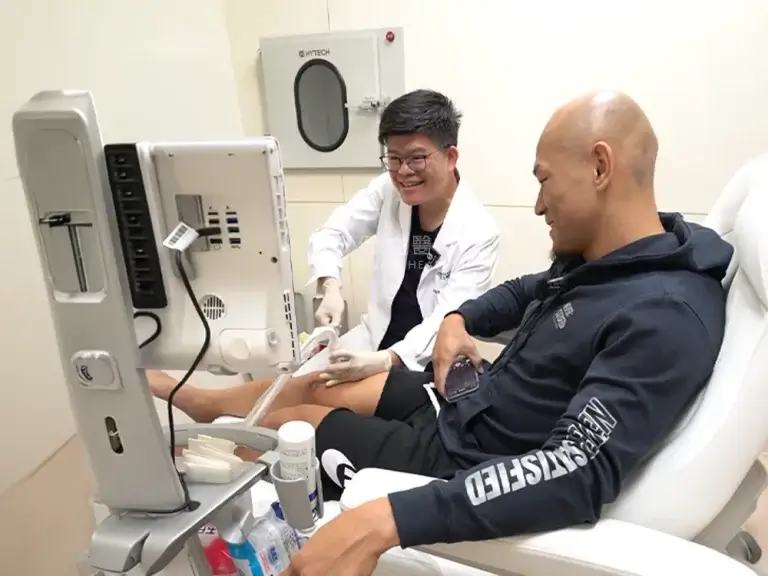
CASE Testimonials Yu Zhicheng is a national mixed martial arts (MMA) athlete representing Team China in Taiwan. Due to years of high-intensity competition and training, his muscles, ligaments, and joints have been subjected to immense stress, making sports injuries a constant risk and resulting in c
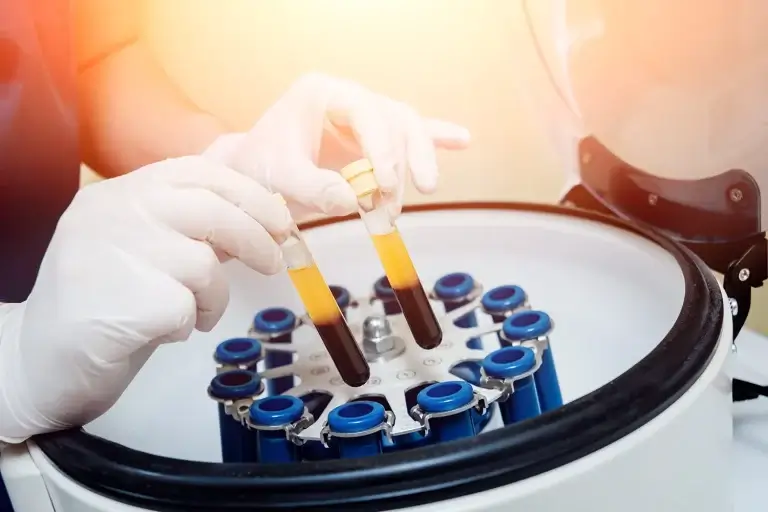
Regenerative Medicine Integrative Medicine Regenerative Therapy Please enter a title here Table of Contents All-Natural Tissue Regeneration | A Guide to the Sustained-Release Effects of PRF and Joint Self-Healing PRF (Platelet-Rich Fibrin) is a cutting-edge therapy in modern regenerative medicine. B