Prolotherapy
Integrative Medicine
Regenerative Therapy
Prolotherapy
Intravenous (IV) Therapy
Medical Equipment & Technology
PRP (high concentration of platelets in plasma)
Table of Contents
Unlocking the Joints’ Natural Healing Power: PRP Regenerative Therapy and a Holistic Anti-Aging Care Plan
PRP (Platelet-Rich Plasma) is one of the core technologies in modern regenerative medicine and is hailed as a “non-surgical solution for joint repair.” Golf legend Tiger Woods, NBA star Kobe Bryant, and Major League Baseball star Shohei Ohtani have all used PRP to treat sports injuries and extend their professional careers.
What is PRP?
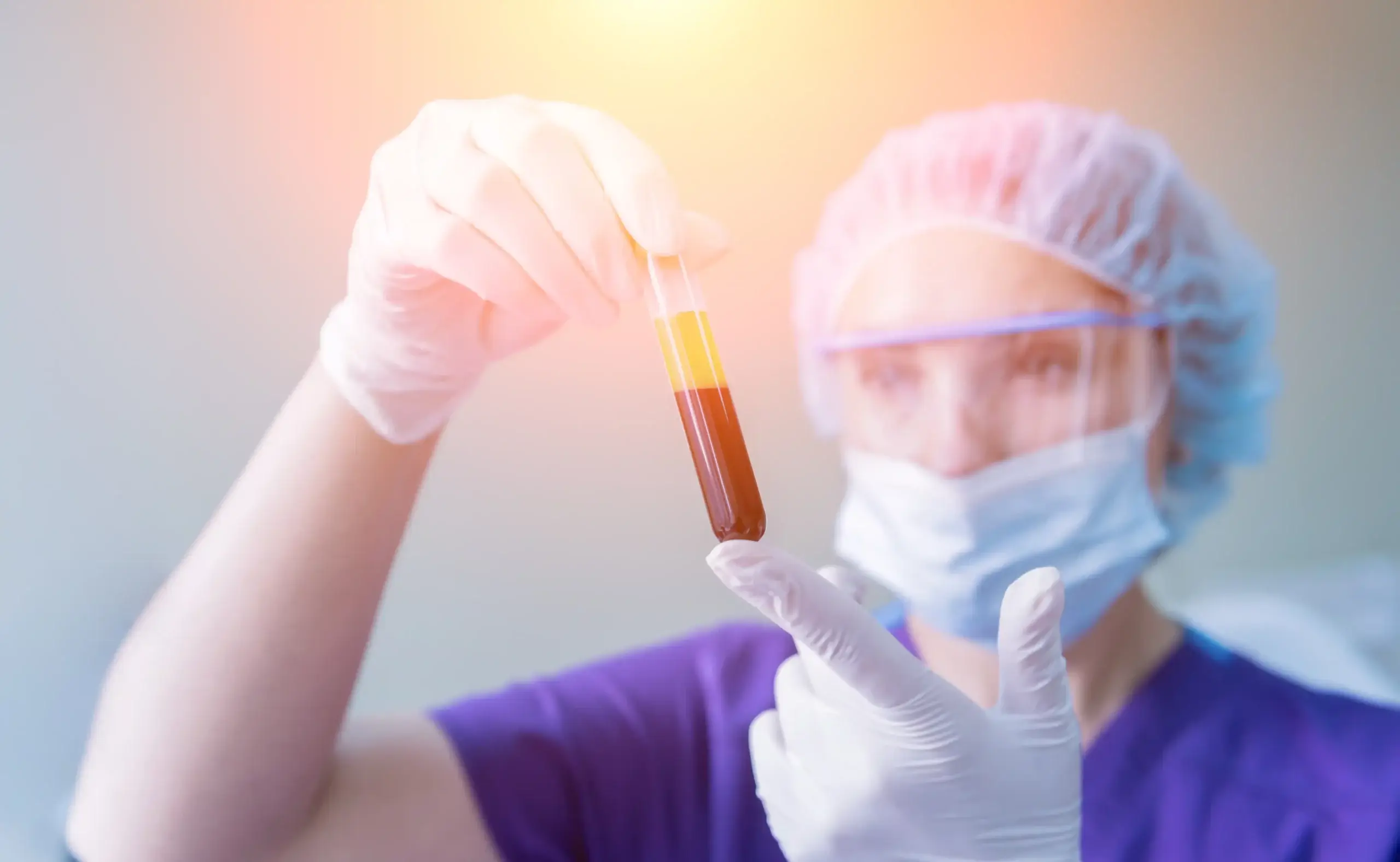
PRP (Platelet-Rich Plasma) is a core technology in modern regenerative medicine and integrative medicine. It utilizes the patient’s own blood to purify and concentrate platelets. This is not merely a localized pain relief treatment; rather, through biological healing mechanisms, it actively stimulates the “self-healing capacity” of aged or damaged tissues, achieving a fundamental restorative effect.
- Procedure: Approximately 10–20 cc of the patient’s blood is drawn. Using specialized centrifugation equipment, platelets are separated and concentrated to levels 5 to 10 times higher than in normal blood, and in some cases, nearly 100 times higher.
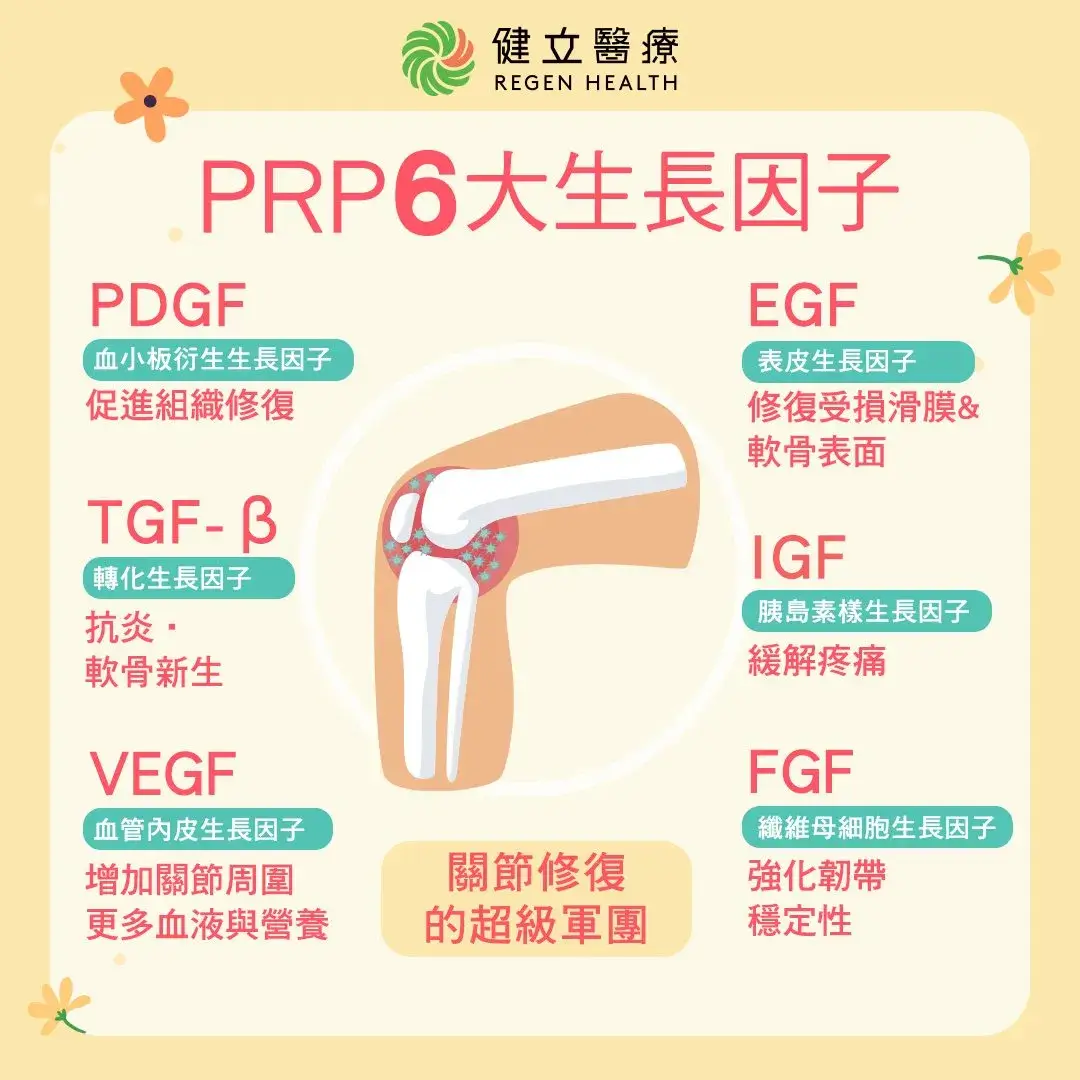
- Key to Repair: Platelets are rich in various growth factors (such as PDGF, TGF-β, and FGF), which can rapidly activate repair mechanisms, induce tissue regeneration, alleviate chronic pain, and slow down joint degeneration.
Who Can Benefit from Integrative Medicine PRP?
Chronic Degenerative Conditions: Degenerative knee/hip arthritis (Stages 1–3), degenerative small joint disease.
Chronic Overuse Injuries: Long-standing plantar fasciitis, tennis elbow, de Quervain’s tenosynovitis, and frozen shoulder.
Sports Injury Rehabilitation: Conservative treatment for meniscus tears and partial cruciate ligament tears.
PRP vs. Hyaluronic Acid (HA) – A Comparison of Mechanisms, Regenerative Potential, and Pros and Cons
| Procedure | HA (Hyaluronic Acid Injections) | PRP (Platelet-Rich Plasma) |
| Source | Medical-grade hyaluronic acid formulations | Autologous blood collection → Centrifugation and concentration |
| Ingredients | High-viscosity hyaluronic acid | Platelets, high-concentration growth factors (PDGF, TGF-β, etc.) |
| Mechanism of Action | Provides joint lubrication and shock absorption; reduces friction in the short term | Initiates regenerative repair, promoting the repair of cartilage, tendons, and ligaments |
| Repair Capacity | No repair function; provides only lubrication and pressure relief ⭐⭐ | Promotes tissue regeneration, with excellent root-cause treatment effects⭐⭐⭐⭐ |
| Pain Relief | Short-term improvement (3–6 months) ⭐⭐ | Long-lasting and significant (6–12 months or more) ⭐⭐⭐⭐ |
| Anti-inflammatory | Weak, no direct anti-inflammatory effect | Moderate; may reduce chronic inflammation |
| Indications | Mild to moderate osteoarthritis, joint stiffness | Osteoarthritis, sports injuries, tendon and ligament injuries |
| Duration | Approximately 3–6 months | 6–12 months or longer |
Key Indicators of PRP (Platelet-Rich Plasma) Efficacy
The effectiveness of PRP varies from person to person; the following three factors are key to ensuring treatment success:
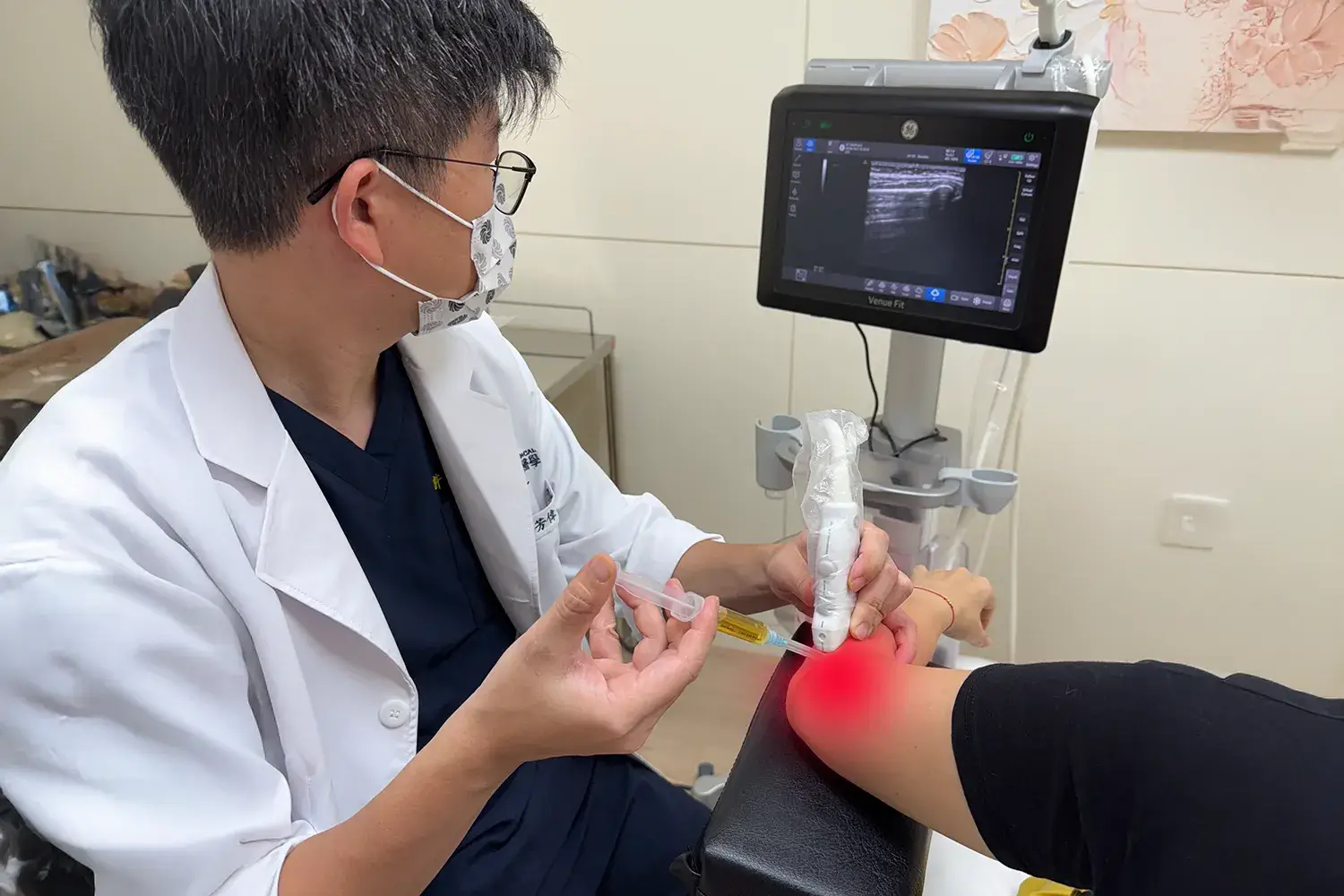
- Precise Diagnosis and Guidance: Using ultrasound imaging to guide precise injections into damaged areas (such as tendons or joint cavities) significantly enhances safety and efficacy.
- High-Quality Processing Equipment: Whether the clinic has professional centrifuge equipment to maintain high concentrations and activity of growth factors.
- Patient-Specific Health Factors: The patient’s age, nutritional status, and the abundance of blood-derived repair substances directly influence treatment outcomes.
Indications for PRP (Platelet-Rich Plasma)
PRP is widely used in orthopedics, sports medicine, and the treatment of chronic pain:
- Shoulder: Rotator cuff tears, frozen shoulder, shoulder arthritis.
- Elbow: Tennis elbow, golfer’s elbow, osteoarthritis of the elbow.
- Wrist/Fingers: Triangular fibrocartilage complex (TFCC) injuries, osteoarthritis of the fingers, de Quervain’s tenosynovitis.
- Spine: Chronic neck pain, lower back pain, herniated discs, degenerative facet joint disease.
- Knee: Osteoarthritis of the knee, cruciate ligament injuries, meniscus tears, patellar tendinitis.
- Feet and Ankles: Plantar fasciitis, Achilles tendinitis, ankle ligament sprains.
A Long-Term Lifestyle Plan for Joint Health (Prehabilitation)
Undergoing PRP (Platelet-Rich Plasma) therapy is the perfect opportunity to reassess your lifestyle. Successful regenerative medicine requires the patient’s active participation:
Nutritional Intervention: Within one month after the procedure, it is recommended to increase intake of high-quality protein (deep-sea fish, chicken breast, soybeans) and anti-inflammatory foods (Omega-3, turmeric).
Biomechanical Realignment: PRP can repair tissue, but it cannot correct poor posture. We strongly recommend combining treatment with physical therapy to strengthen the muscles surrounding the affected area (e.g., strengthening the quadriceps for the knee) and improve the joint’s dynamic stability.
Weight Management: For every 1 kilogram of weight lost, the load on the knee joint during walking is reduced by 4 kilograms.
PRP (Platelet-Rich Plasma) Frequently Asked Questions
What is PRP? How is it different from a regular painkiller injection?
PRP uses autologous blood to concentrate growth factors to initiate tissue repair and regeneration; painkillers mainly suppress pain temporarily, while PRP is a “root cause” treatment.
Who is PRP suitable for?
Suitable for patients with osteoarthritis, chronic tendon/ligament injuries, sports injuries, and those who wish to delay surgery or slow down joint aging.
How many PRP treatments are needed? How often should they be administered?
It is generally recommended to inject once every 3 to 4 weeks, and a complete course of treatment requires about 3 to 4 injections, depending on the severity of the condition as assessed by a physician.
What is the difference between PRP and hyaluronic acid (HA)?
Hyaluronic acid primarily provides joint “lubrication” and “shock absorption,” with effects lasting approximately 3-6 months; PRP, on the other hand, initiates “regeneration and repair,” resulting in longer-lasting effects (approximately 6-12 months or more).
How long does it take for PRP injections to take effect? How long do the effects last?
PRP provides non-immediate pain relief, with most patients experiencing improvement within one month, and the most significant repair effect after two to three months; some studies show that the effect can last for more than a year.
Will it hurt after the injection? How can I relieve the side effects?
There may be temporary soreness during the injection. If you feel unwell 3-7 days after the procedure, you can apply warm compresses (or ice packs) multiple times to relieve the soreness and pain, and take Acetaminophen. However, remember not to use anti-inflammatory drugs.
Who is not suitable for PRP? (Contraindications)
Direct injection is not recommended for individuals with platelet dysfunction, sepsis, acute/chronic infectious diseases, active infection of the affected area, immune system diseases, malignant tumors, pregnant women, or those taking anticoagulants long-term.
How much does PRP cost? Is there insurance coverage?
Currently, PRP is a fully out-of-pocket procedure and is not covered by health insurance. The cost per procedure ranges from approximately NT$15,000 to NT$20,000. If the injury is due to an accident or qualifies for outpatient surgery/hospitalization, reimbursement-based insurance policies often cover the costs. It is recommended to consult an insurance agent to confirm the policy terms before undergoing the procedure.
Related Articles
CASE Testimonials Mrs. Chen had previously undergone total knee replacement surgery on her right knee. Fully aware of the hardships of the recovery period, she was extremely reluctant to undergo another operation despite suffering from severe osteoarthritis in her left knee, and could only endure th