

Strengths

Service Advantages

Comprehensive Integration × Personalized Treatment

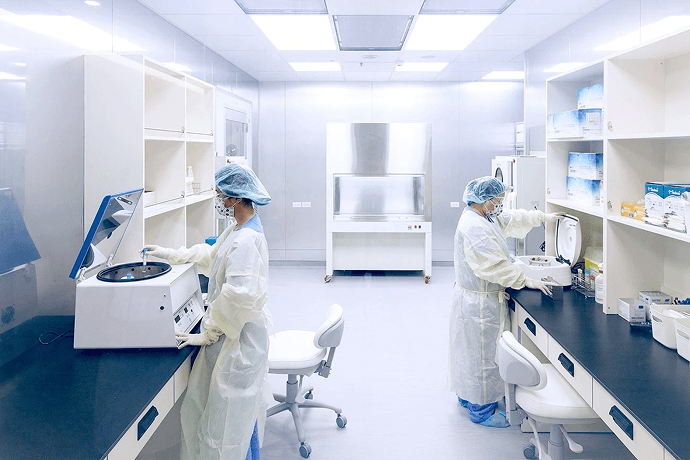
Regen Health centers its philosophy on “regenerative medicine,” combining a multidisciplinary integrated team, full-body joint health assessments, a private and comfortable treatment environment, high-standard cleanroom laboratories, and advanced medical equipment to provide safe, precise, and personalized healthcare services. We believe that health is not just about treating disease but about reactivating the body’s self-healing and regenerative capabilities, enabling every patient to regain vitality and confidence.

01

Specialized Integrated Team

Cross-disciplinary physician collaboration allows examinations and treatments to be completed in a single visit, maximizing therapeutic effectiveness.

02

Private & Comfortable Space

Fully appointment-based, one-on-one consultation rooms provide a private, safe, and relaxing medical experience.

03

Full-Body Joint Health Assessment

Simultaneous X-ray and ultrasound examinations provide a comprehensive understanding of joint health and the root causes of pain.

04

High-Standard Cleanroom

PRP/PRF is prepared in a sterile environment in real time, ensuring the purity, safety, and effectiveness of regenerative components.

05

Precision Diagnostic Equipment

High-resolution imaging–guided treatments reduce errors and pain, enhancing safety and efficiency.

06

Core of Regenerative Medicine

Autologous PRP/PRF therapy activates the body’s repair mechanisms, promoting regeneration, reducing inflammation, and restoring health.

Does calcific tendinitis always require surgery?

Not necessarily; most cases can be improved through suction or regeneration therapy.

Is rehabilitation necessary after treatment for a rotator cuff tear?

Absolutely.

Regulation is crucial regardless of whether it’s conservative treatment, injection therapy, or post-surgery. Through progressive stretching and strength training, shoulder mobility can be restored, scapular stabilizing muscles strengthened, and the risk of recurrence significantly reduced.

What role does SIS (Super Magnetic Energy Therapy) play in rotator cuff tears?

SIS (Super Magnetic Energy) is a non-invasive, high-intensity electromagnetic therapy that can:

**Rapidly relieve shoulder pain**

**Relax stiff muscles and improve range of motion**

**Stimulate neuromuscular reeducation and strengthen shoulder joint stability** Often used in conjunction with PRP/rehabilitation to enhance overall treatment effectiveness.

Are PRP or PRF really effective for rotator cuff tears?

It is helpful for partial tears or chronic tendon injuries.

PRP/PRF contains a high concentration of growth factors and can be precisely injected into the tear site under ultrasound guidance to promote tendon repair and collagen production. It is a “repair treatment” rather than simply pain relief.

What symptoms should raise suspicion of a rotator cuff tear?

Common warning signs include:

  • Significant pain or weakness when raising the arm
  • Nighttime shoulder pain, waking up in pain when sleeping on your side
  • Gradually decreasing range of motion in the shoulder joint
  • Difficulty lifting heavy objects, dressing, and combing hair
  • If symptoms persist for more than 2–4 weeks, further examination is recommended.

What’s the difference between a rotator cuff tear and frozen shoulder?

The two are often confused, but are fundamentally different:

Rotator muscle tear: A tendon injury; the patient cannot lift their arm themselves, but others can assist in raising it.

Frozen shoulder (adhesive capsulitis): Adhesion of the joint capsule, limiting both active and passive movement.

Accurate diagnosis greatly influences the treatment approach.

Will a torn rotator cuff heal on its own?

Most tears will not heal completely on their own.

Tendons have limited repair capabilities; without proper treatment, the tear may continue to become inflamed, worn down, and even widen. Early intervention and rehabilitation can effectively prevent deterioration and improve functional recovery.

Does a rotator cuff tear always require surgery?

Not necessarily.

Most partial or mild to moderate tears can be treated conservatively first, such as rehabilitation, physical therapy, PRP/PRF injections, and SIS (Super Magnetic Resonance Therapy). Surgery will only be evaluated if there is a complete tear or if conservative treatment is ineffective.

Will golfer’s elbow keep recurring? How can it be prevented?

If only pain relief is provided without addressing hand habits and muscle imbalances, relapse is indeed likely.

Key prevention methods include:

  • Adjusting work and exercise posture
  • Avoiding prolonged gripping and excessive strain
  • Regularly performing forearm extension and strength training
  • Early treatment of initial pain

If symptoms persist or treatment is ineffective, a high-resolution musculoskeletal ultrasound is recommended.

Ultrasound can clearly show:

  • whether the tendon is swollen or torn
  • whether there are changes in blood flow indicating chronic poor repair.

    This helps in accurately locating the problem and selecting the correct treatment approach.

Instagram
Scroll to Top