

Strengths
Service Advantages
Comprehensive Integration × Personalized Treatment
Regen Health centers its philosophy on “regenerative medicine,” combining a multidisciplinary integrated team, full-body joint health assessments, a private and comfortable treatment environment, high-standard cleanroom laboratories, and advanced medical equipment to provide safe, precise, and personalized healthcare services. We believe that health is not just about treating disease but about reactivating the body’s self-healing and regenerative capabilities, enabling every patient to regain vitality and confidence.
Specialized Integrated Team
Cross-disciplinary physician collaboration allows examinations and treatments to be completed in a single visit, maximizing therapeutic effectiveness.
Private & Comfortable Space
Fully appointment-based, one-on-one consultation rooms provide a private, safe, and relaxing medical experience.
Full-Body Joint Health Assessment
Simultaneous X-ray and ultrasound examinations provide a comprehensive understanding of joint health and the root causes of pain.

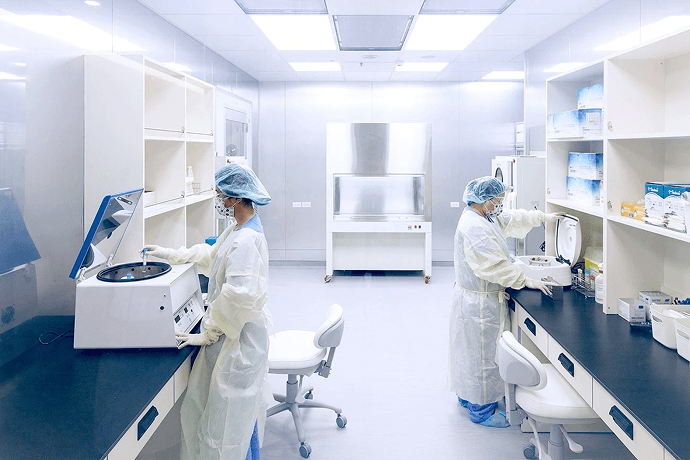
High-Standard Cleanroom
PRP/PRF is prepared in a sterile environment in real time, ensuring the purity, safety, and effectiveness of regenerative components.

Precision Diagnostic Equipment
High-resolution imaging–guided treatments reduce errors and pain, enhancing safety and efficiency.

Core of Regenerative Medicine
Autologous PRP/PRF therapy activates the body’s repair mechanisms, promoting regeneration, reducing inflammation, and restoring health.
Do I need to prepare anything special for a full-body joint checkup?
No fasting or special preparation is required before the examination; simply wear comfortable clothing. The doctor will conduct imaging and clinical analysis based on your lifestyle and symptoms.
How often should I have a full-body joint checkup?
It is recommended to have a check-up once a year. If you sit for long periods, exercise frequently, or have joint pain, you may need to have a check-up every six months to detect signs of degeneration or inflammation early.
What are the differences between a full-body joint checkup and a regular X-ray examination?
Most hospitals focus on examining a single painful joint, while Jianli Clinic’s “Whole Body Joint Health Check” covers major areas such as the cervical spine, shoulders, lumbar spine, hip joints, knees, and ankle joints in one go, and is interpreted in real time by orthopedic doctors, providing a comprehensive analysis of joint health.
If shoulder stability and muscle strength are not strengthened, there is still a risk of recurrence. It is recommended to continue training and posture adjustment.
How long will it take to resume daily activities and exercise?
Light activities, such as daily life, office work, and simple stretching, can be resumed approximately 3–5 days after treatment. Shoulder training can be gradually introduced starting from the first week, and a full range of exercise or work requirements can be safely resumed around the 3rd–4th week, subject to assessment and adjustment by a physician and therapist based on individual circumstances.
No. The treatment is performed under local anesthesia and ultrasound guidance, allowing the doctor to precisely avoid nerves and sensitive tissues. Most people only experience brief, mild soreness or tingling sensations, which subside within 1-2 days after the procedure.
Can a tear in the shoulder labrum be completely healed with just one treatment?
For mild lip tears, some patients experience significant improvement after a single PRP or PRF injection.
However, for chronic injuries, degenerative tears, or structural instability, it is recommended to undergo 2-3 stages of injection therapy, combined with rehabilitation training, to achieve complete repair and functional recovery.
Depending on the severity, some patients may experience difficulties with actions such as raising their hands or using tools, requiring early diagnosis and intervention.
When is surgery absolutely necessary for a tear in the shoulder joint labrum?
For example, those with recurrent shoulder dislocations, extensive tears causing significant instability, and whose condition cannot be improved through rehabilitation and injections.
Minor injuries can be improved with rehabilitation, but continued activity will worsen the wound.
