

Strengths
Service Advantages
Comprehensive Integration × Personalized Treatment
Regen Health centers its philosophy on “regenerative medicine,” combining a multidisciplinary integrated team, full-body joint health assessments, a private and comfortable treatment environment, high-standard cleanroom laboratories, and advanced medical equipment to provide safe, precise, and personalized healthcare services. We believe that health is not just about treating disease but about reactivating the body’s self-healing and regenerative capabilities, enabling every patient to regain vitality and confidence.
Specialized Integrated Team
Cross-disciplinary physician collaboration allows examinations and treatments to be completed in a single visit, maximizing therapeutic effectiveness.
Private & Comfortable Space
Fully appointment-based, one-on-one consultation rooms provide a private, safe, and relaxing medical experience.
Full-Body Joint Health Assessment
Simultaneous X-ray and ultrasound examinations provide a comprehensive understanding of joint health and the root causes of pain.

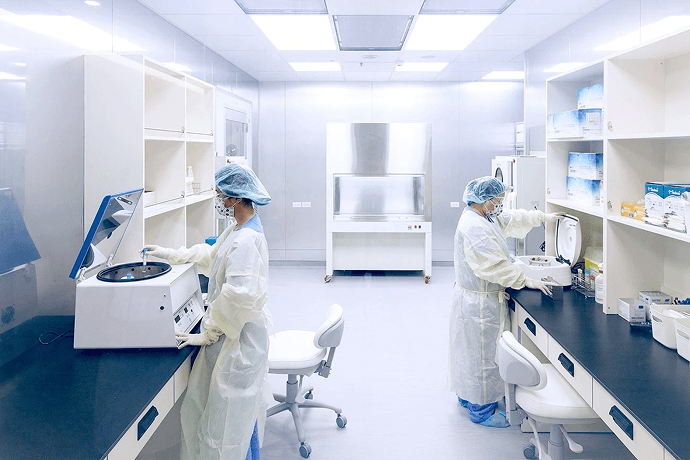
High-Standard Cleanroom
PRP/PRF is prepared in a sterile environment in real time, ensuring the purity, safety, and effectiveness of regenerative components.

Precision Diagnostic Equipment
High-resolution imaging–guided treatments reduce errors and pain, enhancing safety and efficiency.

Core of Regenerative Medicine
Autologous PRP/PRF therapy activates the body’s repair mechanisms, promoting regeneration, reducing inflammation, and restoring health.
Most mild to moderate tears can be improved with non-surgical conservative treatment, unless it is a severe tear or recurrent instability.
No. X-rays mainly show bone; the lip is cartilage tissue, requiring MRI or MR arthrography for clear observation.
What is the difference between a labral tear of the shoulder joint and frozen shoulder?
Frozen shoulder is mainly caused by adhesions of the joint capsule, resulting in limited range of motion; while lip lacerations tend to involve damage to deeper structures, characterized by locking, clicking sounds, and instability.
Women aged 40–60, those who work with their shoulders above the ground, and those with metabolic diseases.
Most patients show significant improvement within 1–4 weeks, but this may vary depending on individual circumstances.
High-resolution ultrasound is the preferred method, and X-rays may be used in conjunction when necessary.
Relapse is still possible if posture and usage habits are not improved.
What are the differences between SIS and electrotherapy for calcific tendinitis?
SIS penetrates deeper and has a more comprehensive effect.
It can be used as an important repair method, but it needs to be evaluated according to the calcification status.
Is calcified tendinitis and calcification aspiration very painful?
Minimally invasive procedure, combined with local anesthesia, resulting in minimal pain.
