
Radiofrequency Ablation

健立醫療
2026-05-14
目錄
Say Goodbye to Chronic, Intractable Pain! Will RF (Radiofrequency Ablation) Therapy Be Painful? Post-operative Care and 7 Frequently Asked Questions!
Want to undergo RF therapy but afraid of pain or worried about the recovery period? This guide provides detailed answers to the treatment process, wound care, and 7 frequently asked questions.It helps you understand how to safely block long-term chronic pain signals through local anesthesia and minimally invasive techniques, dispelling all treatment myths and allowing you to confidently regain a pain-free life!
What is Radiofrequency Ablation (RF)?
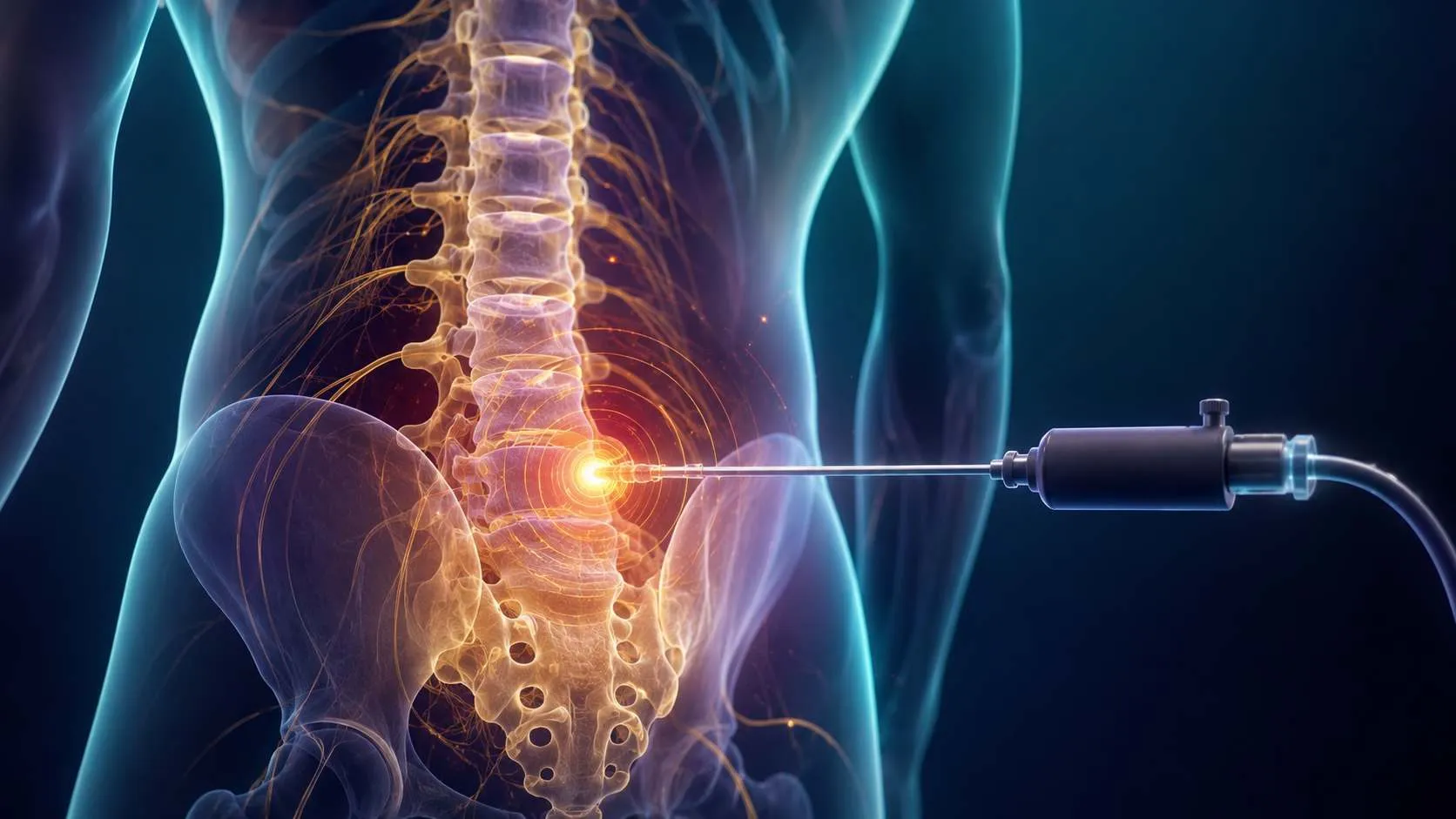
Radiofrequency ablation (RF) is a precise, image-guided minimally invasive technique. Under real-time monitoring via X-ray, ultrasound, or CT scan, a doctor precisely positions a specially designed electrode needle near the target nerve causing the pain.
A high-frequency current is emitted through a sophisticated instrument, generating controlled heat (approximately 70–90°C) at the needle tip. This heat produces a moderate nerve desensitization effect, blocking the transmission of pain signals to the brain. In short, it temporarily shuts down the neural pathways transmitting pain, thus relieving the pain at its source.
(Radiofrequency Ablation) Therapy: Four Core Advantages
Compared to traditional open surgery or short-acting injections, RF offers a safer and higher-quality option:
No Surgery, Minimally Invasive and Scarless: The incision is only the size of a pinhole, requiring no sutures and leaving no scar, significantly reducing the risk of infection.
Quick Procedure, No Hospitalization Required: Local anesthesia is used, and the entire procedure takes only 30 to 90 minutes. Patients can return home after a short observation period, without affecting daily life.
Long-Lasting Pain Relief: Unlike nerve block surgery, whose effects only last a few days, the effects of RFA typically last for 6 months to 2 years.
Reduced Medication Dependence: Effectively reduces the burden on the kidneys and gastrointestinal tract from long-term pain medication use, and if pain recurs, the procedure can be safely repeated.
Authoritative Medical Evidence: Is (Radiofrequency Ablation) Therapy Really Effective?
High-frequency thermocoagulation therapy is not a folk remedy, but a legitimate medical procedure endorsed by top international journals:
Significant Reduction in Pain Index: The Journal of Pain Research indicates that RF significantly reduces postoperative pain scores in patients treating lower back pain and arthritis, with extremely high satisfaction rates.
Confirmed by the New England Journal of Medicine (NEJM) (2023): The world’s most authoritative medical journal confirms that RF has a crucial and significant therapeutic effect on lower back pain caused by facet joint disorders.
New Strategy for Knee Osteoarthritis Management (2023): A study in the Korean Journal of Pain evaluated RF and found it to provide a highly effective, non-surgical pain relief option for patients with degenerative knee osteoarthritis.
Stable Long-Term Outcomes (2022): The journal Pain Physician evaluated lumbar facet joint treatment and confirmed the superiority of RF in long-term clinical outcomes.
(Radiofrequency Ablation) Therapy: Indications and Contraindications
Common Applicable Patients
Spinal Problems: Chronic lower back pain, neck pain, intervertebral disc disease, facet joint degeneration.
Neuropathy: Sciatica, trigeminal neuralgia, postherpetic neuralgia, peripheral neuralgia.
Joint Pain: Osteoarthritis of the knee, frozen shoulder, tennis elbow, plantar fasciitis.
Contraindications (Please inform your doctor):
Skin infection at the puncture site.
Bleeding tendency or currently undergoing anticoagulation therapy.
Allergy to local anesthetics or contrast agents.
Unexplained acute pain.
Professional Analysis: Nerve Block vs.(Radiofrequency Ablation) Therapy
| Item | RF Therapy | Nerve Block |
|---|---|---|
| Treatment Principle: |
Using high-frequency current to generate heat to “passivate” nerves | Injecting local anesthetics or steroids to block signaling |
| Maintenance of efficacy | Long-term (6 months to 2 years) | Short duration (several days, approximately 18-30 hours) |
| Indication | Chronic intractable pain | Acute pain, chronic pain, diagnostic treatment |
| Applicable Type | Suitable for long-term pain relief and for those who respond to nerve blocks. | Quick pain relief, suitable for acute inflammatory phase |
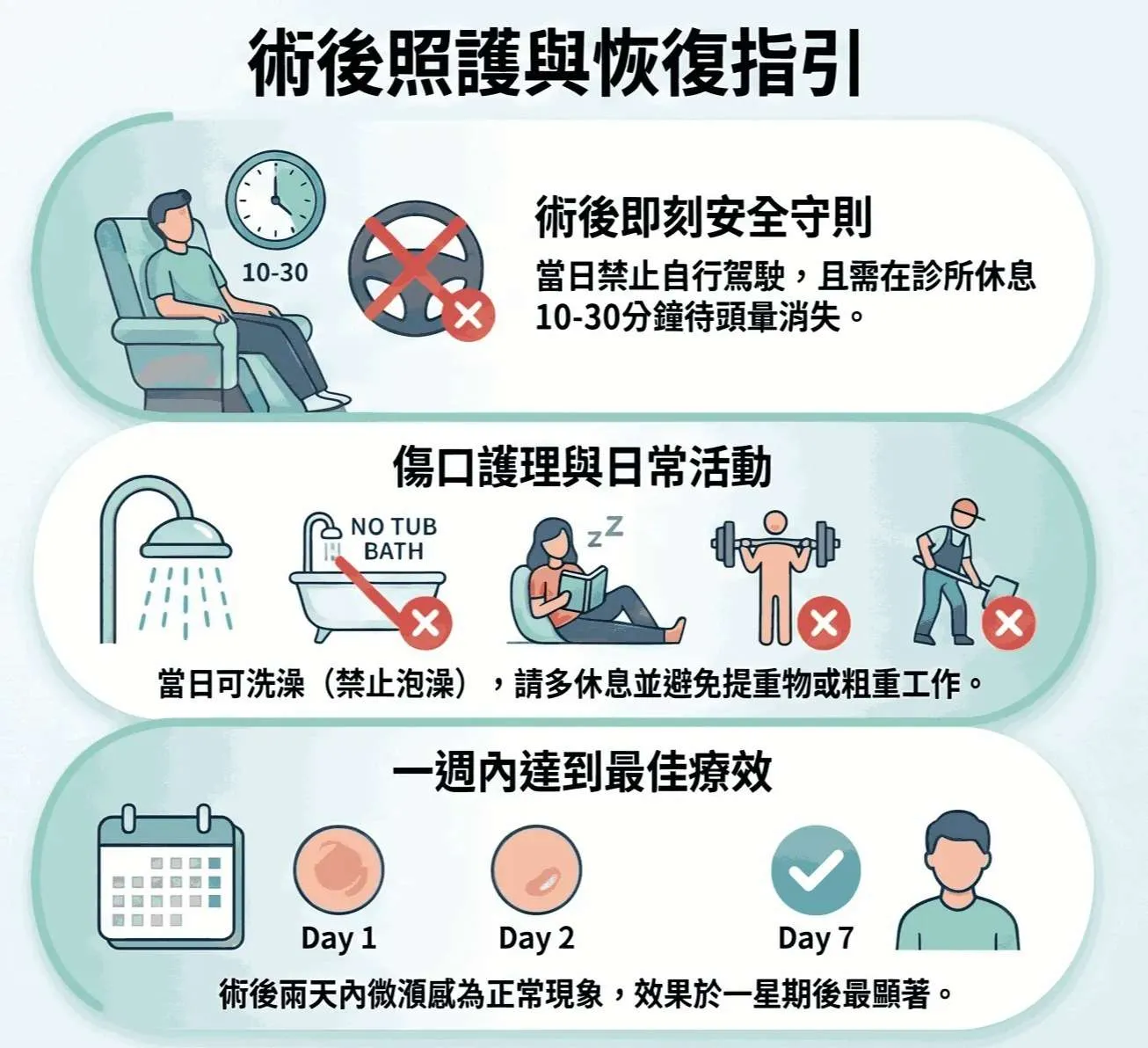
Postoperative care of Radiofrequency Ablation Therapy
Frequently Asked Questions (FAQ) about RF Radiofrequency Ablation Therapy
Q1: Will the (Radiofrequency Ablation) Therapy treatment be painful?
A: The treatment will be performed under local anesthesia. There may be a slight soreness or swelling when the needle tip is advanced to the target site, but most patients find it tolerable.
Q2: How long after treatment will I see results?
A: Some patients experience immediate relief after the procedure, but because the nerves need time to repair and adapt after being heated, the best pain relief usually peaks about a week after the procedure.
Q3: If the effect disappears, can it be performed again?
A: Yes. High-frequency thermocoagulation is a minimally invasive technique and does not use steroids, making it highly safe. Even if pain recurs after 1-2 years due to nerve regeneration, it can still be safely repeated.
Q4: Who is (Radiofrequency Ablation) Therapy suitable for? Are there any contraindications?
Suitable for patients with chronic lower back pain, cervical spondylosis, sciatica, trigeminal neuralgia, knee arthritis, and those experiencing intractable pain for more than three months. Contraindications include: infection at the puncture site, bleeding tendency or during anticoagulation therapy, allergy to anesthetics, and acute pain or pain of unknown cause.
Q5: What is the difference between Radiofrequency Ablation and nerve block surgery?
Nerve block surgery temporarily blocks nerve signals through the injection of medication, with effects lasting approximately 18–30 hours. Radiofrequency Ablation, on the other hand, uses heat energy to desensitize nerve endings, with effects lasting up to 6 months to 2 years. It is suitable for chronic pain patients who have responded well to nerve block surgery and wish for long-term pain relief.
Q6: How long after (Radiofrequency Ablation) Therapy can I resume normal life?
Most patients can leave the hospital after resting in the observation room for 10-30 minutes post-surgery. It is recommended to avoid strenuous exercise and soaking in the bath for one week after the procedure. Normal showering can be resumed after three days. The best pain relief effect reaches its peak approximately one week after the procedure.
常見問題
What is PRP? How is it different from a regular painkiller injection?
PRP uses autologous blood to concentrate growth factors to initiate tissue repair and regeneration; painkillers mainly suppress pain temporarily, while PRP is a “root cause” treatment.
Who is PRP suitable for?
Suitable for patients with osteoarthritis, chronic tendon/ligament injuries, sports injuries, and those who wish to delay surgery or slow down joint aging.
How many PRP treatments are needed? How often should they be administered?
It is generally recommended to inject once every 3 to 4 weeks, and a complete course of treatment requires about 3 to 4 injections, depending on the severity of the condition as assessed by a physician.
What is the difference between PRP and hyaluronic acid (HA)?
Hyaluronic acid primarily provides joint “lubrication” and “shock absorption,” with effects lasting approximately 3-6 months; PRP, on the other hand, initiates “regeneration and repair,” resulting in longer-lasting effects (approximately 6-12 months or more).
How long does it take for PRP injections to take effect? How long do the effects last?
PRP provides non-immediate pain relief, with most patients experiencing improvement within one month, and the most significant repair effect after two to three months; some studies show that the effect can last for more than a year.
Will it hurt after the injection? How can I relieve the side effects?
There may be temporary soreness during the injection. If you feel unwell 3-7 days after the procedure, you can apply warm compresses (or ice packs) multiple times to relieve the soreness and pain, and take Acetaminophen. However, remember not to use anti-inflammatory drugs.
Who is not suitable for PRP? (Contraindications)
Direct injection is not recommended for individuals with platelet dysfunction, sepsis, acute/chronic infectious diseases, active infection of the affected area, immune system diseases, malignant tumors, pregnant women, or those taking anticoagulants long-term.
How much does PRP cost? Is there insurance coverage?
Currently, PRP is a fully out-of-pocket procedure and is not covered by health insurance. The cost per procedure ranges from approximately NT$15,000 to NT$20,000. If the injury is due to an accident or qualifies for outpatient surgery/hospitalization, reimbursement-based insurance policies often cover the costs. It is recommended to consult an insurance agent to confirm the policy terms before undergoing the procedure.
相關文章

CASE Testimonials What Can Be Done About Recurrent Knee Pain Due to Degenerative Conditions? For many middle-aged and older adults, degenerative knee conditions often lead to a sharp decline in quality of life. Mr. Wu, an avid cyclist, has been suffering from recurring knee pain for over three month

