

Strengths
Service Advantages
Comprehensive Integration × Personalized Treatment
Regen Health centers its philosophy on “regenerative medicine,” combining a multidisciplinary integrated team, full-body joint health assessments, a private and comfortable treatment environment, high-standard cleanroom laboratories, and advanced medical equipment to provide safe, precise, and personalized healthcare services. We believe that health is not just about treating disease but about reactivating the body’s self-healing and regenerative capabilities, enabling every patient to regain vitality and confidence.
Specialized Integrated Team
Cross-disciplinary physician collaboration allows examinations and treatments to be completed in a single visit, maximizing therapeutic effectiveness.
Private & Comfortable Space
Fully appointment-based, one-on-one consultation rooms provide a private, safe, and relaxing medical experience.
Full-Body Joint Health Assessment
Simultaneous X-ray and ultrasound examinations provide a comprehensive understanding of joint health and the root causes of pain.

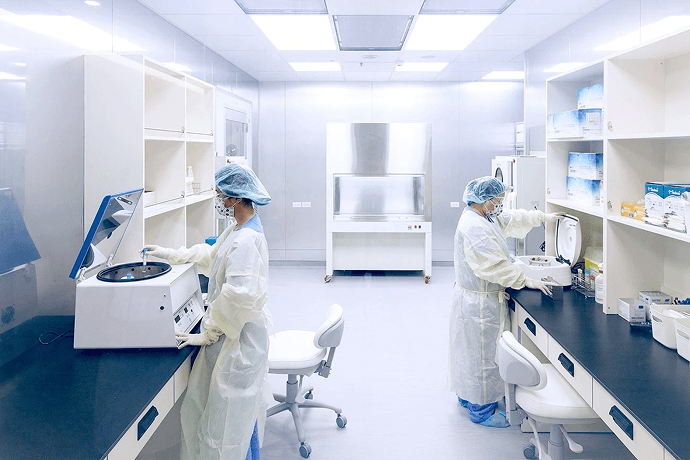
High-Standard Cleanroom
PRP/PRF is prepared in a sterile environment in real time, ensuring the purity, safety, and effectiveness of regenerative components.

Precision Diagnostic Equipment
High-resolution imaging–guided treatments reduce errors and pain, enhancing safety and efficiency.

Core of Regenerative Medicine
Autologous PRP/PRF therapy activates the body’s repair mechanisms, promoting regeneration, reducing inflammation, and restoring health.
Why does it still hurt even though I stretch?
This is a common misconception. Simply stretching can only temporarily relax a tight iliotibial band, but it cannot solve the problem of “weak gluteal muscles.” When the gluteal muscles are weak (this is the real culprit), the body forces the iliotibial band to compensate and maintain stability when running, causing it to repeatedly tighten. Therefore, “strengthening the gluteal muscles” is often more important than simply stretching.
Should I apply ice or heat to my knees?
Depending on the stage of the illness:
- Acute phase (new injury, redness, swelling, heat, and pain): Apply ice for 15 minutes at a time to help reduce inflammation and relieve pain.
- Chronic phase (long-term stiffness and soreness): Apply heat to promote blood circulation and muscle relaxation.
Will runner’s knee heal on its own?
Mild symptoms may subside with rest and reduced intensity. However, if underlying causes such as “weak gluteal muscles,” “pelvic instability,” or “poor posture” are not addressed, symptoms are likely to recur once exercise resumes. If pain recurs, it is recommended to seek professional evaluation to address the underlying problem.
How is this different from anterior knee pain (patellofemoral pain syndrome)?
Both are commonly known as runner’s knee, but their locations are quite different.
- Iliotibial band syndrome: Pain is located on the outer side of the knee, mainly due to fascial tightness and friction/compression.
- Patrofemoral pain syndrome: Pain is located on the front of the knee (around the patella), often related to pressure on the knee cartilage. It is recommended that a doctor perform an ultrasound examination for differential diagnosis to ensure the correct treatment approach.
Is pain on the outside of the knee runner’s knee? How can I test myself for it?
Very likely. The pain point in runner’s knee is usually located about 2-3 cm above the outer edge of the knee joint line. You can try the “Noble Compression Test”: press on the pain point and bend your knee to about 30 degrees. If you experience significant pain, it is highly suspicious of iliotibial band syndrome.
Why do you need to stop taking the injections before you can get anesthesia after getting a slimming injection?
Because GLP-1 injections delay gastric emptying, if the medication is not discontinued, even fasting may result in food residue in the stomach, increasing the risk of choking.
**GLP-1 Discontinuation Guidelines:**
**Weekly formulation (weekly injections) ➜ Discontinue medication 7 days before anesthesia**
**Daily formulation (daily injections) ➜ Discontinue medication 24 hours before anesthesia**
How long after a sedation anesthesia can I go home? What are some normal reactions?
Most people can return home after a period of observation in the recovery area and once their vital signs stabilize. Common temporary reactions include:
drowsiness, dizziness, slowed reaction time
mild nausea or sore throat (depending on individual constitution)
These usually subside gradually within a few hours.
Should I stop taking my usual medications for chronic diseases (hypertension, diabetes)?
Not necessarily. Many chronic medications still need to be taken as usual, but diabetes medications and anticoagulants may need to be adjusted. The safest approach is to provide your medication list to your doctor/anesthesia team for evaluation before surgery to avoid stopping medication on your own.
Why is fasting required before sedation anesthesia? How long should the fasting period be?
Fasting is to reduce the risk of vomiting and choking (protective reflexes are weakened during anesthesia).
Common recommendations:
- Solid food: Avoid 6–8 hours before surgery
- Clear liquids: Avoid 2 hours before surgery (actual instructions may vary depending on the hospital)
Will sedation cause pain? Am I afraid of needles?
There may be a brief tingling sensation during the injection, but you will usually relax quickly.
For people who are afraid of pain or anxious, sedation anesthesia can significantly reduce tension and make the procedure go more smoothly.
