

Strengths
Service Advantages
Comprehensive Integration × Personalized Treatment
Regen Health centers its philosophy on “regenerative medicine,” combining a multidisciplinary integrated team, full-body joint health assessments, a private and comfortable treatment environment, high-standard cleanroom laboratories, and advanced medical equipment to provide safe, precise, and personalized healthcare services. We believe that health is not just about treating disease but about reactivating the body’s self-healing and regenerative capabilities, enabling every patient to regain vitality and confidence.
Specialized Integrated Team
Cross-disciplinary physician collaboration allows examinations and treatments to be completed in a single visit, maximizing therapeutic effectiveness.
Private & Comfortable Space
Fully appointment-based, one-on-one consultation rooms provide a private, safe, and relaxing medical experience.
Full-Body Joint Health Assessment
Simultaneous X-ray and ultrasound examinations provide a comprehensive understanding of joint health and the root causes of pain.

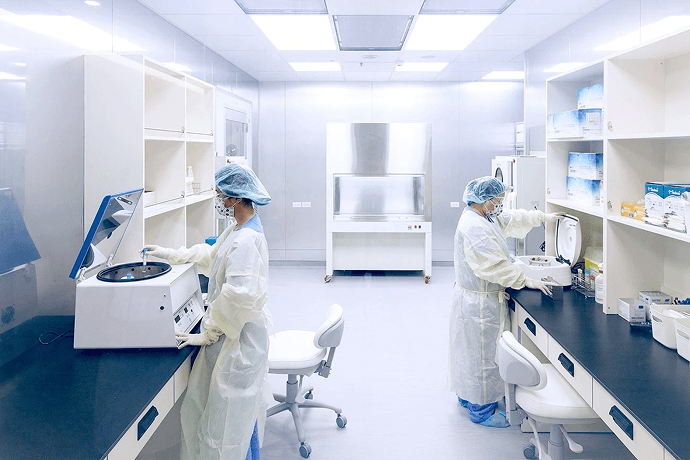
High-Standard Cleanroom
PRP/PRF is prepared in a sterile environment in real time, ensuring the purity, safety, and effectiveness of regenerative components.

Precision Diagnostic Equipment
High-resolution imaging–guided treatments reduce errors and pain, enhancing safety and efficiency.

Core of Regenerative Medicine
Autologous PRP/PRF therapy activates the body’s repair mechanisms, promoting regeneration, reducing inflammation, and restoring health.
Jianli Medical uses ultrasound-guided injection, which is safe, precise, and virtually painless.
Yes. Moderate stretching can help relieve nerve pressure, but during the acute phase, weight-bearing and bending movements should be avoided.
Mild cases may improve, but if there is no improvement after more than two weeks, it is recommended to seek medical attention.
Is sciatica a lumbar spine problem or a buttock problem?
Both are possible. Lumbar spine compression causes nerve root pain, while piriformis muscle compression occurs in the buttocks.
Do everyday postures really affect hip joint degeneration?
Yes. Prolonged sitting, crossing your legs, bending over to lift heavy objects, or weak hip muscles can all increase the burden on your joints. Improving posture and strengthening your glutes and core muscles can help reduce stress and slow down degeneration.
Are PRP or regenerative therapy suitable for osteoarthritis of the hip?
Some patients with mild to moderate symptoms may benefit, but it is not suitable for everyone. Whether or not to proceed depends on imaging examinations, the degree of degeneration, and symptom assessment, with the doctor determining the most appropriate treatment strategy.
Why does hip joint degeneration cause pain that extends to the knee?
This is a common type of “migrated pain.” The nerve pathways of the hip and knee joints partially overlap, so a lesion in the hip may manifest as pain in the thigh or knee. It is necessary to investigate the source to avoid misdiagnosis and treatment of only the knee.
Will hip joint degeneration always get worse?
Not necessarily. The rate of deterioration is related to weight control, activity level, muscle strengthening exercises, and whether treatment is initiated early. With appropriate treatment and lifestyle adjustments, many patients can maintain stable condition for a long time without rapid deterioration.
Is all hip pain a sign of degeneration?
No, it needs to be differentiated from bursitis, tendinitis, and lumbar nerve compression.
Incorrect sports activities; proper low-impact training combined with strength training can actually have a protective effect.
