

Strengths

Service Advantages

Comprehensive Integration × Personalized Treatment

Regen Health centers its philosophy on “regenerative medicine,” combining a multidisciplinary integrated team, full-body joint health assessments, a private and comfortable treatment environment, high-standard cleanroom laboratories, and advanced medical equipment to provide safe, precise, and personalized healthcare services. We believe that health is not just about treating disease but about reactivating the body’s self-healing and regenerative capabilities, enabling every patient to regain vitality and confidence.

01

Specialized Integrated Team

Cross-disciplinary physician collaboration allows examinations and treatments to be completed in a single visit, maximizing therapeutic effectiveness.

02

Private & Comfortable Space

Fully appointment-based, one-on-one consultation rooms provide a private, safe, and relaxing medical experience.

03

Full-Body Joint Health Assessment

Simultaneous X-ray and ultrasound examinations provide a comprehensive understanding of joint health and the root causes of pain.

04

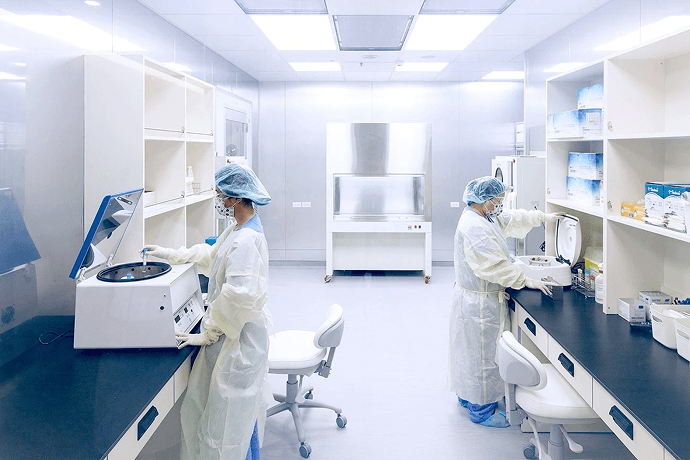
High-Standard Cleanroom

PRP/PRF is prepared in a sterile environment in real time, ensuring the purity, safety, and effectiveness of regenerative components.

05

Precision Diagnostic Equipment

High-resolution imaging–guided treatments reduce errors and pain, enhancing safety and efficiency.

06

Core of Regenerative Medicine

Autologous PRP/PRF therapy activates the body’s repair mechanisms, promoting regeneration, reducing inflammation, and restoring health.

PRF treatment typically involves only a brief feeling of soreness or pressure. Most procedures are performed under local anesthesia or ultrasound guidance, so the pain is usually within a tolerable range. After treatment, a slight tightness or soreness may occur locally, which usually subsides gradually within 1–3 days.

Does plantar fasciitis require surgery?

Surgery is only considered for a very small number of patients who do not respond to long-term conservative treatment and experience severe pain.

Currently, minimally invasive or endoscopic methods are mostly used.

Most patients can improve through integrated treatment and do not need to undergo surgery.

What is the principle behind PRP/PRF treatment for plantar fasciitis?

PRP/PRF is derived from the patient’s own blood, concentrated to a high concentration of growth factors, and then precisely injected into the damaged fascia.

The aim is to promote tissue repair and regeneration, reduce chronic inflammation, and it is a non-surgical regenerative medicine treatment.

Is it necessary to get an injection or undergo shockwave therapy?

Not necessarily. Most patients improve with conservative treatment (stretching, insoles, physical therapy).

If recurrence persists for more than 3 months, extracorporeal shock wave therapy or proliferative therapy (PRP/PRF) may be considered, with suitability assessed by a physician.

Can I continue exercising if I have plantar fasciitis?

During acute inflammation, it is recommended to reduce or stop high-impact exercises (running, jumping).

Switch to low-impact exercises such as swimming or cycling.

At the same time, be sure to strengthen the stretching of the plantar muscles and calf muscles.

Who is particularly susceptible to plantar fasciitis?

Those who stand for long periods (teachers, healthcare workers, service industry workers)

Long-distance runners or jumpers

People with flat feet or high arches

Overweight individuals

Middle-aged people and pregnant women

Are plantar fasciitis and bone spurs the same?

Not entirely the same. Bone spurs are bone growths, while plantar fasciitis is inflammation or degeneration of the plantar fascia.

Both can coexist, but the primary cause of pain usually comes from the fascia itself, not the bone spurs.

Will plantar fasciitis heal on its own?

Mild or early symptoms can improve with rest, stretching, and insole adjustments, typically within weeks to months.

However, if the pain persists for more than 3 months, it may indicate a chronic degenerative stage, and professional evaluation is recommended to prevent it from developing into intractable heel pain.

My first step in the morning is extremely painful. Could it be plantar fasciitis?

This is one of the typical symptoms.

If you experience “severe pain on the first step in the morning, which is slightly relieved after activity, but the pain returns after walking for a while,” plantar fasciitis is highly suspected. The pain is mostly concentrated on the inside of the heel or in the arch of the foot.

If I have sciatica, should I choose this or epidural injection (ESI)?

This depends on the specific “pain point.”

Epileptic injection (ESI): More direct for precise nerve root compression (such as radiating pain in the leg caused by a herniated disc).

ESP block: More advantageous for large-area back pain, intercostal pain, and postoperative recovery. It is recommended that you have an evaluation by a dual-specialist team at Jianli Clinic to develop the most precise repair plan.

Instagram
Scroll to Top