

Strengths
Service Advantages
Comprehensive Integration × Personalized Treatment
Regen Health centers its philosophy on “regenerative medicine,” combining a multidisciplinary integrated team, full-body joint health assessments, a private and comfortable treatment environment, high-standard cleanroom laboratories, and advanced medical equipment to provide safe, precise, and personalized healthcare services. We believe that health is not just about treating disease but about reactivating the body’s self-healing and regenerative capabilities, enabling every patient to regain vitality and confidence.
Specialized Integrated Team
Cross-disciplinary physician collaboration allows examinations and treatments to be completed in a single visit, maximizing therapeutic effectiveness.
Private & Comfortable Space
Fully appointment-based, one-on-one consultation rooms provide a private, safe, and relaxing medical experience.
Full-Body Joint Health Assessment
Simultaneous X-ray and ultrasound examinations provide a comprehensive understanding of joint health and the root causes of pain.

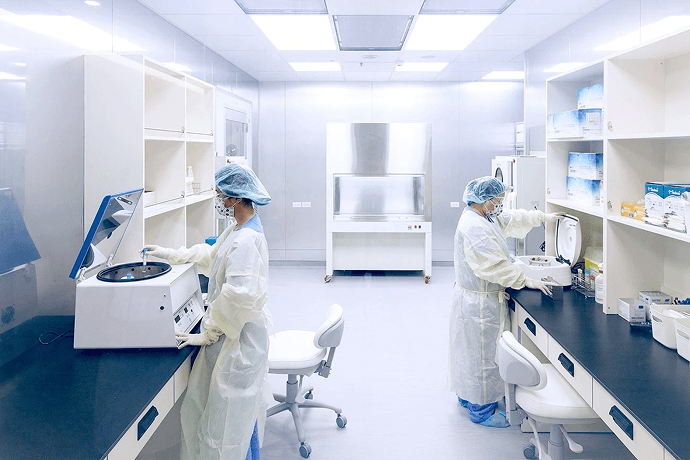
High-Standard Cleanroom
PRP/PRF is prepared in a sterile environment in real time, ensuring the purity, safety, and effectiveness of regenerative components.

Precision Diagnostic Equipment
High-resolution imaging–guided treatments reduce errors and pain, enhancing safety and efficiency.

Core of Regenerative Medicine
Autologous PRP/PRF therapy activates the body’s repair mechanisms, promoting regeneration, reducing inflammation, and restoring health.
Will taking painkillers be enough? Or will it make my condition worse?
Medications (NSAIDs, muscle relaxants, nerve pain relievers) can provide short-term symptom relief, but they cannot reverse degeneration or eliminate bone spurs. Long-term reliance on painkillers alone may delay treatment; combining them with posture correction, exercise, physical therapy, or regenerative therapy is recommended for better results.
Is numbness in the hand caused by nerve compression? What tests should be done?
Persistent or recurrent hand numbness is mostly related to nerve root compression caused by cervical spondylosis.
Common examinations include:
X-ray: to check for bone spurs and cervical curvature
Ultrasonogram: to assess muscles, ligaments, and inflammation
MRI: to confirm the degree of nerve compression
Will bone spurs disappear on their own? Do I need immediate surgery?
Bone spurs are hyperplasia resulting from joint degeneration and will not disappear on their own, but symptoms can be significantly improved with conservative treatment. Surgery is only necessary when there is significant weakness, gait instability, or bowel and bladder dysfunction due to spinal cord compression. Most patients can control their symptoms without surgery.
How can I tell if my neck pain is caused by “degeneration” or “bone spurs”?
Typical symptoms of cervical spondylosis include neck and shoulder pain, difficulty turning the head, numbness in the hands, dizziness, and pain on the inner side of the scapula. If symptoms persist for 2–4 weeks without improvement, recur frequently, or if numbness and weakness in the hands become more pronounced, it is recommended to have an X-ray, ultrasound, or MRI to evaluate for bone spurs, intervertebral disc degeneration, or nerve compression.
Is this treatment covered by health insurance? Approximately how much does it cost?
Currently, amniotic growth factor injections are a self-funded medical service and are not covered by health insurance. Due to the high technical threshold of the manufacturing process (requiring patented dehydration and sterile processing), the cost is higher than traditional PRP. However, considering that it usually only requires one injection (compared to multiple injections for PRP) and avoids the huge costs and risks of surgery and hospitalization, it has a very high cost-effectiveness ratio (CP value) for patients seeking highly efficient repair.
What are the contraindications after the injection? Can I take anti-inflammatory medication?
This is very important: it is recommended to “avoid” taking strong anti-inflammatory painkillers (NSAIDs), such as ibuprofen, after surgery. This is because the principle of regenerative therapy is to use the body’s natural “reparative inflammation” to rebuild tissues, and strong anti-inflammatory drugs may inhibit the effects of growth factors and reduce the effectiveness of the treatment.
Will the treatment be painful? Will I need to rest for a long time after the procedure?
The procedure takes only 3-5 minutes, and the pain is similar to a regular injection. We will use ultrasound guidance to precisely avoid nerves, minimizing pain. No hospitalization is required after the procedure, and you can walk immediately. Some patients may experience mild soreness at the injection site for 2-3 days; this is a normal reaction as tissue repair begins (benign inflammation). It is recommended to avoid strenuous exercise for one week after the procedure.
Does amniotic growth factor injection contain “stem cells”?
Strictly speaking, legal amniotic membrane preparations do not contain “living stem cells” (due to regulations and safety considerations). They are rich in more than 285 natural growth factors and a special protein scaffold. These components act like powerful “commanders” and “magnets,” summoning and activating your own stem cells after injection to gather at the injured site for repair, rather than directly implanting foreign cells.
I am taking anticoagulants (or aspirin), can I undergo this treatment?
Yes, it is possible. This is a major advantage of amniotic fluid injection. Anticoagulants are usually discontinued before PRP therapy to avoid affecting platelet function or causing bruising. However, amniotic fluid injection does not require drawing blood from the patient’s own body. Therefore, patients taking anticoagulants, those with anemia, or those with poor vascular conditions can safely receive this treatment without the risk of discontinuing medication.
How long after treatment will I feel the effects? How many treatments are needed?
Amniotic membrane injection has a dual effect of “anti-inflammatory” and “tissue repair.”
- Short-term (1-2 weeks): Due to the anti-inflammatory effect, many patients experience significant pain relief.
- Long-term (3-6 months): This is a critical period for tissue regeneration, and function will continue to improve. Unlike PRP, which usually requires 3-6 treatments, amniotic growth factor, due to its high concentration and long-lasting efficacy, allows most patients to see results with only one treatment; if the condition is severe, a second booster treatment can be administered after 3 months, subject to physician evaluation.
